World news and discussion on TalkFuse.
T. rex could become most expensive fossil ever – but it’s a problem for scientists
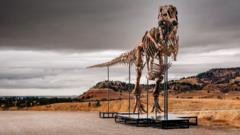
A near-complete Tyrannosaurus rex skeleton nicknamed Gus is due to be auctioned by Sotheby's on Tuesday, with a pre-sale valuation of $30m (about £24m) and the potential to become the most expensive dinosaur ever sold. The sale has revived a long-running debate in the natural history world over whether scientifically important specimens should be reserved for museums, or whether commercial fossil hunters deserve to be rewarded for finding and rescuing them. The concern for many scientists is that soaring prices are pushing such specimens beyond the reach of public institutions and into private hands.
Gus was discovered in the Badlands of South Dakota, 67 million years after the animal lived, and is named after the late cattle rancher Gary "Gus" Licking, on whose land it was found. The team led by Thomas Heitkamp spent three years excavating the fossil, working only during the field season between the ground thawing and refreezing in September, followed by a further three years documenting and reconstructing it in the lab. Bidding must start at no less than $19m; by comparison, the T. rex "Sue" sold for $8m (£6m) to Chicago's Field Museum in 1997, while the current record is held by a Stegosaurus called Apex, which fetched $44.6m in 2024 — eleven times its initial valuation.
In short
- A T. rex called Gus goes to auction Tuesday, valued at $30m.
- It could become the priciest dinosaur ever sold.
- Rising prices risk pricing museums out of key fossils.
Steelman: both sides, in good faith
The strongest fair case each way — we don't pick a winner.
The case for
Commercial fossil hunters argue they invest considerable time, expertise, and capital in discovering and excavating specimens like Gus—a three-year excavation effort that might never have happened without economic incentive. Fair compensation enables landowners to benefit from discoveries and motivates the rigorous fieldwork that rescues important fossils from destruction. They contend that the auction market reflects genuine scientific value and that many private collectors preserve specimens responsibly, sometimes making them available for study despite ownership restrictions.
The case against
Scientists contend that palaeontologically significant specimens should serve collective research and public understanding rather than become private luxury assets. When fossils command escalating auction prices, they move beyond the reach of museums and researchers who need sustained access for ongoing study. The concern is that restricting specimens to private hands impedes the dissemination of knowledge about Earth's history and limits collaborative examination essential to palaeontological advancement.
Explained simply
A Tyrannosaurus rex skeleton has been discovered in South Dakota and is being put up for auction with an estimated value around £24 million, potentially making it the most expensive dinosaur fossil ever sold. The specimen, nicknamed Gus, required six years of careful excavation from the ground where it had lain for 67 million years, followed by work to reconstruct and document it.
The upcoming sale illustrates a long-standing debate within the scientific community about how important fossils should be owned and managed. Some argue that scientifically significant specimens should remain in public museums where they can be studied by researchers and accessed by the public, whilst others believe those who discover and fund extraction deserve financial reward for their efforts.
The concern for many scientists is that as prices for major fossils have risen, specimens are increasingly moving into private collections beyond the reach of institutions and researchers. This tension reflects different views about whether fossils should be valued as scientific resources or as commercial commodities.
Americas Research Science World