Terrifying moment great white shark off the coast of Georgia lunges at woman as she dangles her arm over the side of boat
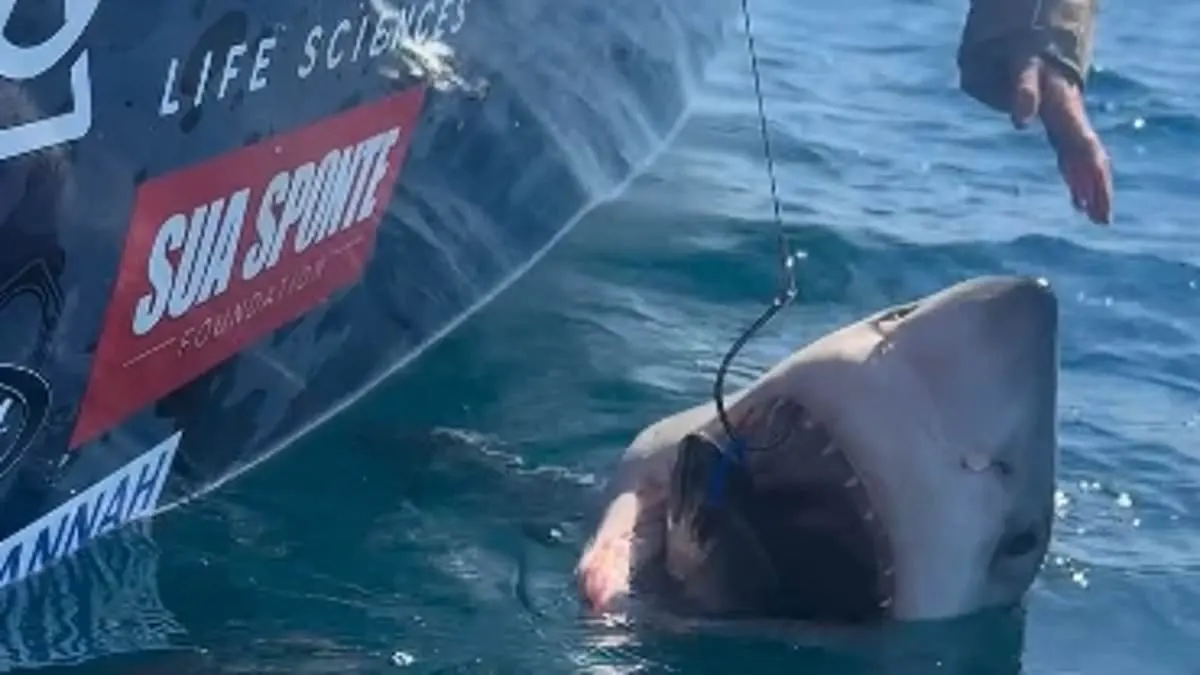
A woman on a shark-tagging trip off Tybee Island, Georgia, narrowly avoided being struck when a hooked great white swung its head towards her as she petted it. The crew said the shark was under control and did not come close enough to harm her, but the incident underscored the need to treat the animals with respect.
The Knot Lucky Fishing crew was collecting data on shark movements, but released this shark without tagging it because they could not find a safe opportunity for the crew and animal. The programme names tagged sharks after fallen US service members and involves veterans, including through trips intended to support those dealing with PTSD. The article also reports 65 shark bites worldwide last year, nine fatal, compared with a 10-year average of 72 bites and six deaths.
In short
- A hooked great white swung its head towards a crew member off Georgia.
- The crew said she was not in danger and released the shark untagged.
- The tagging programme also involves veterans and honours fallen service members.
Steelman: both sides, in good faith
The strongest fair case each way — we don't pick a winner.
The case for
The trip can be defended as a way to gather data that improves understanding of shark movements, while involving veterans in an activity intended to support people dealing with PTSD. With trained crew managing the animal and the shark released when tagging could not be done safely, carefully controlled research may serve public and conservation interests.
The case against
Even on a research trip, allowing a participant to pet a hooked great white and dangle an arm near it creates avoidable danger for both the person and the shark. The incident suggests that safety procedures should keep people clear of the animal, especially when the intended research can be abandoned, as it was here, whenever conditions are not safe.
Explained simply
Great white sharks are large predatory fish found in oceans around the world, including off the south-eastern United States. Researchers and fishing crews sometimes catch sharks briefly to study their movements, then release them.
The Knot Lucky Fishing crew works off Tybee Island, Georgia, collecting information about sharks. Its programme names tagged sharks after US service members who have died and includes trips for veterans, some of whom have experienced post-traumatic stress.
Shark bites are uncommon, though they can be serious. Worldwide figures help put individual encounters in context, while tagging research can help scientists understand where sharks travel.
Culture Entertainment Horror Travel World