Entertainment news and discussion on TalkFuse.
Tesla teases Cybercab with a built-in Starlink V5 antenna
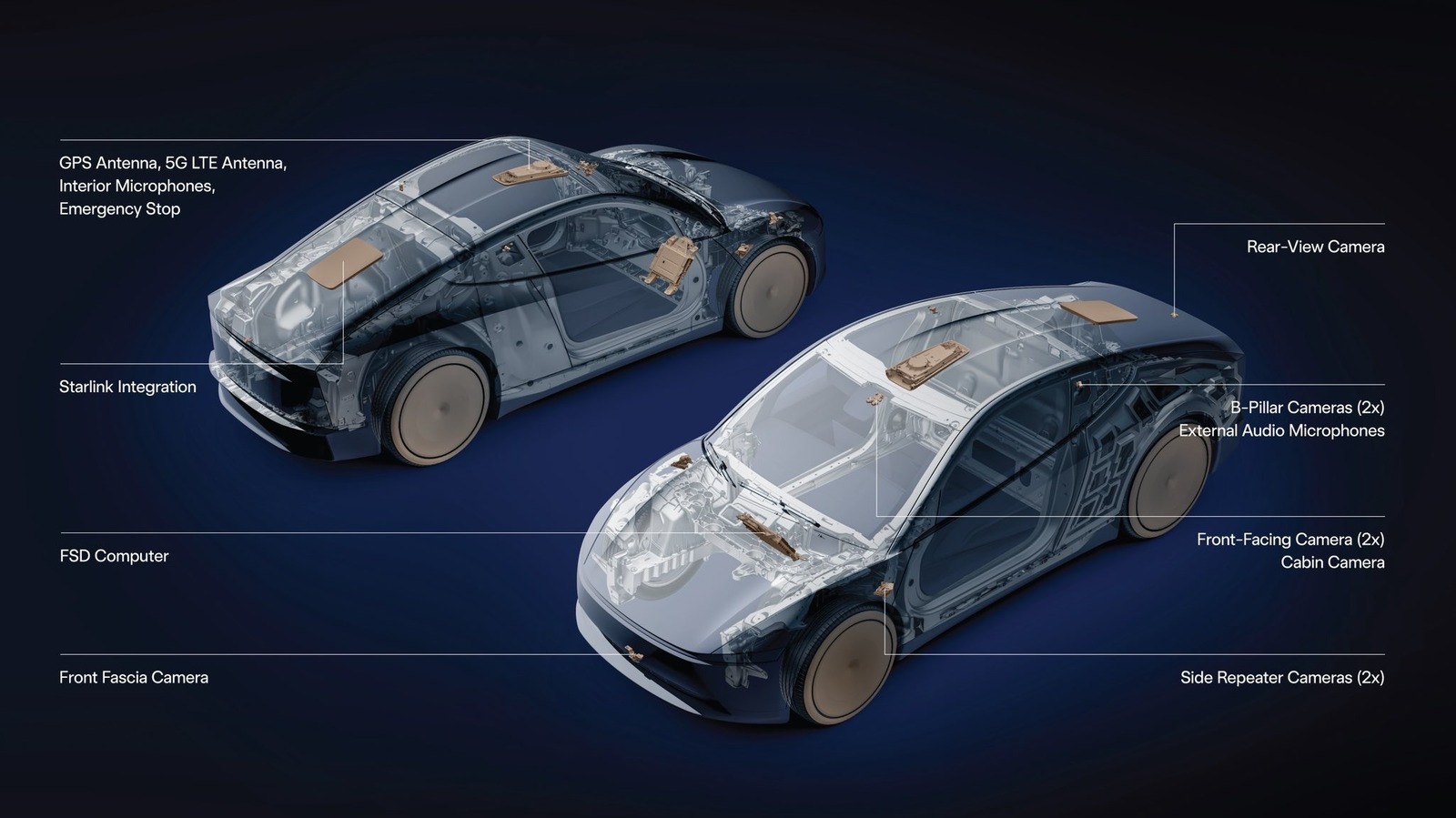
Tesla has revealed that its upcoming Cybercab robotaxi will feature a built-in SpaceX Starlink V5 satellite dish, showcased via a cutaway image posted on X alongside GPS and 5G LTE connectivity. The move is another example of cross-pollination between Elon Musk's companies, positioning the vehicle to draw on space-based internet for autonomous driving support, though the practical benefit is questionable given the cars currently only operate within cities that already have strong cellular coverage.
The integrated dish uses the Starlink V5 model announced only a week earlier, which is smaller and more energy-efficient than its predecessor but slightly slower, offering 375+ Mbps versus the V4's 400+ Mbps. Notably, Starlink markets the V5 for "home internet" use rather than on-the-go applications like its Mini unit, and with average US city 5G speeds around 175 Mbps, the satellite link appears redundant for short urban trips. Tesla suggests it could still aid fleet-wide functions such as inter-vehicle communication and remote support, but has not announced a launch timeline; its robotaxi fleet currently numbers just 39 unsupervised vehicles and 770 in total including supervised ones.
In short
- Tesla's Cybercab will include a built-in Starlink V5 satellite dish
- V5 offers 375+ Mbps but is aimed at home, not mobile, use
- Benefit unclear as Cybercabs already have 5G and operate only in cities
Steelman: both sides, in good faith
The strongest fair case each way — we don't pick a winner.
The case for
Integrating Starlink V5 provides valuable redundancy for autonomous vehicles, ensuring connectivity remains robust even if primary 5G networks fail unexpectedly. Beyond immediate urban deployment, this architecture future-proofs the Cybercab for expansion beyond cities and enables advanced fleet coordination and remote support features. The V5's improved efficiency and compact design make it practical to incorporate, whilst its throughput exceeds typical city 5G speeds and demonstrates Tesla's technical integration capabilities.
The case against
The Starlink integration appears premature and unnecessary for vehicles currently operating only in cities with strong cellular coverage, where 5G speeds already suffice for autonomous driving safely. Adding satellite hardware increases vehicle complexity, weight and cost whilst providing redundant connectivity; the V5 is marketed for stationary home use rather than mobile applications, raising legitimate questions about its suitability. With the robotaxi fleet tiny and no announced timeline or demonstrated use case, this appears more like cross-promotion between Musk's companies than a justified engineering necessity.
Explained simply
Tesla is developing a Cybercab, a self-driving vehicle designed to operate as a taxi without requiring a human driver. The company is currently testing these vehicles and plans to expand its fleet.
Starlink is a satellite internet service operated by SpaceX, a space company also owned by Elon Musk. Tesla and SpaceX are separate companies, but shared ownership means their technologies can be integrated.
Autonomous vehicles depend on reliable data connections to function, as they must constantly communicate with servers and other vehicles. The self-driving taxis Tesla is currently testing operate in cities where mobile phone networks already provide good coverage.
Celebrity Cybersecurity Entertainment Space Technology