World news and discussion on TalkFuse.
Texas execution lasted 63 minutes after repeated failed attempts to establish IV access
Developed over time first seen 1 day ago
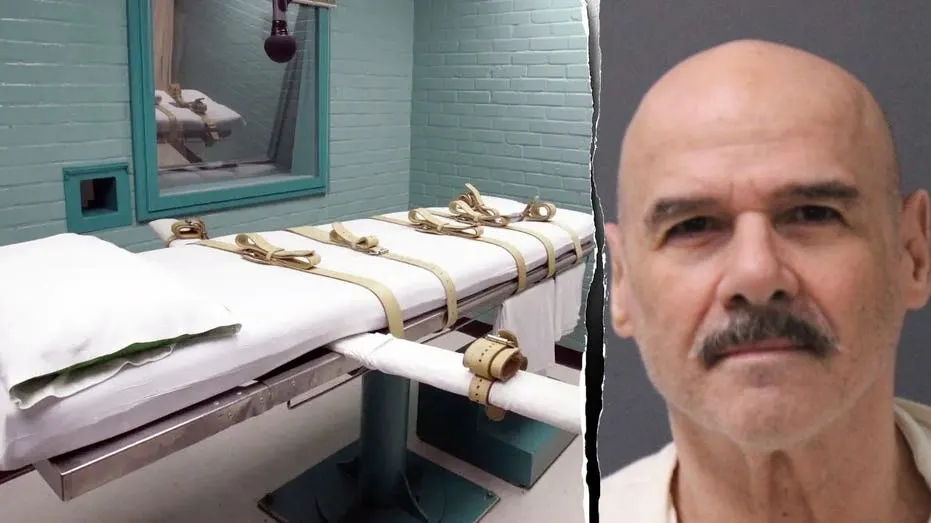
Reinaldo Dennes’s execution in Texas lasted 63 minutes, as prison staff made repeated unsuccessful attempts to establish intravenous access before administering the lethal injection. Witnesses reported that Dennes repeatedly cried out in pain; the case has renewed scrutiny of lethal injection procedures following a separate failed attempt in Tennessee.
Dennes was convicted of capital murder for the 1996 killing of Houston diamond dealer Janos Szucs. Texas officials said staff followed state procedures and placed needles in Dennes’s left foot and the left side of his neck, while a spokesperson suggested his pain complaints may have been exaggerated. He was pronounced dead at 7:08 p.m., one minute after the procedure ended.
- Sources
- 2
- Outlets
- 2
- Left · Centre · Right
- 0 · 0 · 2
In short
- Texas execution took 63 minutes after repeated failed IV attempts.
- Witnesses said Dennes cried out in pain during the procedure.
- Officials said procedures were followed; scrutiny of lethal injections has grown.
How this story developed
- 1 day ago Dennes was pronounced dead at 7.08pm, one minute after the injection ended, and the case drew further scrutiny after a separate September execution attempt in Tennessee, where Christa Pike survived two doses of pentobarbital that her lawyers said had not properly entered her bloodstream.
- 1 day ago Texas officials said staff made several unsuccessful attempts to establish IV access before placing needles in Reinaldo Dennes’s left foot and neck during his 63-minute execution, as witnesses reported that he repeatedly cried out in pain.
Full account
Reinaldo Dennes was pronounced dead at 7.08pm on Thursday after a lethal injection at the state penitentiary in Huntsville, Texas. The procedure took 63 minutes from the time he was secured to the gurney until it ended; he was pronounced dead a minute later. Staff had difficulty establishing intravenous access for the pentobarbital.
Witnesses cited by the Associated Press said Dennes groaned and called out during the procedure, describing pain in his right leg and pleading not to be left to suffer. The Texas Department of Criminal Justice said staff made several unsuccessful attempts to place an IV before using veins in his left foot and the left side of his neck. Spokesperson Amanda Hernandez said she did not know how many attempts there had been, but said the department followed its procedures and the eventual access points were permitted.
Hernandez also questioned whether Dennes’ reported pain reflected the procedure, saying he complained before the drugs began flowing and in parts of his body where no IV had been placed. The incident comes amid renewed scrutiny of lethal injections after Christa Pike survived an execution attempt in Tennessee in September. Her lawyers said two doses of pentobarbital had not properly entered her bloodstream and left her seriously injured.
Dennes had been convicted of capital murder for the 1996 killing of Houston diamond dealer Janos Szucs. He was the second person executed in the United States on Thursday, after Florida put Thomas Mitchell Overton, 71, to death for the killings of a pregnant woman and her husband during a home invasion. The reports noted that Overton’s execution was Florida’s 20th this year, a state record.
Where outlets differ
From the full account, which is AI-written from the sources:
The two supplied reports are substantially alike and both attribute the account of Dennes’ cries and the execution details to the Associated Press. The first includes his initial exclamation, “The pain! Go! Go!”, while the second omits it.
The first report gives more space to the wider context, including a separate headline about Pike’s condition and a reference to a rare triple execution day; the second does not include these details. Both mention Pike’s September execution attempt and the Florida execution.
The first says Fox News Digital had contacted the Texas Department of Criminal Justice for comment; the second says it had sought additional comment. Neither supplied report includes a response to that enquiry.
Steelman: both sides, in good faith
The strongest fair case each way — we don't pick a winner.
The case for
Supporters of the execution can argue that Dennes was convicted of a grave murder and that carrying out a lawful sentence honours the jury’s decision and provides accountability for the victim. They may also say that officials reported following state procedures, and that a difficult IV placement, while troubling, does not by itself establish that the execution method is inherently inhumane or should be abandoned.
The case against
Opponents can argue that repeated failed attempts to establish IV access and Dennes’s cries of severe pain raise serious questions about whether the procedure was humane, regardless of his conviction. They may contend that the state has a duty to prevent avoidable suffering and that this case, alongside another failed attempt, warrants independent scrutiny and reconsideration of lethal injection practices.
Explained simply
Lethal injection is the method Texas uses to carry out death sentences. Medical staff insert an intravenous line, or IV, to deliver the drugs; finding a suitable vein can be difficult, and procedures vary between states.
Reinaldo Dennes was sentenced to death for the 1996 murder of Houston diamond dealer Janos Szucs. His case has drawn attention to how executions are carried out and what safeguards are used when access to a vein is difficult.
The debate has also arisen after a separate attempted execution in Tennessee. Questions about IV access, pain and the use of lethal injection matter because states must carry out death sentences under their procedures while facing scrutiny over the treatment of people being executed.
Coverage · 2 sources
Bias meters
From 2 rated sources.
Read the full article at the source →
Originally published by Fox News as “Texas inmate’s execution takes over an hour as prison staff struggle to find suitable veins”.