Culture news and discussion on TalkFuse.
US Thanksgiving flights forecast to exceed pre-pandemic record despite storm threat
Developed over time first seen 16 hours ago
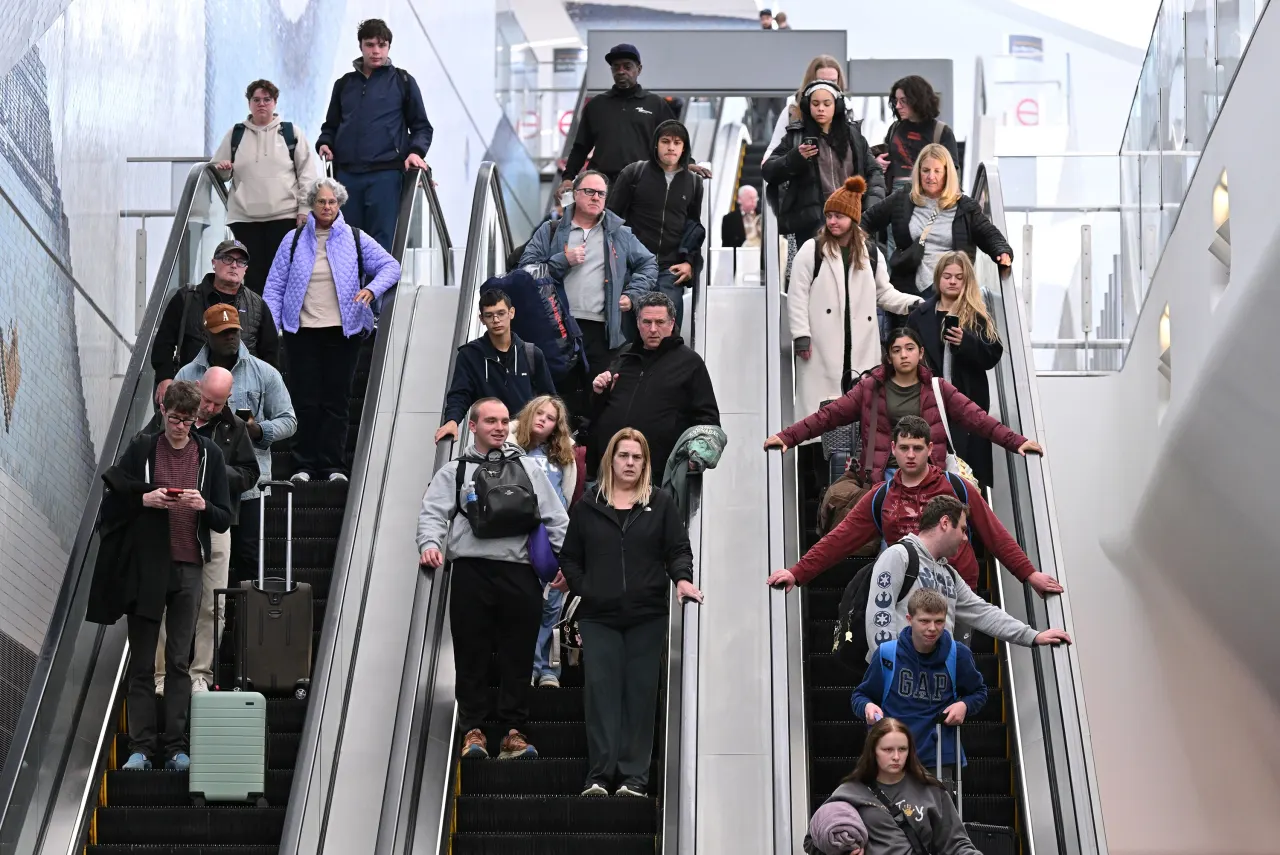
US Thanksgiving air travel is forecast to reach a 16-year high, despite concerns following a nationwide airspace shutdown less than two weeks earlier. The surge coincides with a major East Coast storm forecast to bring high winds and heavy rain on the Wednesday before Thanksgiving and on the holiday itself.
At least 417,775 flights are expected from 23 November to 1 December, a 2.2% rise on 2025 and 7.5% above the 2019 pre-pandemic record; Tuesday is forecast to see more than 52,000 flights. The FAA said faulty communications upgrades caused the 13 November shutdown and that the issue has been resolved. A government team is meeting weekly to monitor air traffic control reliability.
- Sources
- 2
- Outlets
- 2
- Left · Centre · Right
- 0 · 0 · 2
In short
- Thanksgiving flights are forecast to reach a 16-year high.
- More than 417,000 flights are expected over the holiday period.
- An East Coast storm may complicate travel on Wednesday and Thursday.
How this story developed
- 8 hours ago New coverage again highlighted the storm threat, with high winds and heavy rain forecast for the East Coast on Wednesday and Thanksgiving Day as the record travel period approached.
- 15 hours ago The latest forecast put the total at 417,775 flights from 23 November to 1 December, while the FAA said the shutdown’s communications fault was fixed and weekly reliability monitoring was under way.
- 15 hours ago US Thanksgiving flights were expected to reach a 16-year high, despite a recent nationwide airspace shutdown, as a major East Coast storm threatened holiday travel.
Full account
US air travel over Thanksgiving is forecast to reach its busiest level in 16 years. The Federal Aviation Administration expects more than 417,000 flights between 23 November and 1 December, with 52,345 scheduled for Tuesday, the busiest day for departures. The Transportation Security Administration, meanwhile, expects 17.6 million people to pass through airport checkpoints from Tuesday through the following Monday.
The expected increase comes shortly after a nationwide ground stop on 13 November, ordered after a telecommunications failure affected some air traffic control facilities. The FAA said a separate report traced that disruption to faulty communications-system upgrades, which have since been resolved. The recent incidents have put the reliability of air traffic control under renewed scrutiny as the holiday rush begins. The White House has convened experts from aviation, transport, defence and intelligence to examine the failure and reduce the risk of a repeat.
Airlines may use larger aircraft to manage the crowds, particularly for return journeys: the forecast peak in flights is Tuesday, while passenger numbers are expected to be highest on Sunday. The FAA and TSA say staff are working through the holiday period to manage traffic and security. The FAA administrator has also pointed to rising demand as a reason to continue improving the air traffic control system.
Weather could add to the travel pressures. Forecasts cited by the outlets point to thunderstorms in Florida and along the Gulf Coast on Tuesday and Wednesday, rain across parts of the south-east on Wednesday, and heavy rain and strong winds in the north-east on Thursday. Conditions could disrupt flights as the system moves towards the mid-Atlantic.
Where outlets differ
From the full account, which is AI-written from the sources:
One report characterises the forecast as a 16-year high and gives comparisons: 2.2% more Thanksgiving-week flights than in 2025 and 7.5% above the pre-pandemic 2019 level. The other focuses on the FAA’s flight count and TSA’s separate estimate of 17.6 million airport passengers.
The reports describe the 13 November disruption differently. One says the FAA attributed a nationwide airspace shutdown to faulty communications upgrades; the other describes a ground stop after a telecommunications failure at selected air traffic control facilities. They also differ in emphasis on subsequent incidents: the second mentions temporary groundings at Atlanta and Chicago, while the first discusses outages at major companies and a government team meeting weekly on air traffic reliability.
The weather accounts have different levels of detail. The first highlights a major east-coast storm bringing wind and rain on Wednesday and Thursday; the second specifies thunderstorms around Florida and the Gulf Coast earlier in the week, rain in the south-east, and heavy rain and wind in the north-east on Thursday.
Steelman: both sides, in good faith
The strongest fair case each way — we don't pick a winner.
The case for
The FAA says the communications fault behind the 13 November shutdown has been resolved, and a government team is meeting weekly to monitor air traffic control reliability. Travellers may reasonably take this as evidence that the disruption has been addressed, while recognising that heavy holiday demand and severe weather can still cause delays.
The case against
The recent nationwide shutdown shows how a technical failure can disrupt flights at a particularly busy time, and the record travel forecast leaves little room to absorb further problems. With high winds and heavy rain forecast for key holiday dates, travellers may reasonably question whether assurances of a fix and weekly monitoring are enough to ensure reliable journeys.
Explained simply
Thanksgiving is a major US holiday when many people travel to spend time with family and friends. The Federal Aviation Administration, or FAA, oversees the country’s air traffic system and works with airlines to keep flights moving safely.
Air travel has increased since the pandemic, putting pressure on airports and air traffic control during busy periods. A recent nationwide shutdown caused by a communications problem highlighted how technical faults can disrupt flights across the country.
Coverage · 2 sources
Bias meters
From 2 rated sources.
Read the full article at the source →
Originally published by New York Post as “Thanksgiving travel expected to see 16-year high just weeks after widespread outages, flight cancelations”.