New releases, music videos and album news — indie, rap, rock and pop. Always covering Ren, Chris Webby, Sam Tompkins, bbno$, CHINCHILLA, Muse, Yungblud and more.
The Alternative Number Ones: The Mighty Mighty Bosstones’ “The Impression That I Get”
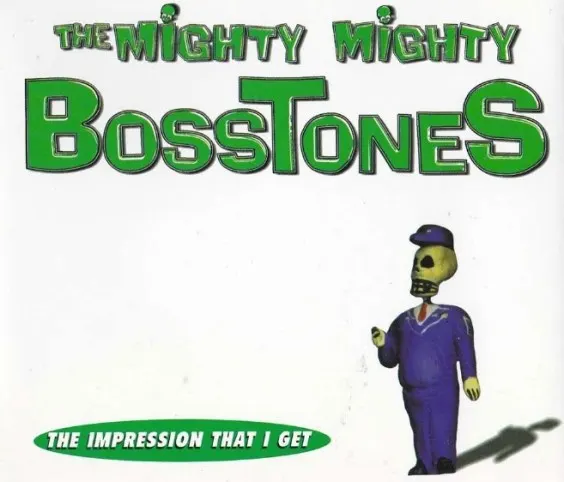
In this instalment of Stereogum's "Alternative Number Ones" column, critic Tom Breihan looks back at the Mighty Mighty Bosstones' ska-punk hit "The Impression That I Get," which topped Billboard's Modern Rock Tracks chart for one week in June 1997. He frames the piece around Ben Carr, the band's non-musical "dancer" member, reflecting on his own experience as a similarly redundant member of his high school punk band and on the cultural moment ska-punk enjoyed in the late 1990s.
Breihan recalls his short-lived band, which played only two shows in spring 1997 under the names American Standard and American Substandard, and his own role as the group's designated dancer with no instrumental or vocal duties. He draws comparisons to other "non-playing" band members such as Bez of the Happy Mondays, before recounting the Bosstones' scene-stealing performance at Lollapalooza 1995, including a quote from Pavement's Bob Nastanovich describing the band's high-energy stage presence.
In short
- Column revisits the Bosstones' 1997 #1 hit "The Impression That I Get."
- Writer recalls his own teenage punk band and its non-playing "dancer."
- Piece highlights the Bosstones' celebrated 1995 Lollapalooza performance.
Explained simply
The Mighty Mighty Bosstones were an American band whose music mixed ska, with its offbeat rhythms and horns, with punk rock. Their lively live shows helped them become part of the late-1990s ska-punk scene, when the style reached a wider audience.
The band included Ben Carr, who danced on stage but did not play an instrument or sing. His role recalls a broader tradition of performers who add movement and presence to a band without making music.
In 1997, the Bosstones’ “The Impression That I Get” spent a week at the top of the US Modern Rock Tracks chart. Its success offers a way to look back at the band’s place in that era and at how a band’s stage presence can be part of its identity.