Video games news, releases, esports and culture — all the biggest gaming stories in one place.
The Balrog vs Sauron Fight Is Either Blasphemy or Awesome, Depending on Where You Stand on The Lord of the Rings Adaptations
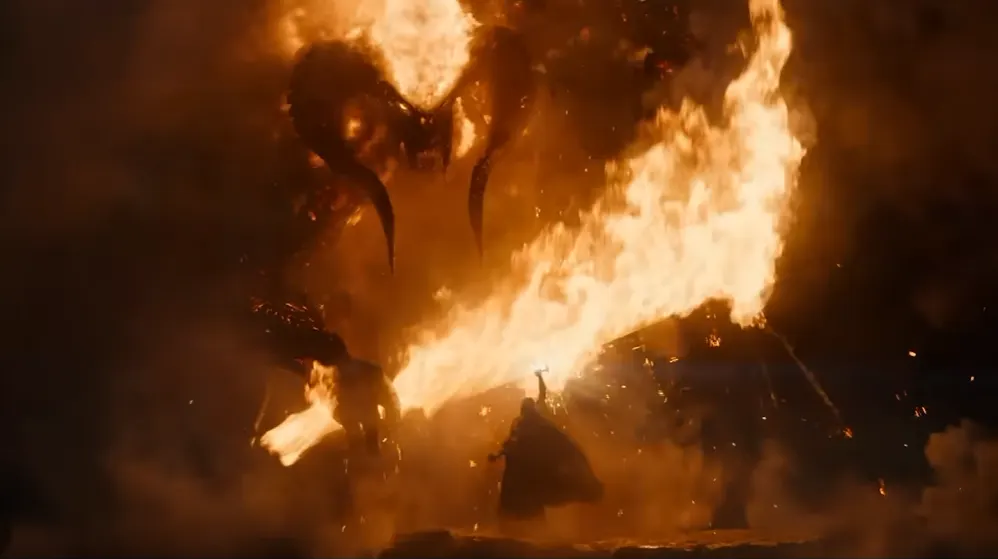
A leaked San Diego Comic Con 2026 clip revealing that Season 3 of Amazon's *The Lord of the Rings: The Rings of Power* features a talking Balrog fighting Sauron has split fans, with reactions ranging from delight at the spectacle to accusations that it betrays J.R.R. Tolkien's source material. The scene, in which Sauron uses the Crown of Morgoth to block the Balrog's flaming sword, has no basis in Tolkien's writing, continuing the show's pattern of departing from established lore, but it has reignited debate over how much creative licence adaptations should be allowed given how little Tolkien wrote about the Second Age.
Simon Pegg voices the Balrog, previously known for its battle with Gandalf in *The Fellowship of the Ring*, and the character reportedly speaks the line "Crawl back to your world above" via voice-over. Some prominent fans and lore commentators, including the YouTuber The Nerd of the Rings, have praised the sequence, arguing there's nothing in Tolkien's texts ruling out a speaking Balrog or a Sauron-Balrog encounter, and that the sparsely detailed Second Age leaves room for such additions. Others remain critical of the departure, reflecting the wider divide among Tolkien fans over the show's willingness to invent scenes and dialogue absent from the books.
In short
- Rings of Power Season 3 clip shows a talking Balrog battling Sauron.
- Scene isn't in Tolkien's books; fans are split on the deviation.
- Simon Pegg voices the Balrog; Sauron uses the Crown of Morgoth to defend.
Steelman: both sides, in good faith
The strongest fair case each way — we don't pick a winner.
The case for
Defenders of the adaptation argue that Tolkien's sparse documentation of the Second Age creates legitimate room for creative storytelling that doesn't contradict established lore. They contend there is nothing in Tolkien's texts that explicitly rules out a speaking Balrog or an encounter between Sauron and such a creature, and that adaptations inherently require artistic licence to translate literature into compelling visual narratives. From this perspective, spectacle and storytelling value can honour the spirit of Tolkien's world even when departing from his literal texts.
The case against
Critics argue that the departures represent an unfaithful adaptation that prioritises visual spectacle over fidelity to Tolkien's vision. They maintain that sparse documentation of the Second Age doesn't constitute creative blank space available for invention, and that the pattern of adding scenes and dialogue absent from the books—rather than deepening existing lore—suggests the show strays from its source material's spirit. For these commentators, adaptations of such a beloved and extensively detailed fictional world should prioritise faithfulness to the author's work rather than wholesale invention.
Explained simply
Amazon's The Rings of Power is a television adaptation of J.R.R. Tolkien's The Lord of the Rings universe, set in the fictional Second Age, thousands of years before the events of Tolkien's main books. The series has created new characters, dialogue, and plot elements not found in Tolkien's published works, citing Tolkien's relatively sparse writing about this period as justification.
This approach to adaptation has created a significant divide among fans and viewers. Some appreciate the creative freedom to develop the sparse source material into a fuller narrative, whilst others argue that adaptations have a responsibility to remain faithful to what Tolkien actually wrote. This disagreement has become more pronounced as the series has introduced increasingly original content.
The Balrog and Sauron are both figures from Tolkien's mythology who play important roles in fan discussions. Disagreements over how these characters should be portrayed in adaptations represent a broader debate about whether television should prioritise fidelity to source material or creative interpretation when adapting literature.