British Museum display traces Bayeux Tapestry’s Battle of Hastings
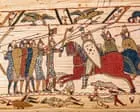
The British Museum's new display of the Bayeux tapestry presents what the writer calls the greatest battle ever depicted in art, arguing that despite lacking the technical sophistication of later masterpieces, the 11th-century embroidered narrative achieves an extraordinary emotional and dramatic power. The exhibition matters because it offers UK audiences a rare chance to view the historic artwork up close, with a carefully designed setting that lets visitors trace, in sequence, the story of the Norman conquest of England.
The tapestry depicts the Battle of Hastings on 14 October 1066, when King Harold's Anglo-Saxon forces were defeated by William, Duke of Normandy, a victory that permanently altered the course of English history and succeeded where later invasions by figures such as Napoleon and Hitler failed. The display, laid out along a gallery-length case with subdued lighting to highlight its russet, green and yellow hues, guides visitors chronologically from small human details, such as a servant eavesdropping or a dog being carried to a ship, through to the climactic, chaotic violence of cavalry charges, arrow volleys and fallen soldiers, rendered with what the writer describes as unexpectedly vivid realism and momentum.
- British Museum unveils new Bayeux tapestry display in London.
- Tapestry depicts the 1066 Battle of Hastings and Norman conquest.
- Reviewer praises its dramatic power despite its technical simplicity.
New here? Start with this
The Bayeux Tapestry is a long embroidered cloth made in the 11th century. It tells the story of the Norman invasion of England and the events leading up to the Battle of Hastings.
The battle took place in 1066, between the forces of Harold, king of England, and William, Duke of Normandy. Harold was defeated, and William became king, beginning a period of Norman rule that changed England’s government, language and society.
The tapestry is an important historical source as well as a work of art, though it presents events through the viewpoint of its makers. Seeing it in sequence helps visitors follow how the invasion unfolded and how the battle ended.
Read the full article at the source →
Originally published by The Guardian as “The Bayeux tapestry: a stupefying, thrilling, horrifying masterpiece that shakes the earth”.