Business news and discussion on TalkFuse.
The community lost to the sea: Empty plots of land on Britain’s most eroded coastline go on sale for up to £8,000 – as pensioners are told to sell their homes or pay to demolish them
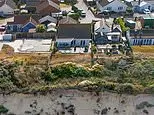
Empty plots of land on one of Britain's most rapidly eroding stretches of coastline are being sold for as much as £8,000, even though experts warn they could be lost to the sea within years. Elderly residents in affected communities have reportedly been told they must either sell their properties or pay to have them demolished before the encroaching coastline reaches their homes, highlighting the growing human and financial cost of coastal erosion in the UK.
The situation reflects wider concerns about how coastal erosion is being managed, with landowners apparently able to market vulnerable plots to buyers despite the clear risk of the land disappearing entirely. Pensioners living in threatened homes face a difficult choice between selling up, often at reduced value, or covering demolition costs themselves, raising questions about compensation, planning policy and support for those affected by Britain's shifting coastline.
In short
- Land on eroding UK coastline sold for up to £8,000 despite sea risk
- Pensioners told to sell homes or pay for demolition
- Highlights gaps in support for coastal erosion victims
Steelman: both sides, in good faith
The strongest fair case each way — we don't pick a winner.
The case for
Those supporting current market practices argue that coastal erosion is a documented geographic risk that participants in property transactions can research and incorporate into their decision-making. They hold that property owners should retain the right to sell their assets at market rates, with buyers conducting due diligence before purchasing. From this perspective, government cannot sustainably protect all coastal properties; individual responsibility and transparent market pricing serve financial discipline and respect property rights more fairly than subsidies that might create moral hazard or unsustainable expectations.
The case against
Those advocating reform contend that elderly residents are being asked to bear costs for a natural, geographic problem beyond their control. They argue that when communities face unavoidable coastal loss, collective support through compensation, demolition assistance, and relocation help reflects fair burden-sharing rather than leaving individuals to absorb these losses alone. From this view, vulnerable pensioners should not face the choice between accepting reduced property values or funding demolition themselves; society should share responsibility for managing geographic change more equitably.
Explained simply
Coastal erosion is a natural process where land gradually washes away into the sea, but it is occurring rapidly in some parts of Britain where homes and communities have been built close to the shoreline. This creates a growing crisis for residents whose properties are becoming increasingly vulnerable to being swallowed by the ocean.
In affected areas, elderly residents are facing difficult choices: they must either sell their homes, often at reduced prices, or pay to demolish them before the sea reaches their doorstep. At the same time, vacant plots in these threatened zones are being put on the market for thousands of pounds, despite experts warning these pieces of land could disappear into the sea within years.
The crisis raises fundamental questions about responsibility and support for communities facing coastal erosion. Residents currently bear much of the financial burden themselves, with limited government compensation or help, highlighting a gap between the scale of the problem and the protection available to those affected.