The day small boats crisis became a BIG boats crisis: Forty-nine foot mega-dinghy carrying 230 migrants – more than a Boeing 737 – reaches Britain
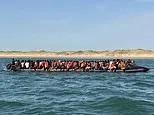
A record number of migrants – 230 people – crossed the English Channel in a single crossing aboard an oversized 49-foot dinghy, described as carrying more passengers than a Boeing 737 aircraft. The crossing marks a significant escalation in the small boats crisis, prompting criticism that Labour's "smash the gangs" strategy is failing to curb Channel crossings despite government claims of progress.
The vessel's size represents a shift in tactics by people-smuggling gangs, who appear to be using larger boats to move greater numbers of migrants in fewer crossings. The incident has renewed political pressure on the government over its handling of Channel crossings, with critics pointing to the record-breaking numbers as evidence that current enforcement measures are not working.
In short
- Mega-dinghy carrying 230 migrants crossed Channel to Britain
- Boat held more people than a Boeing 737 aircraft
- Crossing undermines Labour's "smash the gangs" claims
Steelman: both sides, in good faith
The strongest fair case each way — we don't pick a winner.
The case for
Critics argue that a single dinghy carrying 230 people is unambiguous proof that current enforcement is failing and that the government's 'smash the gangs' pledge has not delivered results, whatever the official statistics claim. They contend that ministers have a duty to protect the country's borders and public confidence in the immigration system, and that allowing ever-larger vessels to cross unchecked rewards smuggling networks, encourages further crossings, and puts migrants themselves at even greater risk from overcrowded, unseaworthy boats. On this view, tougher deterrents, faster returns agreements and more assertive interception at sea are necessary and overdue.
The case against
Defenders of the government's approach argue that the shift to larger boats is a predictable smuggler adaptation to tighter enforcement elsewhere, not evidence that policy is failing, and that judging strategy by a single record crossing rather than trends over time risks reactive, politically-driven responses. They emphasise that people-smuggling is a transnational criminal enterprise requiring sustained international cooperation, upstream disruption and safe legal routes rather than headline-chasing measures, and that framing every crossing as a policy indictment obscures the genuine complexity of managing an issue driven by global displacement and organised crime networks operating beyond any one government's immediate control.
Explained simply
Migrants have been crossing the English Channel from northern France to England for several years, typically packed into small inflatable dinghies organised by smuggling gangs who charge people large sums for the journey. The UK government has tried various measures to reduce these crossings, including a Labour policy aimed at breaking up the criminal networks behind them, though numbers have remained high and the issue is a recurring source of political debate.
The people making these crossings come from many different countries and are often fleeing conflict, persecution or poverty, though their exact circumstances vary widely. Once they reach UK shores, they typically claim asylum, entering a system that assesses whether they qualify for protection, a process that can take a long time and has become a major point of contention in British politics.
This particular case is notable because of the sheer scale of a single crossing, which raises questions about how smuggling operations are adapting and what that means for border enforcement, public safety at sea and the wider debate over how the government manages immigration and asylum policy.