World news and discussion on TalkFuse.
The EU that Burnham is eyeing up is very different to the one Britain left
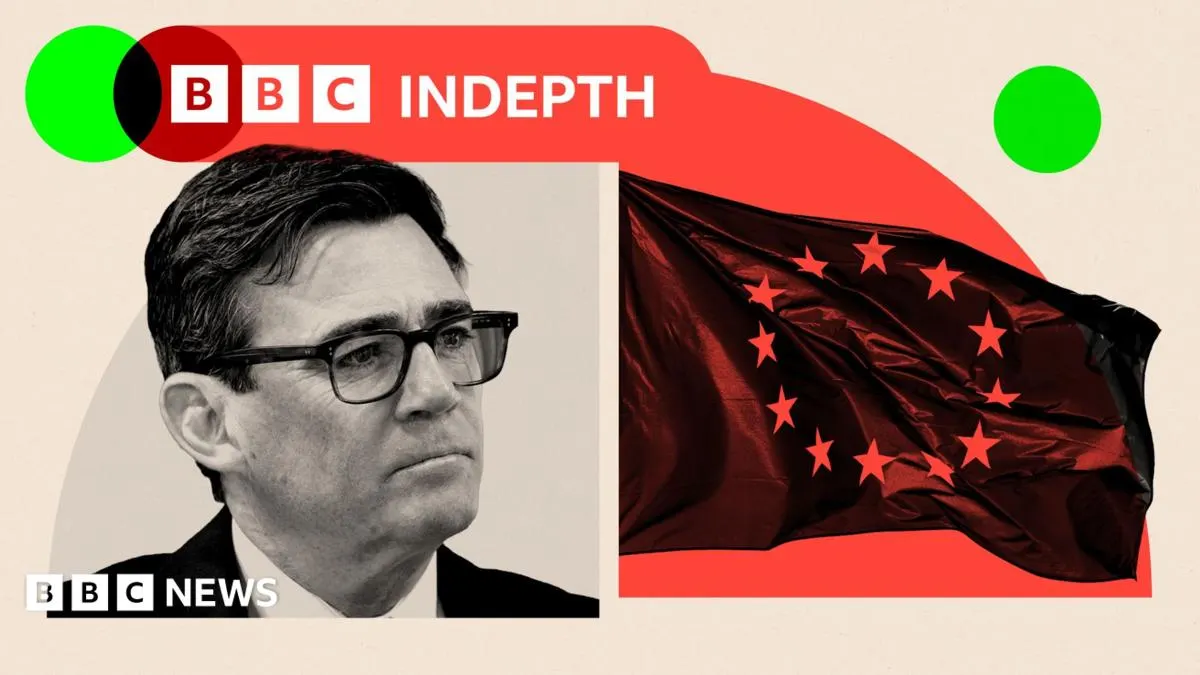
The article says the EU-UK summit is expected to produce limited agreements on youth mobility, carbon emissions pricing and food trade, rather than a major change in Britain’s relationship with the bloc. Andy Burnham has described closer ties as a step-by-step process, while opponents have portrayed the proposals as opening the way to uncontrolled immigration or EU membership.
The article says the EU has changed since Britain left, with the Covid pandemic, Russia’s invasion of Ukraine, uncertainty over US support and competition from China pushing it to prioritise resilience and self-reliance. Further discussions could cover the UK rejoining the EU electricity market or a defence loan scheme; customs union, single market membership and a possible referendum are raised as later possibilities, but not before the next general election.
In short
- The summit is expected to deliver limited agreements, not EU re-entry.
- Global shocks have made the EU more focused on self-reliance.
- Bigger questions about UK-EU ties may come later.
Steelman: both sides, in good faith
The strongest fair case each way — we don't pick a winner.
The case for
A gradual, practical reset could improve trade, energy co-operation and youth opportunities while addressing shared challenges such as climate change and security. Advocates can argue that the EU’s focus on resilience and closer co-operation makes engagement valuable, and that limited agreements do not commit Britain to membership or a customs union.
The case against
Even incremental agreements could bring regulatory obligations or constrain Britain’s freedom to set its own policies, so sceptics may reasonably question whether the benefits justify the trade-offs. They may also argue that closer ties could create pressure for deeper integration over time, and that decisions on migration, trade and sovereignty should be made transparently with clear public consent.
Explained simply
The European Union is a group of European countries that share rules and work together on trade and other issues. The UK left the bloc in 2020, ending its membership of the single market and customs union, which had made trade between Britain and EU countries more integrated.
Since then, the EU has faced the Covid pandemic, Russia’s invasion of Ukraine and growing economic competition from China, as well as uncertainty about future US support. These events have led it to focus more on resilience and being able to meet its own needs.
Andy Burnham, the mayor of Greater Manchester, has said closer UK-EU ties could develop gradually. Youth mobility, carbon pricing and food trade are areas where the two sides may cooperate; broader arrangements such as the customs union or single market would involve more extensive changes to how the UK relates to the EU.