World news and discussion on TalkFuse.
The Himalayas are melting faster – and India’s economy is ‘at risk’
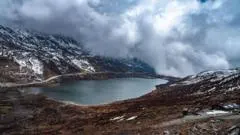
New research warns that the Himalayas are approaching a dangerous tipping point, with glaciers melting 65% faster than a decade ago while monitoring and early-warning systems remain dangerously inadequate. The findings, published by consultancy Systemiq with the Integrated Mountain Initiative and technical input from ICIMOD and the GB Pant National Institute of Himalayan Environment, follow devastating floods in Nepal and Tibet that killed more than 1,300 people, underlining how climate-driven instability in the region threatens both lives and the wider economy that depends on Himalayan water.
Only around 21 of an estimated 40,000 glaciers across the Himalaya-Karakoram region are monitored in detail, even as retreating ice leaves behind unstable glacial lakes and thawing permafrost raises the risk of cascading disasters. India's government has classified 56 glacial lakes as "very high risk", and although the Himalayas cover just 18% of Indian territory, they account for roughly 35% of the country's disasters; past glacial lake outbursts in Sikkim (2023) and Uttarakhand (2021) killed 70 and over 200 people respectively. The report estimates Himalayan water supports about 20% of India's GDP through agriculture, hydropower and tourism, yet mountain states capture only 5% of that value, while economist Lord Nicholas Stern warned the region — dubbed the "Third Pole" — is nearing a tipping point that threatens hundreds of millions of people; the study also attributes roughly a third of glacier melt to black carbon pollution, largely from brick kilns, which unlike global emissions is within India's power to curb.
In short
- Himalayan glaciers now melting 65% faster than a decade ago
- Only 21 of 40,000 glaciers are closely monitored, raising disaster risk
- Himalayan water supports 20% of India's GDP but mountain states gain little
Explained simply
The Himalayas are a vast mountain range whose glaciers store water and feed rivers across South Asia. That water supports farming, hydropower and tourism, so changes in the mountains can affect people and businesses far beyond the region.
Glaciers can leave unstable lakes behind as they shrink, while thawing frozen ground can make slopes less stable. If a lake bursts or a slope collapses, floodwaters and debris can endanger communities downstream; only a small share of the region’s many glaciers is closely monitored.
India’s mountain states face these hazards, but the rivers also support a much larger share of the country’s economy than the mountains receive in return. Researchers and officials are therefore concerned about improving monitoring and warning systems, as well as addressing pollution such as soot from brick kilns, which contributes to glacier melt.
Asia Business Economy Science World