“The Idiot(s)” Reimagines Dostoevsky as Chaos and Celebrates His Wife’s Essential Role
Developed over time first seen 2 months ago
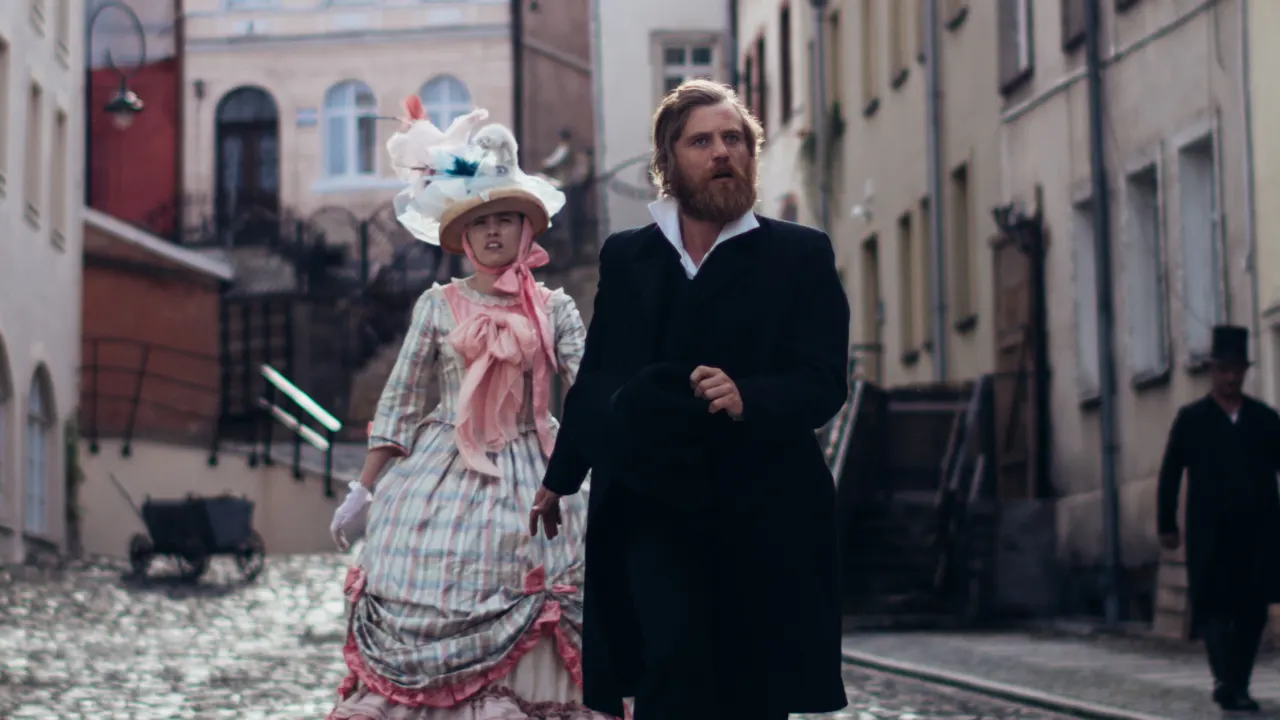
"The Idiot(s)," from directors Małgorzata Szumowska and Michał Englert, is a satirical film that reimagines the writing of Fyodor Dostoevsky's masterpiece "The Idiot" as chaotic farce while foregrounding the overlooked contribution of his wife, Anna. Rather than a conventional reverent biopic, the film treats Dostoevsky's genius as inseparable from those around him, using humour and stylistic flourishes to puncture the myth of the solitary literary great and to give Anna genuine narrative weight.
Played by Aimee Lou Wood, Anna transcribes her husband's work and is shown as an active force keeping him afloat, rather than a passive bystander to his chaos. Johnny Flynn's Fyodor is portrayed as buffoonish, self-pitying and petulant, prone to gambling, heavy drinking and socialising with fellow writer Ivan Turgenev (Christian Friedel) and his girlfriend (Vicky Krieps) during their stay in Germany, all while producing little actual writing. Written by Szumowska, Englert, Kasper Bajon and Brid Arnstein, the screenplay leans into playful anachronisms, such as a 19th-century rendition of A-Ha's "Take On Me," and outlandish visual details to keep the tone irreverent rather than tragic.
- Satirical film reframes Dostoevsky's writing process as comic chaos
- Aimee Lou Wood's Anna is shown as an active, essential collaborator
- Film uses anachronisms and dark humour, avoiding standard biopic reverence
New here? Start with this
Turgenev's serene poise and Vicky Krieps's coquettish glamour drown out his self-obsessed dread.
That is not the point though – here is the primer:
Fyodor Dostoevsky is one of Russia's most celebrated 19th-century novelists, known for weighty, philosophical works such as Crime and Punishment and The Idiot. Away from his fiction, his personal life was famously turbulent, marked by a serious gambling addiction, chronic debt and a volatile temperament, much of which unfolded during a period living abroad in Germany with his second wife, Anna, who managed their finances and shielded him from the worst of his impulses.
Full account
A new film titled "The Idiot(s)" reimagines the early married life of Russian novelist Fyodor Dostoevsky as a chaotic, tragicomic ordeal rather than a reverent literary biography. Directed by Polish filmmaking duo Małgorzata Szumowska and Michał Englert, once a married couple themselves, the film stars Johnny Flynn as Dostoevsky and Aimee Lou Wood as his young wife Anna. Rather than attempting to cover the writer's entire life, the story narrows its focus to a single turbulent chapter, drawing largely on Andrew D. Kaufman's book "The Gambler Wife: A True Story of Love, Risk and the Woman Who Saved Dostoyevsky" for its account of the couple's difficult period abroad.
The narrative follows Fyodor and Anna as they travel to Germany, ostensibly so he can settle down to write his next novel. Instead, he squanders time and money at the roulette table, drinks heavily, and swings between arrogant self-belief and self-pitying despair, all while resenting the polished manners of Western Europe he claims to despise even as he mingles with its literary elite. Among the figures he clashes with is his rival, fellow author Ivan Turgenev, played by Christian Friedel, whose apparent comfort with Western sophistication only deepens Fyodor's contempt. The film uses coarse, scatological comedy and eccentric set-pieces, including a spontaneous dance contest between the two writers, to strip away the solemn, statesmanlike image usually attached to Dostoevsky, presenting him instead as flawed, undignified and often absurd.
Central to the film's approach is its insistence that Anna's contribution to her husband's success has been historically overlooked. Wood's performance renders Anna as resourceful and quietly determined rather than a passive bystander to her husband's turmoil, transcribing his work and effectively holding their fraught domestic and financial life together as debts mount and they shuttle between shabby lodgings and glimpses of aristocratic excess. The film frames her not merely as a supportive spouse but as something closer to an uncredited creative partner, gently proposing that the novels bearing Fyodor's name alone were, in truth, a joint achievement.
Critical reactions, while broadly positive about the film's irreverent tone and central performances, differ in emphasis. One account frames the film primarily as a wider commentary on separating an artist's personal failings from the value of their work, situating it within Szumowska and Englert's earlier collaborations such as "Never Gonna Snow Again" and "Infinite Storm," and highlighting the visual contrast between opulent European high society and the couple's grim living conditions. Another account focuses more closely on Anna's perspective and voice within the story, praising Wood's performance as a standout and drawing a comparison to her earlier breakthrough role in "The White Lotus," while also noting supporting turns from Vicky Krieps as underused and suggesting the film runs somewhat longer than its material warrants.
Where outlets differ
Source 1 frames the film mainly as a satire on separating art from artist and situates it within the directors' prior work, with emphasis on the class contrast between elite society and the couple's poverty.
Source 2 focuses more on Anna's own voice and interiority, singles out Aimee Lou Wood's performance for particular praise (comparing it to her role in The White Lotus), and offers a mild critique that the film overstays its welcome, while also noting Vicky Krieps' role as underused.
Coverage
- Variety — ‘The Idiot(s)’ Review: Dostoevsky Is an Endearing Drunken Fool in This Rambunctious, Tonally Off-Kilter Two-Hander
- The Hollywood Reporter — ‘The Idiot(s)’ Review: Aimee Lou Wood and Johnny Flynn Sparkle in a Playful, Indulgent Tribute to Fyodor Dostoevsky’s Underappreciated Wife
Americas Art Celebrity Culture Entertainment Europe Film Fitness Health World