News, events and chat from Sheffield and South Yorkshire.
The Legacy of the Manvers Riots – what have we learned two years on?
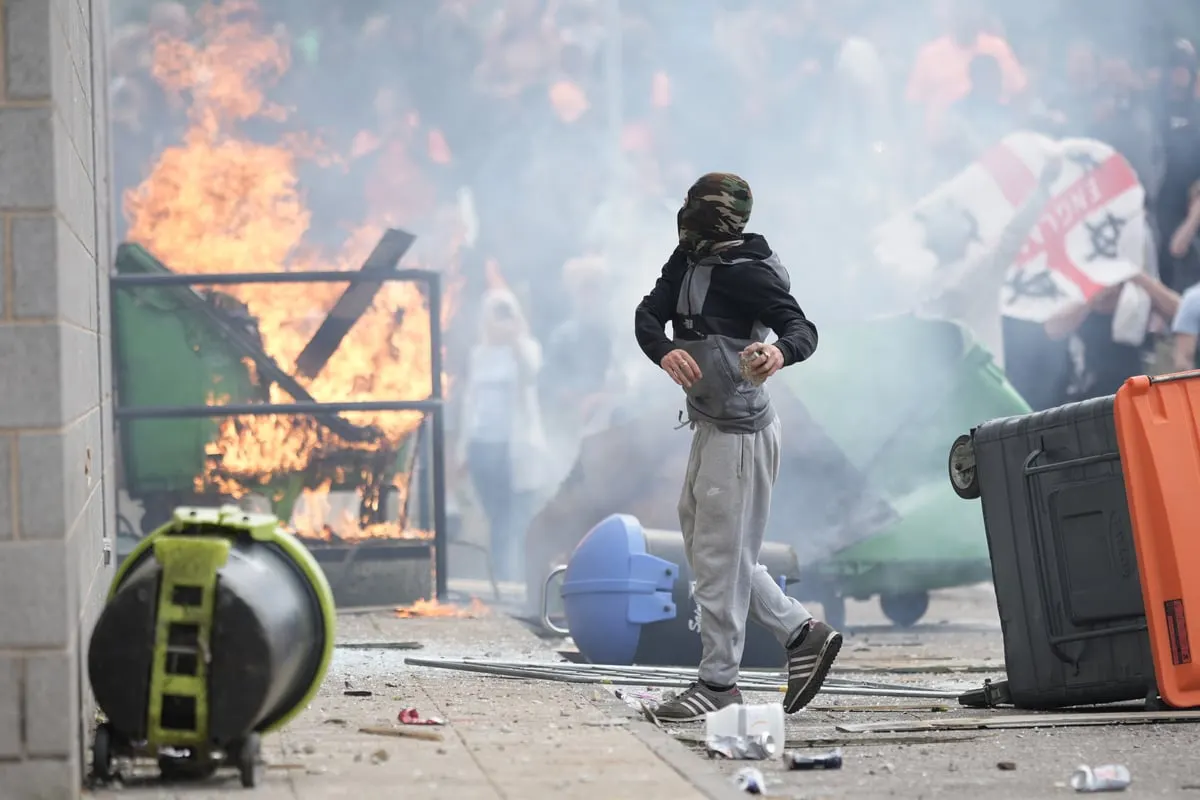
The Manvers riots of August 2024 outside an asylum facility in Rotherham led to two years of court proceedings that established a clear distinction: whilst people may hold strong political views on immigration and protest peacefully, the courts rejected using violence, intimidation, or attacks on emergency workers as acceptable means of expression. Judges consistently upheld this principle across numerous sentencing hearings, accepting that such concerns are legitimate without endorsing criminal conduct.
Participants from diverse backgrounds—employed professionals alongside those with prior convictions—were convicted based on individual responsibility for their specific actions rather than collective guilt. Modern surveillance technology including CCTV and body-worn cameras transformed the investigation, eliminating the anonymity that historically protected rioters and enabling systematic prosecution of individual offenders.
In short
- Manvers riots (August 2024) prompted two years of prosecutions establishing that violence cannot justify political expression on immigration
- Diverse participants faced individual accountability for specific actions; modern surveillance eliminated anonymity that historically protected rioters
- Courts upheld legitimate immigration concerns whilst drawing firm boundaries against violence and intimidation
Explained simply
In August 2024, riots broke out in Rotherham, South Yorkshire, outside an asylum facility at Manvers. The disorder was linked to tensions surrounding immigration policy and involved violence, property damage, and attacks on emergency workers.
The courts spent two years prosecuting those involved, establishing a clear principle: whilst people are entitled to hold and express strong views on immigration, violence and attacks on emergency workers are never acceptable forms of protest. Those convicted came from various backgrounds, but each was held individually responsible for their own actions rather than facing collective punishment.
The prosecution was enabled by modern surveillance technology, including CCTV and police body cameras, which removed much of the anonymity that historically protected rioters. Officers were consequently able to identify and prosecute individual offenders systematically, transforming how riot prosecutions could be conducted.