Technology news and discussion on TalkFuse.
The likely solution to the Riemann hypothesis by AI marks a turning point for mathematics
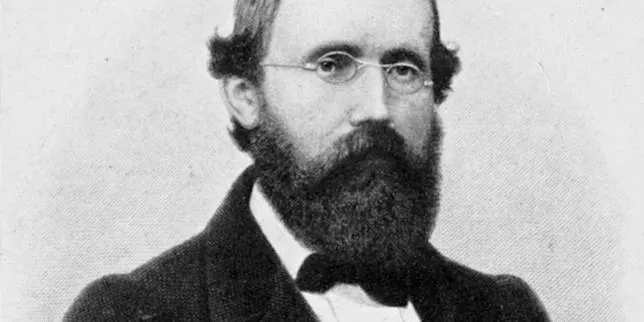
Anthropic mathematician Levent Alpöge says he and the company’s Claude AI have proved the Riemann hypothesis, a famous 1859 conjecture about the distribution of prime numbers. If independently confirmed, the result could mark a major milestone for AI-assisted mathematics, though researchers say it is too early to assess its impact.
The claim is set out as a formal proof in Lean, software that checks whether logical steps follow correctly. Mathematicians still need to confirm that it proves the intended theorem and translate it into a form people can assess; previous AI-assisted proofs have raised concerns about translation errors and possible software bugs. The Clay Mathematics Institute offers a $1 million prize for a solution, and Alpöge also claims his approach applies to related versions of the hypothesis.
In short
- An Anthropic mathematician says Claude helped prove the Riemann hypothesis.
- The formal proof still needs expert verification.
- A confirmed solution would reshape understanding of prime numbers.
Steelman: both sides, in good faith
The strongest fair case each way — we don't pick a winner.
The case for
If independent experts confirm the Lean proof and its translation, this could be a landmark result in number theory and a striking example of AI helping mathematicians solve a long-standing problem. Formal verification may also make complex arguments easier to check, while the claimed extensions could open further avenues of research.
The case against
A machine-checked proof is not by itself enough to establish that the intended theorem has been proved: experts must scrutinise the formalisation, its link to the mathematical claim, and the software involved. Until that review is complete, calling this a turning point risks overstating an unverified claim, and the broader impact of AI assistance remains uncertain.
Explained simply
Proposed by Bernhard Riemann in 1859, the Riemann hypothesis is an unsolved claim about how prime numbers are distributed. It links the primes to a function whose zeros follow a particular pattern; proving the claim would settle a question that has shaped number theory for more than a century.
Levent Alpöge is a mathematician at Anthropic, the company behind the Claude AI system. Lean is software that checks the logical steps in a formal proof, but mathematicians must still establish that the proof addresses the intended claim and can be understood and checked independently.
The Clay Mathematics Institute offers a $1 million prize for a solution. The claim also matters to the wider debate over whether AI can help produce reliable mathematical proofs, while any consequences for research depend on independent scrutiny.