World news and discussion on TalkFuse.
The Odyssey review – Nolan goes god-tier with breathtaking epic of men, monsters and moral metamorphosis
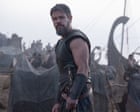
The Guardian’s review describes Christopher Nolan’s The Odyssey as a highly ambitious and visually grand retelling of Homer’s legend, centred less on heroic adventure than on the emotional and moral damage of war. It argues that the film reframes Odysseus’s journey home as a story about postwar trauma, showing how soldiers may physically return long before they recover psychologically, while families are left waiting and unable to move on. The reviewer sees this as giving the ancient myth modern relevance, with gods, hallucinations and flashbacks used to express inner anguish and dislocation.
Key details highlighted include Matt Damon as a sorrowful, battle-worn Odysseus, Anne Hathaway as Penelope, Benny Safdie as Agamemnon, Lupita Nyong’o as both Helen and Clytemnestra, Jon Bernthal as Menelaus, and Elliot Page as Sinon. The review says Nolan presents the Trojan war as being driven not by romance but by trade interests, and it praises the film’s large-scale Imax imagery, unusual visual treatment of the sea, and intense battle scenes shot by Hoyte van Hoytema. It also stresses that the Trojan horse sequence and the Greeks’ victory matter less than the bitter aftermath, with Odysseus’s long return portrayed as the true heart of the story.
In short
- Review hails Nolan’s film as a bold, traumatic war epic
- Odysseus’s journey is framed through PTSD and aftermath
- Damon leads a star-studded cast in a visually huge adaptation
Steelman: both sides, in good faith
The strongest fair case each way — we don't pick a winner.
The case for
Reframing the Odyssey as a story of postwar trauma is a valid and necessary artistic choice that gives the ancient myth contemporary meaning whilst honouring its core concerns. Odysseus's journey has always been fundamentally about psychological and emotional struggle beneath the surface of adventure—what the Guardian reviewer identifies as the 'true heart' of the story. By centering this theme and using modern cinematic language to express inner anguish, Nolan reveals truths about human suffering that the source material already contains, making it resonate with modern audiences who understand PTSD and invisible wounds.
The case against
Reframing Homer's Odyssey primarily through postwar trauma risks imposing a distinctly modern psychological framework onto an ancient text, potentially distorting its original thematic concerns around fate, perseverance, cunning and the heroic struggle against divine forces. By deprioritising the adventure narrative and mythological elements in favour of psychological damage, the adaptation may sacrifice what makes the Odyssey distinctive—its exploration of human agency against cosmic forces—in pursuit of contemporary relevance. Some argue that fidelity to the source material and its own world-view matters as much as modern resonance.
Explained simply
The Odyssey is an ancient Greek poem about Odysseus, a warrior who spends ten years attempting to return home to his wife Penelope after fighting in the Trojan War. The epic has inspired countless adaptations and retellings across art, literature and film, and remains one of the most influential stories in Western culture.
The traditional narrative emphasizes Odysseus's heroic struggles against monsters and gods during his journey. However, the story also contains elements about family separation, the cost of war, and the difficulty of moving on from conflict—themes that different interpreters emphasize in different ways.
Christopher Nolan, one of cinema's most ambitious filmmakers, has now adapted this classical source material for film. A major filmmaker's interpretation of an ancient myth often reveals much about how contemporary audiences understand their own times.