Entertainment news and discussion on TalkFuse.
The one singer Joni Mitchell didn’t want to influence anyone: “Not great”
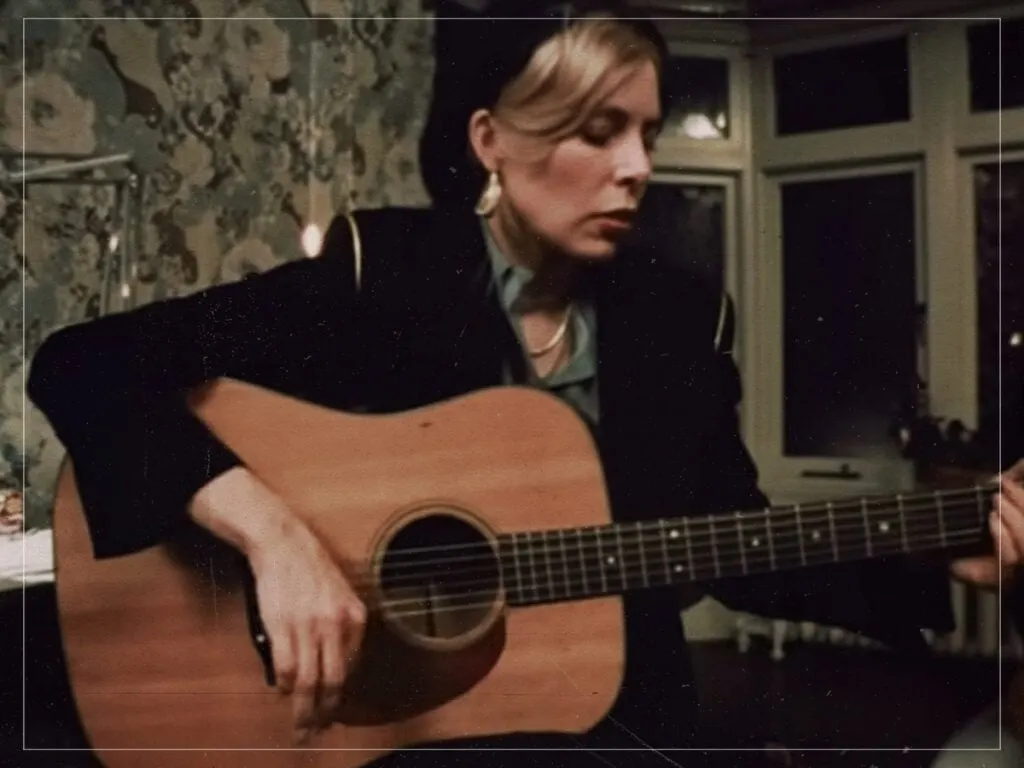
Joni Mitchell's artistic path led her away from mainstream pop music as industry trends shifted toward spectacle. After pioneering distinctive chord progressions and melodic complexity in folk-rock during the 1960s, she redirected toward jazz in the mid-1970s, accepting reduced commercial appeal in exchange for creative autonomy. By the 1980s and 1990s, she found mainstream and alternative pop spheres increasingly misaligned with her vision.
During the 1990s alternative movement, Mitchell expressed concerns that some artists were adopting her vocal techniques without advancing the underlying musicality. She pointed to Natalie Merchant of 10,000 Maniacs as an example of derivative artistry, noting that while Merchant emulated her vocal phrasing, the resulting songs lacked comparable harmonic and melodic depth. Despite this criticism, Mitchell acknowledged genuine innovation in artists like Björk and Fiona Apple, who she felt took substantive creative risks across their work.
In short
- Joni Mitchell expressed disapproval of artists she felt emulated her vocal style without developing substantive musical innovation during the 1990s alternative era
- She specifically cited Natalie Merchant as copying her vocal phrasing whilst building work on what Mitchell regarded as musically superficial foundations
- Mitchell remained appreciative of genuinely experimental artists like Björk and Fiona Apple who pursued greater creative complexity
Steelman: both sides, in good faith
The strongest fair case each way — we don't pick a winner.
The case for
Young artists learning vocal techniques from masters is how artistic traditions develop and is not inherently derivative. Merchant created a substantial body of work with 10,000 Maniacs that achieved both commercial success and critical respect on its own terms. Whether Merchant's compositions advanced harmonic complexity or achieved artistic meaning through different aesthetic choices is ultimately a matter of interpretive disagreement; many music critics and listeners could reasonably assess her work as a legitimate creative statement rather than mere technical emulation.
The case against
Genuine artistic innovation requires substantive advancement beyond adopting a predecessor's recognisable techniques, particularly in harmonic and melodic composition. Mitchell's distinction between artists like Merchant and genuine innovators such as Björk and Fiona Apple reflects a meaningful principle: the latter pursued genuine compositional risks whilst Merchant primarily employed established techniques without equivalent harmonic development. The alternative movement presented genuine creative possibilities for meaningful artistic advancement, making a difference between artists expanding the form and those primarily echoing established voices.
Explained simply
Joni Mitchell emerged as a singer-songwriter in the 1960s, combining folk and rock with unusual chords and intricate melodies. In the mid-1970s she moved towards jazz, a direction that brought her less mainstream success but gave her more room to pursue her musical interests.
By the 1990s, alternative music had brought a new generation of performers to wider audiences. Mitchell distinguished between artists who borrowed elements of her singing style and those she considered more musically adventurous, naming Björk and Fiona Apple as examples of the latter.