The remote Nepal-China border crossing at the heart of a Himalayan tragedy
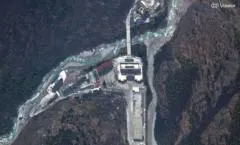
Devastating floods that tore through the remote Nepal-China border crossing on 26 August have left widespread destruction and hundreds of people unaccounted for, with authorities now piecing together who was actually present when the disaster struck. The crossing, linking Kathmandu and Tibet via the Friendship Bridge at Rasuwagadhi in Nepal and Gyirong on the Chinese side, is a historically busy route used by pilgrims, traders and tourists, and was described by a hydrologist as geologically vulnerable to sudden torrents of water, mud, boulders and ice.
CCTV footage captured the flood surging through Gyirong at 10:59:53 local time, while Nepal's immigration system logged its final border crossing just minutes earlier, at 8:35am local time. Records show 89 people had cleared Nepali immigration to leave for Tibet that morning, including 32 Indians, 12 Chinese nationals, nine Americans and citizens of Britain, Canada, Australia and Italy, but officials say hundreds more may have been waiting in the area, which was reportedly unusually busy. At least 275 Indians remain missing in Nepal, four immigration staff at Rasuwagadhi are among the missing or dead, and both the Friendship Bridge and surrounding buildings, including the trading settlement of Timure, were swept away.
In short
- Floods destroyed the Nepal-China border crossing at Rasuwagadhi/Gyirong on 26 August
- At least 275 Indians remain missing; immigration staff also lost
- Crossing was unusually busy with 300-400 people waiting that morning
Explained simply
Nepal and China are linked by a remote high-altitude crossing in the Himalayas, where the Friendship Bridge at Rasuwagadhi in Nepal connects to Gyirong on the Chinese (Tibetan) side. It is a long-used route for pilgrims, traders and tourists travelling between Kathmandu and Tibet, running through mountainous terrain that experts say is prone to sudden, violent floods carrying water, mud, boulders and ice.
On 26 August, a flood tore through this crossing, destroying the bridge and nearby settlements including the trading town of Timure. Because the area was busy with travellers and traders at the time, and border records only capture people who had formally crossed, it has been difficult for officials to establish exactly how many people were present and are now missing or dead.
The disaster has affected people from several countries, including Nepal, India, China and others, turning it into an international search-and-recovery effort as well as a humanitarian one. Its remoteness and reliance on immigration paperwork to track who was there also help explain why establishing the full scale of the tragedy has taken time.
Art Asia Culture Science World