The safest seat to sit on in a train: How to give yourself the best chance of surviving a train crash
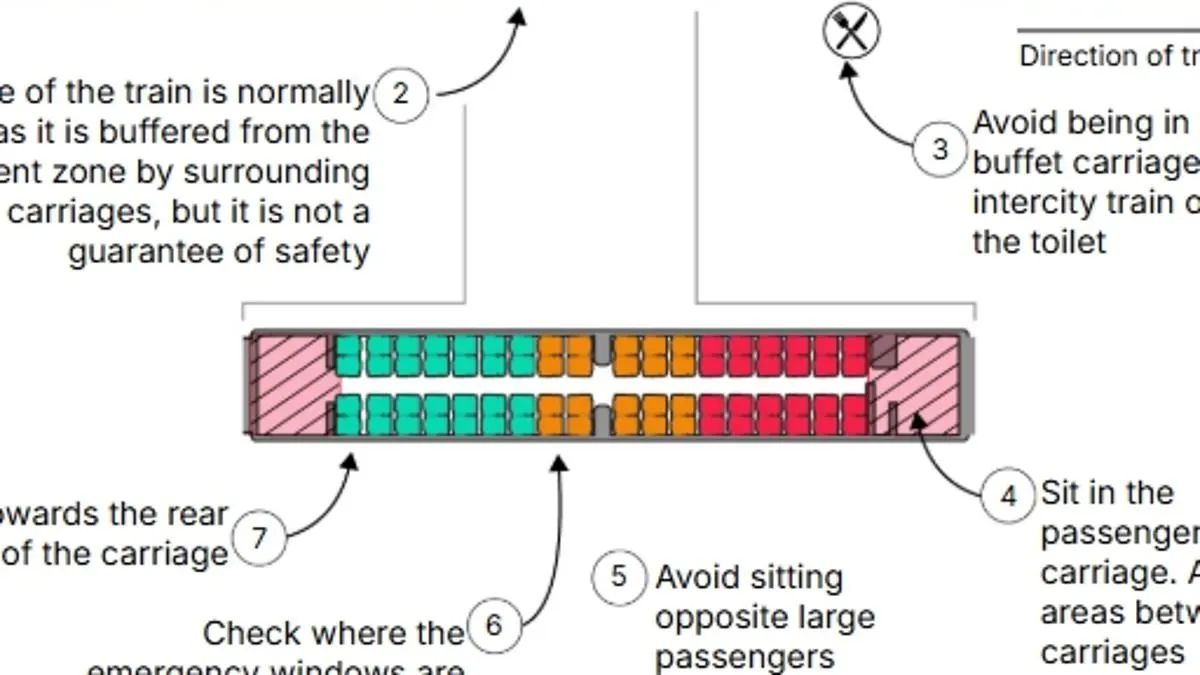
Safety guidance on choosing where to sit on a train has drawn attention after a collision in Spain killed 69 people and injured dozens. A health and safety consultant says the middle carriages are generally less exposed than the front or rear, while stressing that crashes are extremely rare and no seat can guarantee safety.
The advice also favours sitting rather than standing, avoiding sideways-facing seats near doors, and adopting an aeroplane-style brace position if a train starts to derail. Spain’s transport minister said a computer malfunction stopped trains along a 63km stretch, but a control centre ordered one train to resume without speed restrictions; it collided with a stationary train just over 20 minutes later. Investigations into the crash were continuing, and the death toll was expected to rise.
In short
- The middle carriages are generally considered less exposed in a crash.
- Experts advise sitting down and bracing if a train derails.
- A computer failure and restart order preceded Spain’s fatal collision.
Explained simply
Train crashes are rare, and the risks vary with the type of collision and the train involved. Safety advice often favours sitting in a middle carriage, which may be less exposed than the front or rear, though no position can guarantee protection.
Railways rely on signalling and control systems to keep trains apart and regulate their movement. Drivers, railway operators and transport authorities each have roles in responding when those systems fail; investigators examine what happened and whether procedures were followed.
The advice also reflects how passengers may be thrown or injured in a sudden impact: sitting down, avoiding some sideways-facing seats near doors and bracing if a train derails may reduce certain risks. It cannot prevent every injury, and emergency guidance may differ depending on the circumstances.