The secret to protecting next-gen spacecraft might be eggshells
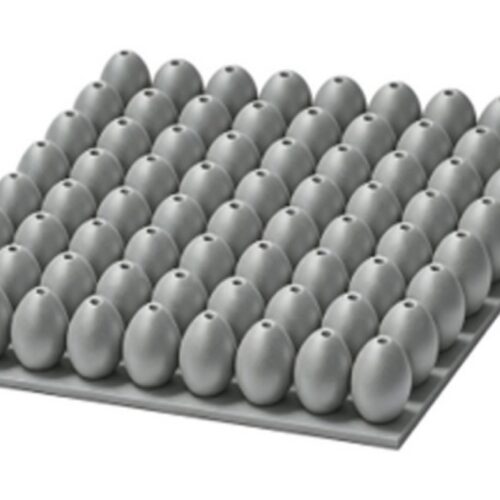
Chinese researchers have developed a 3D-printed aluminium material inspired by the structure of eggshells, which they say could offer improved protection for spacecraft against the growing threat of space debris. The problem has become more pressing as satellite constellations, telescopes and spacecraft proliferate in orbit, following incidents such as a 2007 debris strike that punched a bullet-like hole through a radiator panel on the space shuttle Endeavour. Eggshells have long attracted scientific interest for their crack resistance, a property linked to their ovoid geometry and layered structure of calcium carbonate crystals, protein and collagen, similar to tooth enamel or seashells.
The new study, published in the Journal of Applied Physics, found that aluminium arrays built in an eggshell-like pattern and filled with water were more effective at resisting impacts than conventional designs. This builds on decades of eggshell research, including MIT work showing that egg geometry affects rigidity and that horizontally oriented eggs absorb impact energy better than vertical ones. The findings are relevant given the scale of the debris problem: NASA estimated in 2021 that there are around 34,000 pieces of debris larger than 10cm in near-Earth orbit, roughly 900,000 pieces between 1cm and 10cm, and about 128 million smaller than 1cm, all posing risks due to the high velocities involved. Spacecraft are currently shielded using Whipple shields, which use a bumper layer to break up incoming debris before it reaches the hull.
- Eggshell-inspired aluminium material may better protect spacecraft from debris
- Chinese study published in Journal of Applied Physics tested water-filled aluminium arrays
- Space debris is a growing hazard, with millions of fragments in orbit