The Slate Truck is affordable because you have to ‘bring your own tech’
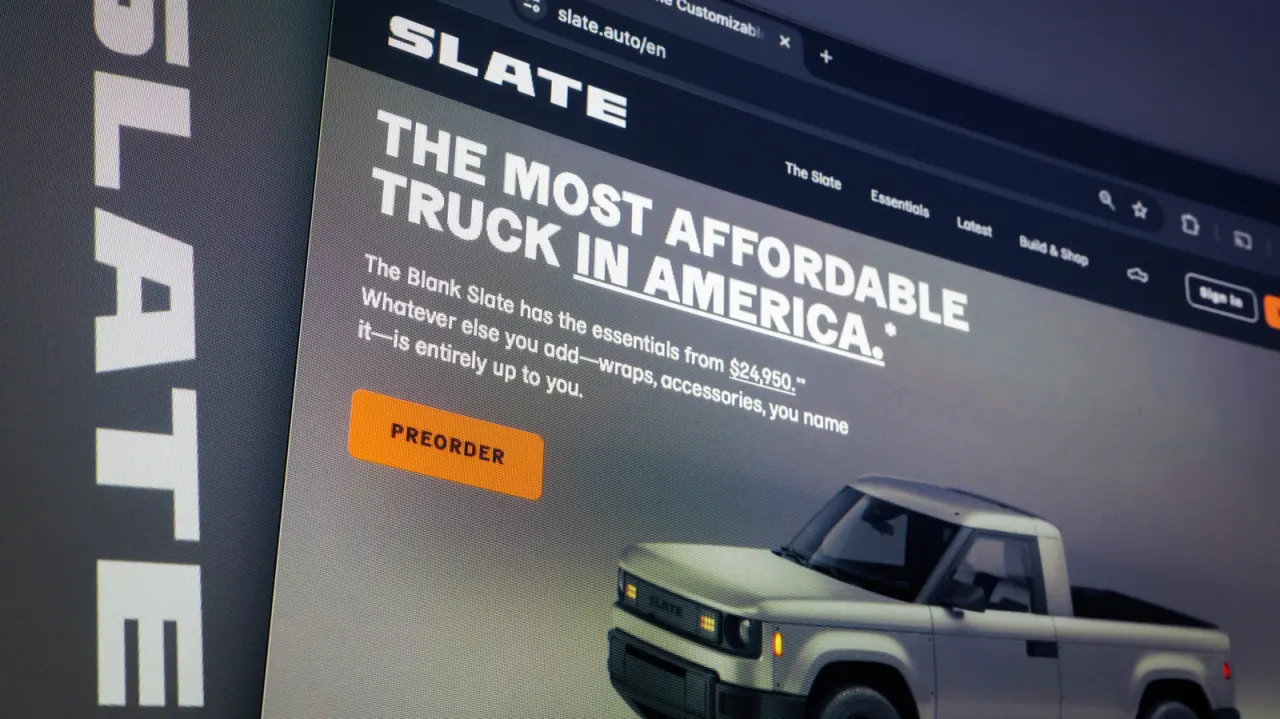
The Slate Truck, a new electric pickup backed by Jeff Bezos, achieves its low price by omitting a built-in infotainment system entirely, instead relying on owners to use their own smartphones or tablets as the centre console screen. The "bring your own tech" approach strips out what the startup calls a "bulky, distracting, and quickly outdated infotainment system," letting Slate market the vehicle as the cheapest pickup and most affordable EV in the American market before fees.
The base model, called The Blank Slate, starts at $24,950, with fully loaded configurations reaching up to $46,493. Rather than a built-in screen, the truck offers a phone mount with USB port and space for a portable Bluetooth speaker, while a small LCD behind the steering wheel serves as the legally required reversing camera. Additional features such as a tablet mount, speaker system (from $149.99 to $249.99), steering wheel Bluetooth controls, and a subscription-based $275 Telematics Module for remote functions are all sold separately, meaning the final price depends heavily on how buyers choose to customise it. The truck is also available in three body styles — pickup, SUV and fastback — with an optional open-air kit.
- Slate Truck skips built-in infotainment, using owners' own phones/tablets instead
- Base price is $24,950, rising to $46,493 with add-ons
- Extras like speakers, tablet mounts and telematics are sold separately
New here? Start with this
Electric vehicles often have large built-in screens for navigation, music and other functions. Slate is a US startup developing a small electric vehicle that can be configured as a pickup, SUV or fastback, with accessories sold separately.
The truck’s basic design leaves out a built-in infotainment screen. Drivers can use a phone or tablet instead, while a small display behind the steering wheel shows the reversing camera; mounts, speakers and connected features are optional extras.
Slate is backed by Jeff Bezos, the founder of Amazon. Its approach makes the starting price lower by leaving some equipment out, but buyers’ final costs depend on which extras they choose.
Both sides, in good faith
The strongest fair case each way — we don't pick a winner.
The case for
Omitting a built-in infotainment system can make the truck cheaper and avoid paying for screens and software that some buyers may find distracting or quickly outdated. Letting owners use devices they already own offers flexibility and may give them more control over upgrades, while optional extras keep the entry price low for people who want a basic vehicle.
The case against
A built-in screen and connected features are now part of what many buyers expect from a modern vehicle, and relying on personal devices may feel less integrated or convenient. Since useful features and accessories cost extra, the advertised base price may understate what some buyers will need to spend, and the approach shifts responsibility for the in-car technology experience onto owners.