Entertainment news and discussion on TalkFuse.
The Soulslike genre has grown stale after Elden Ring, and only FromSoftware can take it to strange new places
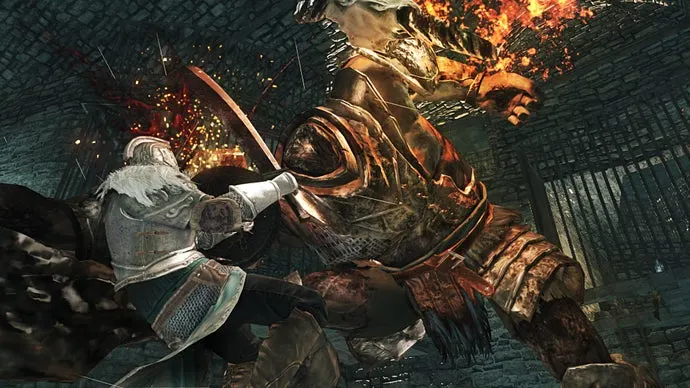
This is an opinion piece from Rock Paper Shotgun arguing that the "Soulslike" genre has grown stagnant in the years since FromSoftware's Elden Ring, with many imitators now feeling formulaic rather than fresh. The writer, a longtime fan of the genre since Dark Souls, contends that only FromSoftware itself seems capable of pushing the format into genuinely new territory, as other studios' efforts increasingly recycle familiar ideas rather than innovate.
The piece defines a Soulslike not as a direct clone but as an interpretation of Dark Souls' "DNA" — likening it to perfume houses producing "dupes" of a popular scent, each tweaking different notes. It identifies core hallmarks as tense risk-reward mechanics (losing collected souls on death, with one chance to reclaim them), sparse and variable checkpoints, and intricately designed, secret-laden maps. Using Team Ninja's Nioh as an example, the article shows how early imitators substituted FromSoftware's traits (open exploration, atmospheric storytelling) with their own strengths (mission structures, loot systems, faster combat), but suggests that the wider genre has since settled into repetitive patterns.
In short
- Opinion piece: Soulslike genre feels stagnant since Elden Ring's release.
- Only FromSoftware, the writer argues, can meaningfully reinvent the genre.
- Uses Nioh as an example of successful early genre reinterpretation.
Steelman: both sides, in good faith
The strongest fair case each way — we don't pick a winner.
The case for
After Elden Ring, the Soulslike market was flooded with games attempting to replicate its success by copying established conventions—the checkpoint system, the death mechanic, the challenging combat—without demonstrating the creative ambition that distinguished FromSoftware's work. FromSoftware's consistent ability to fundamentally reimagine the formula with each release, from Bloodborne to Sekiro to Elden Ring, suggests an innovative vision that contemporary competitors have struggled to match; most other studios' efforts feel like competent executions of an established template rather than genuine artistic evolution.
The case against
Declaring the genre stale overlooks meaningful innovations numerous developers have achieved within the Soulslike framework. Games like Stellar Blade, Nioh, and Lies of P have differentiated themselves through distinctive art direction, narrative approaches, and combat variations whilst maintaining the core appeal of challenging, skill-based gameplay. Confusing genre familiarity with stagnation misses the point: the market remains strong precisely because players appreciate both the established formula and the varied interpretations different studios bring to it, suggesting the genre retains genuine creative potential beyond FromSoftware.
Explained simply
A Soulslike is a type of action role-playing game shaped by ideas from FromSoftware’s Dark Souls series, though it need not copy it directly. These games often make players risk losing what they have gathered when they die, place checkpoints carefully, and build complex worlds with hidden routes and clues.
Different studios have adapted those ideas in their own ways. Team Ninja’s Nioh, for example, uses mission-based levels, plentiful equipment and faster combat, showing how a Soulslike can reflect its creators’ strengths as well as its influences.
FromSoftware made Elden Ring, an open-world game that brought the studio’s approach to a wider audience. The debate over Soulslikes matters because it asks how far other developers can reshape a popular formula while keeping what players value about it.
Entertainment Gaming Offbeat Software Technology Weird & Viral