Technology news and discussion on TalkFuse.
The Space Force is now seeking to buy up to $30 billion in rocket launches
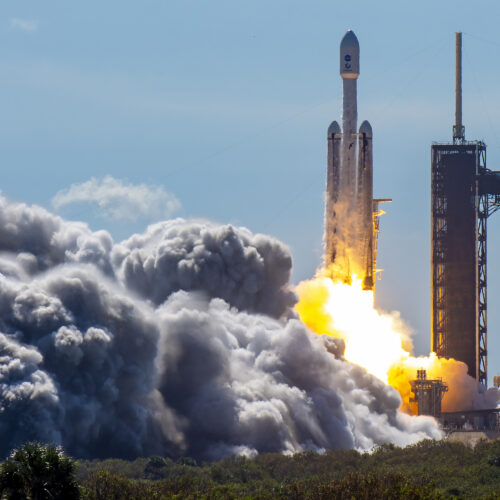
The US Space Force has tripled the maximum value of the Lane 1 portion of its National Security Space Launch (NSSL) Phase 3 contract, from $5.6 billion to $17 billion, reflecting a sharp rise in expected demand for military satellite launches. Combined with the Lane 2 contract, the programme's overall ceiling now exceeds $30 billion, a figure officials expect to grow further as the Pentagon adds missions tied to expanding satellite constellations and missile-defence plans.
The NSSL programme is split into two lanes: Lane 1 covers lower-risk missions such as rideshares and experimental payloads, open to a wider pool of commercial providers including SpaceX, ULA, Blue Origin, Rocket Lab, Stoke Space, Relativity Space and Impulse Space; Lane 2 covers higher-priority strategic missions, restricted to certified rockets, currently only SpaceX's Falcon 9 and Falcon Heavy and ULA's Vulcan. Lane 1 was originally set to cover around 30 missions, while Lane 2's $13.7 billion cap was meant to fund roughly 54 launches through 2029, though Space Systems Command identified 25 additional Lane 2 missions in April alone. Officials have not detailed every new mission driving the increase, but point to large SpaceX contracts for the Space Data Network and Airborne Moving Target Indicator satellite constellations, plus the Trump administration's proposed Golden Dome missile defence shield, as key factors.
In short
- Space Force triples Lane 1 launch contract cap to $17 billion
- Combined NSSL contract ceiling now tops $30 billion
- Rising demand driven by new satellite networks and Golden Dome missile defence
Steelman: both sides, in good faith
The strongest fair case each way — we don't pick a winner.
The case for
The expansion reflects genuine national security imperatives as satellite constellations become central to military operations, intelligence gathering and missile defence. The US must secure reliable, redundant launch capacity under domestic control to counter peer competitors and ensure strategic capabilities across the Space Data Network, Airborne Moving Target Indicator systems and advanced defence systems. A robust, domestically-controlled launch sector supports both military readiness and American industrial competitiveness in space.
The case against
The tripling of the budget without detailed public accounting for each new mission raises legitimate concerns about fiscal responsibility and procurement efficiency. Whilst space capabilities matter, the scale of increase and officials' inability to detail all driving missions suggests mission creep and excessive contractor costs rather than precisely calibrated defence needs. In an era of significant government debt, guaranteed contracts to a small provider group may prove less cost-effective than competitive commercial alternatives that the increasingly capable private space market can now provide.
Explained simply
The United States Space Force depends on commercial rocket companies to launch military satellites for defence and national security purposes. The National Security Space Launch programme is how the Pentagon pays these private providers to perform launches rather than developing its own launch capability.
NSSL operates through two separate contract streams. Lane 1 handles lower-risk missions such as experimental payloads and is open to several commercial providers including SpaceX, Blue Origin and Rocket Lab. Lane 2 covers more critical military missions and is currently limited to two rocket systems: SpaceX's Falcon 9 and Falcon Heavy, and United Launch Alliance's Vulcan rocket.
Military demand for satellite launches is increasing as the Pentagon expands its space capabilities. The Space Force plans to deploy new satellite networks for communications, data transmission and missile detection, whilst the Trump administration is developing additional defence initiatives that will require further launches.