World news and discussion on TalkFuse.
The start-ups hoping to return battery making to the US
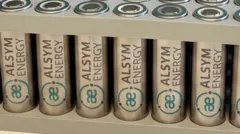
European heatwaves this summer boosted demand for battery storage systems, with San Diego-based startup Unigrid experiencing unexpected orders from Spain, France, Germany and the Netherlands for its home battery systems. This surge highlights the growing market opportunity for sodium-ion batteries, which could help return battery manufacturing to the United States and reduce dependence on China, where the lithium-ion supply chain is dominated.
Unigrid makes nine kilowatt-hour sodium-ion batteries that European homeowners are using to store cheaper off-peak grid power and run air conditioning during peak heat. The company expects to ship 1,000 units before the end of the year after its first 100 units. Sodium-ion batteries are attractive because they are potentially cheaper and safer than lithium-ion alternatives, work in extreme temperatures (down to minus 40C), and could be entirely manufactured in the US using US-sourced materials. However, concerns exist about safety, particularly regarding chromium-3 in Unigrid's cathode potentially forming toxic chromium-6, though the company argues this risk is overblown and has passed European safety certifications.
In short
- European heatwave drives demand for Unigrid's sodium-ion home batteries
- Sodium-ion batteries cheaper, safer alternative to lithium with US manufacturing potential
- Safety concerns remain about chromium-3 converting to toxic chromium-6
Steelman: both sides, in good faith
The strongest fair case each way — we don't pick a winner.
The case for
The story presents a compelling case for supporting sodium-ion battery development and manufacturing in the United States. These batteries offer genuine advantages—lower cost, superior performance in extreme temperatures, and the potential to be manufactured entirely with domestically sourced materials. The growing European market demand, driven by genuine infrastructure needs during heatwaves, demonstrates real commercial viability and the strategic importance of reducing US dependence on Chinese lithium-ion supply chains. With Unigrid already having achieved European safety certifications, the technology appears sufficiently mature to justify continued development and investment as part of broader efforts to rebuild American manufacturing capacity and energy independence.
The case against
Whilst sodium-ion batteries show commercial promise, a more cautious approach to scaling production is warranted. The potential safety concern regarding chromium-3 potentially forming toxic chromium-6 requires serious independent verification before widespread deployment; a single company's certification or assurances should not override rigorous safety scrutiny when human health is at stake. The technology remains relatively immature, and allowing enthusiasm for reviving US manufacturing to drive rapid expansion could lead to the deployment of systems whose long-term environmental and health impacts are not yet fully understood. A more measured strategy—prioritising comprehensive independent safety testing and controlled pilot programmes—would be more responsible than accelerating production based primarily on supply-chain and manufacturing location considerations.
Explained simply
Batteries are essential for modern energy systems, storing renewable power for homes and helping stabilise electrical grids. Battery manufacturing is currently dominated by China, which controls most of the global lithium-ion supply chain, leaving the United States dependent on foreign suppliers. This situation has prompted American companies to explore alternative battery technologies that could be manufactured domestically and strengthen energy independence.
Sodium-ion batteries offer an alternative to lithium-ion, which currently dominates the battery industry. They are potentially cheaper than lithium-ion batteries, operate reliably in extreme temperatures, and could be manufactured entirely in the United States using domestic materials. Developing this technology could reduce reliance on foreign battery imports and restore American manufacturing capacity.
Growing demand for battery storage systems, particularly as countries expand renewable energy infrastructure, is creating opportunities for alternative technologies. Start-ups developing sodium-ion batteries in the United States are positioned to capitalise on this market shift, particularly if they can demonstrate cost advantages and technical superiority. Success could encourage further investment in domestic battery manufacturing and reduce dependence on foreign suppliers.
Americas Art Celebrity Culture Entertainment Technology World