New releases, music videos and album news — indie, rap, rock and pop. Always covering Ren, Chris Webby, Sam Tompkins, bbno$, CHINCHILLA, Muse, Yungblud and more.
The three ‘firsts’ of Buffy Sainte-Marie, and the controversy that erased a fourth
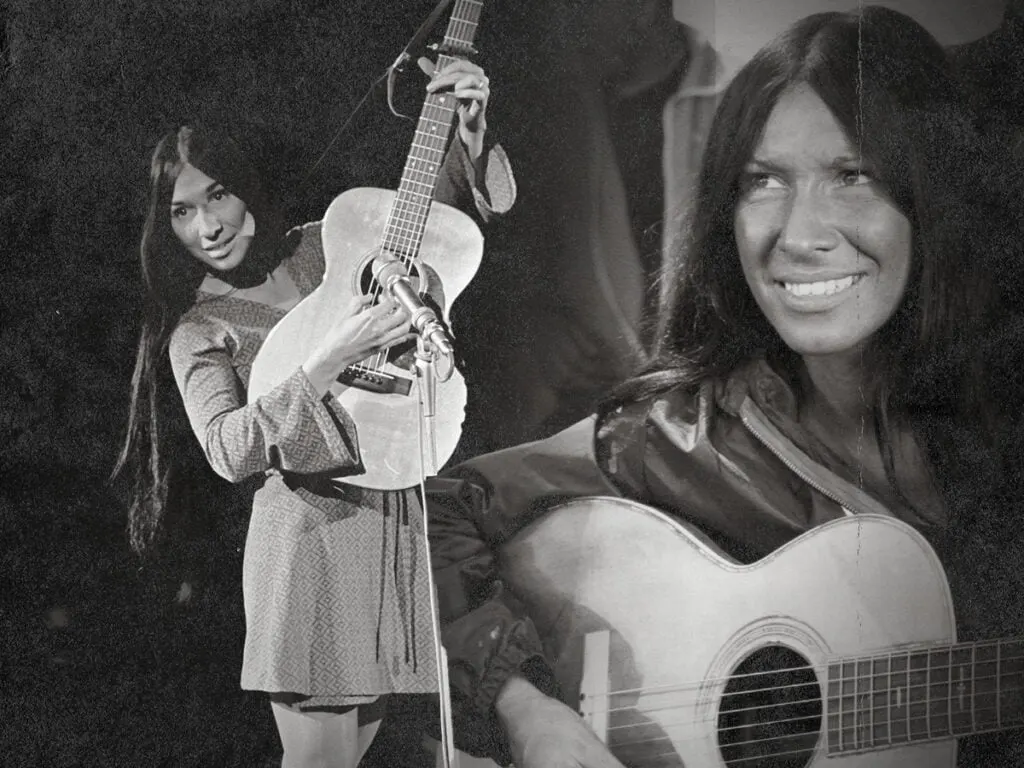
This article revisits the career of singer-songwriter Buffy Sainte-Marie, examining three genuine "firsts" she achieved in music and activism alongside a fourth claim that was later discredited. It draws a parallel with Sacheen Littlefeather, the activist who spoke on Marlon Brando's behalf at the 1973 Oscars, whose claimed Native American heritage was disputed by her family after her death in 2022, prompting scrutiny of other celebrated figures who had identified as indigenous, including Sainte-Marie.
Born in Massachusetts in 1941 to parents of English and Italian descent, Sainte-Marie presented herself from the 1960s onward as a full-blood Cree Indian said to have been born in Saskatchewan and later adopted by an American family. She built a celebrated career on this identity, becoming a revered figure in Canada who received 14 honorary doctorates, two Queen Elizabeth II Jubilee medals and the Companion to the Order of Canada, alongside acclaim for her 1964 debut album It's My Way, widely regarded as a landmark early singer-songwriter record. A 2023 Canadian Broadcasting Company documentary investigated "pretendian" claims against her, echoing the questions raised about Littlefeather and reopening debate over her true heritage and the honours built upon it.
In short
- Buffy Sainte-Marie's claimed Cree heritage was challenged by a 2023 CBC documentary.
- Comparison drawn with Sacheen Littlefeather, whose Native identity was disputed after her 2022 death.
- Sainte-Marie earned major Canadian honours and acclaim partly tied to her indigenous identity.
Steelman: both sides, in good faith
The strongest fair case each way — we don't pick a winner.
The case for
Those defending Sainte-Marie's claims emphasise the documented complexity of Indigenous identity, particularly where adoption and historical record-keeping are involved. They note her consistency in presenting this identity across fifty years and her substantial, genuine contributions to Indigenous music and causes, arguing that genealogical scrutiny may be unfairly applied to someone who built a real legacy within Indigenous communities. Her heritage claims, they suggest, warrant more charity than the parallel case of Littlefeather precisely because Sainte-Marie's whole career has been intertwined with these communities.
The case against
Those questioning her heritage point to genealogical research and family records reportedly documenting English and Italian ancestry, arguing that accepting unverified claims about Indigenous identity undermines the voices of actually Indigenous people. They maintain that public figures seeking recognition and honours based on claimed heritage bear responsibility for factual accuracy about fundamental identity claims, and that the scrutiny Sainte-Marie faces is justified not as bias but as necessary accountability, particularly given parallel cases where similar claims have proven false.
Explained simply
Buffy Sainte-Marie is a singer-songwriter and activist whose career began in the 1960s. Her debut album, It’s My Way, is regarded as an influential early example of the singer-songwriter style, and she became a prominent public figure in Canada.
For decades, Sainte-Marie described herself as Cree, born in Saskatchewan and adopted by an American family. She received major Canadian honours and was widely celebrated for her music and activism. The accuracy of her account of her Indigenous heritage has since been questioned, raising broader questions about identity and recognition.
Those questions gained attention after the family of activist Sacheen Littlefeather disputed her claimed Native American heritage following her death in 2022. A 2023 Canadian Broadcasting Corporation documentary then examined claims about Sainte-Marie, bringing renewed scrutiny to the story of her background and public career.