The true extent of Europe’s summer wildfires: Map reveals how more than 1.2 million hectares were extensively burnt in July and August alone
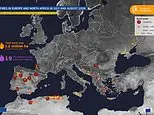
A new European Union map has revealed the true scale of this summer's wildfires, showing that more than 1.2 million hectares of land burned across Europe and North Africa in July and August 2026 alone. The blazes caused widespread devastation and displacement, with the Iberian Peninsula, southern France, Italy, Greece, the Balkans, Ukraine and Algeria all badly affected, in what is being described as one of the worst fire seasons on record.
The map, produced using European Forest Fire Information System data, tracks fires larger than 30 hectares, with nineteen blazes exceeding 10,000 hectares each. Separate research from the Potsdam Institute for Climate Impact Research warns the situation will worsen considerably, with the area burnt annually in Europe potentially rising by 193 per cent to 53,000 square kilometres under a high-emissions scenario by 2100, though scientists say improved fire management could cut this damage by up to 92 per cent depending on the level of warming.
In short
- EU map shows 1.2 million hectares burnt across Europe in July-August 2026
- Iberia, France, Italy, Greece, Balkans, Ukraine and Algeria worst hit
- Study warns burnt area could nearly triple by 2100 without action
Explained simply
Wildfires are a recurring risk in parts of Europe and North Africa, especially during hot, dry summers. The European Forest Fire Information System (EFFIS), an EU service, monitors larger fires and provides information about their size and spread.
The affected regions include countries around the Mediterranean, where heat, dry vegetation and wind can help fires spread. Fires can destroy homes and habitats, force people to leave their communities and put pressure on emergency services.
Researchers study how climate change and land management may influence future fire seasons. Their projections depend on how much the climate warms and on measures such as reducing flammable vegetation and preparing communities for fires.