Culture news and discussion on TalkFuse.
Arcola adaptation adds shocks but weakens Henry James’s psychological tension
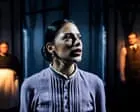
The Arcola Theatre in London is presenting Morgan Lloyd Malcolm's adaptation of Henry James's gothic novella "The Turn of the Screw," which adds contemporary jump scares and a new framing device featuring an unnamed man interrogating the governess's account of possessed children. Directed by Nicky Allpress, the slick, stylised production generates genuine shocks through sound design and visual invention, yet the additional narrative layers undermine rather than enhance the psychological tension at the heart of the original story.
The production features Amy Tara as the governess, with Kathleen McAuley Irvine and Toby Beynon as the children Flora and Miles. Matthew Cassar's elegantly gothic set of screens creates striking visual moments, and the casting of adult-looking children playing the roles adds an unsettling quality. However, the frequent interruptions from the interrogating character and the fragmented, non-linear storytelling repeatedly halt the build-up of dread, whilst the abundance of effects leads to repetitive scares. The final twist partially explains the framing device's purpose—exploring how women must defend their version of events—but the reviewer concludes that the production's self-conscious cleverness ultimately distracts from the story's deeper exploration of fear, desire and moral corruption. The production runs until 10 October.
In short
- Stylish adaptation adds jump scares and interrogation framing to James's classic
- Clever concept undermines psychological tension with too many interruptions
- Strong visuals and sound design cannot compensate for narrative over-complication
Steelman: both sides, in good faith
The strongest fair case each way — we don't pick a winner.
The case for
The adaptation can be defended as a way to make a familiar gothic story feel immediate for a contemporary audience, using sound, visual shocks and a questioning frame to keep viewers alert to how the governess’s account is judged. Its emphasis on a woman having to defend her version of events may also bring a meaningful new dimension to the story, while the stylised set and unsettling casting offer theatrical effects that prose cannot provide.
The case against
The case against the changes is that the original’s power depends on uncertainty and a gradual accumulation of psychological dread, which interruptions and non-linear scenes can dissipate. Repeated jump scares may substitute immediate shock for sustained unease, and the framing device’s ideas can feel over-explained when they divert attention from the novella’s ambiguity about fear, desire and moral corruption.
Explained simply
Henry James’s The Turn of the Screw is a late 19th-century ghost story told through the account of a governess hired to care for two children at a country house. She becomes convinced that the children are being visited by ghosts, but the story leaves room to question what she has seen and how reliable her account is.
Morgan Lloyd Malcolm’s adaptation is being staged at London’s Arcola Theatre, with Amy Tara as the governess and Kathleen McAuley Irvine and Toby Beynon as the children. Nicky Allpress directs a production that adds a man questioning the governess’s story, alongside stylised staging and sound effects.
The story’s uncertainty about the ghosts, the governess and the children is central to its reputation. The adaptation’s added framing device raises questions about whose account is believed, while its changes affect how the original’s suspense and themes are presented.
Culture Entertainment Horror Paranormal Weird & Viral
Read the full article at the source →
Originally published by The Guardian as “The Turn of the Screw review – Henry James’s classic ghost story with added jump scares”.