Business news and discussion on TalkFuse.
The ultimate eclipse chase: A Concorde raced against the Moon’s shadow
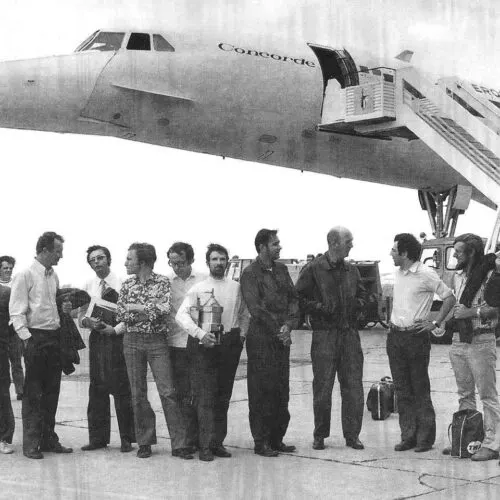
In June 1973, eight scientists used the Concorde 001 prototype to follow a total solar eclipse across Africa, extending their observation of totality to a record 74 minutes. The flight demonstrated how a supersonic aircraft could effectively chase the Moon’s shadow, providing far longer conditions for scientific study than were possible from the ground.
The idea came from astronomer Pierre Léna, who approached Concorde test-flight chief André Turcat after the prototype first flew supersonically in 1970. Flying at nearly 17 km altitude and more than twice the speed of sound reduced atmospheric humidity and improved infrared observations; by comparison, totality on the ground can last about 7.5 minutes at most, while the 12 August eclipse in Europe will offer just over two minutes.
In short
- Concorde 001 chased a 1973 eclipse for a record 74 minutes.
- Scientists gained far longer observing time than ground-based teams.
- High-altitude supersonic flight improved infrared viewing conditions.
Explained simply
A total solar eclipse occurs when the Moon passes between Earth and the Sun, briefly hiding the Sun from places along a narrow path. The period when the Sun is completely covered is called totality, and its duration depends on where the Moon’s shadow crosses the Earth.
Astronomer Pierre Léna proposed using a supersonic aircraft to stay with that moving shadow. He worked with André Turcat, the chief test pilot for Concorde 001, the prototype of the passenger aircraft.
At high altitude, the aircraft could also fly above much of the atmosphere’s moisture, which can interfere with infrared observations. Studying an eclipse from a plane offered scientists more time and different observing conditions than watching from the ground.
Business Markets Space Technology