Business news and discussion on TalkFuse.
The underwater harvest hoping for a bumper crop
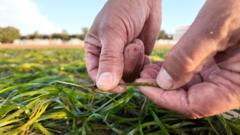
Volunteers and conservationists have been gathering seagrass seeds along the Solent coast near Southampton in an effort to restore Britain's badly depleted seagrass meadows, which play a significant role in absorbing carbon dioxide and supporting marine life. The early-morning harvest, timed to an exceptionally low tide, forms part of a wider restoration effort, as seagrass can absorb up to 35 times more carbon than an equivalent area of tropical rainforest while also providing habitat for thousands of marine species.
About 20 volunteers joined the pre-dawn search at Calshot Beach, led by Tim Ferrero of the Hampshire and Isle of Wight Wildlife Trust, sifting by hand and touch for spathes, the pod-like structures containing seagrass seeds. The UK has lost more than 90% of its seagrass meadows over the past century due to disease, disturbance and pollution. Once collected, the seeds are transported in seawater to the University of Portsmouth's Institute of Marine Sciences, where they undergo a process to separate them from the stems before eventually being replanted to help regenerate meadows elsewhere.
In short
- Volunteers hand-collected seagrass seeds at dawn near Southampton to restore meadows.
- Seagrass absorbs up to 35 times more CO2 than rainforest of equal size.
- UK has lost over 90% of its seagrass meadows in a century.
Explained simply
Seagrass meadows are underwater plants that grow in shallow coastal waters and have become increasingly rare in Britain. They are important because they absorb large amounts of carbon dioxide and provide homes for thousands of species of marine life.
The UK has lost more than 90 per cent of its seagrass meadows over the past century, mainly due to disease, pollution, and human disturbance. This loss has had serious consequences for the creatures that depend on these underwater meadows.
Conservationists and volunteers from organisations like the Hampshire and Isle of Wight Wildlife Trust are now working to restore the meadows by collecting seeds from existing beds and replanting them elsewhere. The seeds are collected by hand during low tides, processed at laboratories including the University of Portsmouth, and then returned to coastal waters to help bring back the meadows.
Business Markets Science UK World