‘Their Strength Through Joy conversation is killing me’: Samuel Beckett’s German diaries
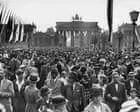
Samuel Beckett’s newly published German diaries reveal that, during a six-month journey through pre-war Germany in 1936–37, he closely observed and was disturbed by the growth of Nazism. The notebooks challenge the view that the future author of Waiting for Godot was detached from contemporary politics, showing instead his private resistance to Nazi language, rituals and propaganda.
Beckett travelled through around 30 towns and cities, including Hamburg, Berlin, Dresden and Munich, principally to see art and improve his German. He recorded Nazi slogans and the prevalence of the “Hitler coat”, mocked the Nazi salute by raising the wrong arm, and predicted after seeing Hitler’s effect on crowds that Germans would “need to fight soon (or burst)”. Editors say he was necessarily cautious because the diaries could have been confiscated, while his journey also followed the deaths of his cousin Peggy Sinclair in 1933 and his father.
In short
- Beckett’s diaries show close, uneasy attention to Nazi Germany.
- The notebooks overturn assumptions that he ignored politics.
- He documented propaganda while quietly resisting Nazi conformity.
Steelman: both sides, in good faith
The strongest fair case each way — we don't pick a winner.
The case for
These diaries reveal Beckett as morally and intellectually engaged with contemporary history, maintaining ethical clarity whilst observing Nazism's growth. His private critical observations demonstrate that he actively questioned the ideology he witnessed, challenging any notion he was indifferent to politics. Understanding his opposition to fascism, recorded in dangerous circumstances, enriches our comprehension of his character and the values underpinning his work.
The case against
Whilst Beckett clearly opposed Nazism, private diary observations don't constitute meaningful political engagement without evidence of broader public action or impact. Many Europeans held similar private reservations; what distinguished politically significant figures was sustained public commitment and documented influence on events. These diaries remain valuable for illuminating his personal thoughts, but they don't necessarily demonstrate the kind of political resistance that should substantially revise how we understand his historical role.
Explained simply
Samuel Beckett was an Irish writer who later became known for plays such as Waiting for Godot. In 1936–37, he travelled around Germany to visit art galleries and improve his German, as the Nazi Party and Adolf Hitler tightened their grip on the country.
The Nazi regime promoted its ideas through slogans, public ceremonies and mass rallies, while persecuting people it regarded as enemies. Beckett’s private notebooks recorded the language and rituals he encountered, offering a view of how one visitor responded to the political changes.
The diaries also belong to a difficult period in Beckett’s life, following the deaths of his cousin Peggy Sinclair and his father. They matter because they add evidence about his political awareness before he became a celebrated writer.