Entertainment news and discussion on TalkFuse.
“There’s a huge amount to be learned” – how the pioneering years of gaming are being preserved for a new generation in a corner of south London
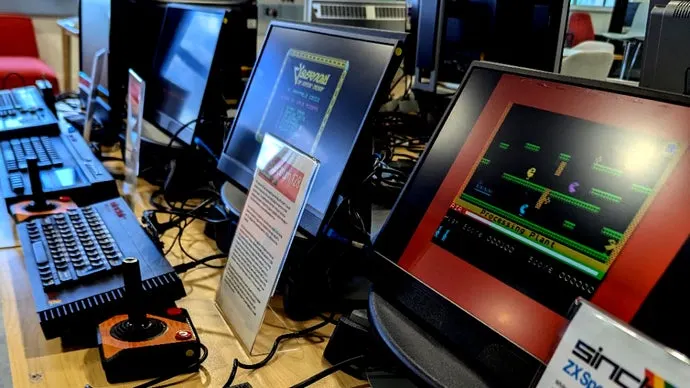
Kingston University’s free Archive of Retro Computing exhibition in south London is presenting more than 65 historic computers and consoles, tracing gaming and home computing from the mid-1970s to more recent machines. Led by computer science course leader Paul Neve, the collection aims to preserve a formative period of technology and help new audiences understand the systems that shaped modern gaming.
Neve began collecting after helping exhibit a large haul of equipment recovered from an engineer’s house in 2004, then expanded it with machines he had wanted as a child. The archive now contains roughly 70 to 80 systems, including Sinclair and Commodore computers, PS1 and PS2 consoles, the original Xbox, Dreamcast, Fairchild Channel F and Vectrex. The display reflects both familiar British home-computing history and rarer “unicorn” hardware.
In short
- Kingston University is exhibiting over 65 retro computers and consoles.
- The archive preserves gaming technology from the 1970s onwards.
- Its creator built the collection from personal passion and rescued history.
Explained simply
Home computers and games consoles became household technology from the 1970s onwards, as machines from companies such as Sinclair and Commodore brought computing into people’s homes. Later consoles, including Sony’s PlayStation and Sega’s Dreamcast, helped shape the games industry familiar today.
Kingston University’s Archive of Retro Computing brings together examples from these early decades, from well-known British machines to rarer systems. Computer science course leader Paul Neve started the collection after helping display equipment recovered from an engineer’s home in 2004.
Preserving the machines gives students and visitors a chance to see how home computing and gaming developed over time. It also helps keep a record of the hardware that influenced later technology and games.