World news and discussion on TalkFuse.
Theresa May urges Andy Burnham to accept Brexit as Blair sets conditions for rejoining EU
Developing story first seen 2 hours ago
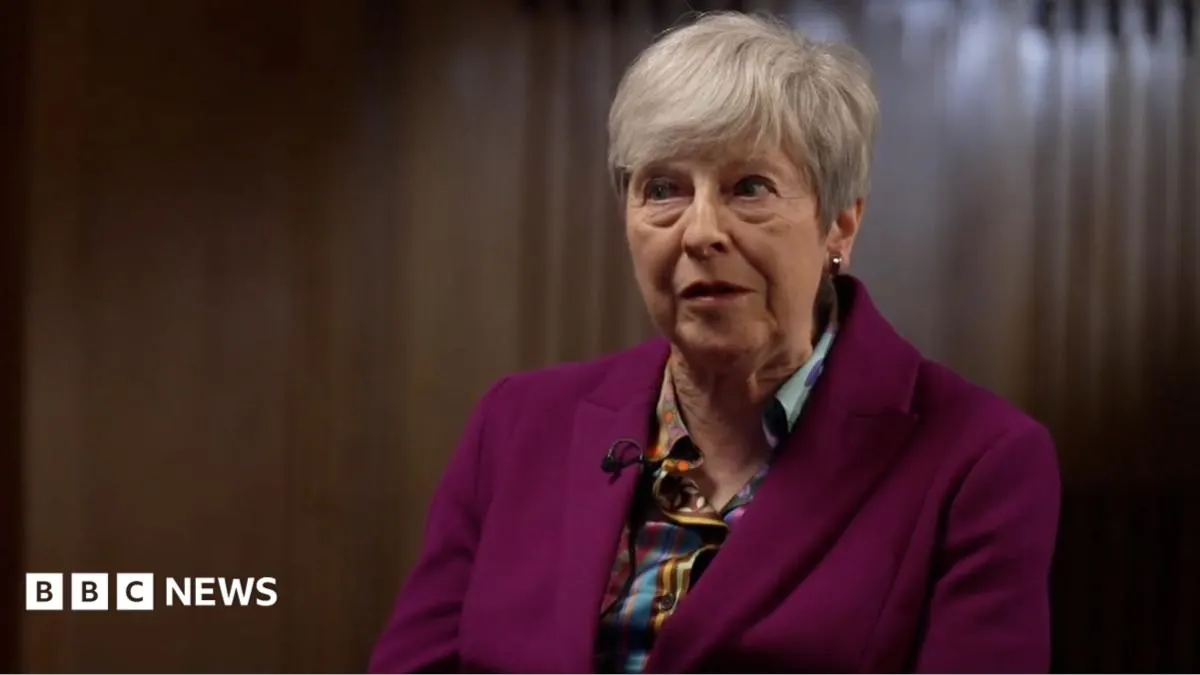
The new coverage adds Tony Blair’s view that the UK should rejoin the EU only if the bloc reforms to allow more technological innovation. His comments come as Theresa May has again urged Andy Burnham to accept Brexit and focus on current challenges, saying she is “aghast” at talk of rejoining.
May argued that reopening the question could suggest voters had got Brexit wrong and should vote again. She recalled the years of negotiations she led as prime minister from 2016 to 2019; MPs rejected her withdrawal deal and she resigned. Burnham recently called a UK-EU agreement covering food exports, emissions trading and a youth experience scheme a “win-win”.
- Sources
- 2
- Outlets
- 2
- Left · Centre · Right
- 0 · 1 · 1
In short
- Blair says EU reform should precede any UK return.
- May urges Burnham to accept Brexit and move on.
- Burnham calls a recent UK-EU deal a “win-win”.
How this story developed
- 35 minutes ago May’s intervention followed Keir Starmer’s call to explore Britain’s future ties with the EU, and Blair added that Brexit was a mistake but rejoining should depend on EU reform.
- 40 minutes ago Tony Blair said the UK should consider rejoining the EU only if it changed to support more technological innovation, while Theresa May urged Andy Burnham to accept Brexit and concentrate on present challenges.
Full account
Theresa May has urged Andy Burnham to accept the result of the 2016 Brexit referendum and focus on current economic and security challenges, as Tony Blair set out conditions for any future UK bid to rejoin the European Union. Their comments follow renewed discussion of the UK’s relationship with the bloc at a Brussels summit, where the prime minister called for leaders to brainstorm options for its future.
May, prime minister from 2016 to 2019, said she was aghast at the prospect of reopening negotiations over EU membership. Drawing on her experience of leading the government through years of talks, she argued that negotiations would consume time across the whole government, from ministers to officials, and would require the UK to press hard for its aims. Her message to Burnham was that voters had chosen Brexit and the country should move on.
She also warned that another public vote could be seen as telling people they had made the wrong choice. May characterised Burnham’s approach as patronising voters by inviting them to reconsider their decision until they gave what he regarded as the right answer. She said the priority should instead be to make the UK stronger economically and in security, while widening opportunities.
May had backed Remain before becoming prime minister, but in office she sought to implement the referendum result. The withdrawal deal she negotiated was rejected by MPs, and she left office in 2019. In 2023, she said the country would have been better off had Parliament supported her agreement, which included proposals for a possible second referendum and a temporary customs union, alongside commitments on workers’ rights and environmental protections.
Blair, the former Labour prime minister, offered a separate qualification to the argument over closer EU ties: according to the second report, he said the UK should only seek to rejoin if it were more willing to embrace technological innovation. Burnham has reportedly suggested that a commitment to rejoin could feature in Labour’s next election manifesto. The reports describe his EU reset as attracting support among some Labour MPs while also prompting concern elsewhere in the party and government.
The accounts differ in emphasis and detail. The first centres on May’s BBC interview and her objections to reopening the membership question, including her warning against a further vote. The second frames her intervention as a warning of renewed political turmoil and adds Blair’s position, Burnham’s reported manifesto suggestion, and reactions within Labour and the Cabinet. The supplied second report ends mid-sentence, so it does not provide the full account of David Cameron’s reported remarks.
Where outlets differ
From the full account, which is AI-written from the sources:
Source 1 focuses on May’s BBC interview, her experience of the withdrawal negotiations, and her criticism of a possible second vote. Source 2 presents the issue as a risk of renewed Brexit conflict and adds Blair’s condition concerning technological innovation, Burnham’s reported manifesto position, and political reactions. It also mentions David Cameron, but the supplied text cuts off before completing that point.
The reports use different descriptions of the Brussels discussions: Source 1 refers to the prime minister wanting to brainstorm future relationship options, while Source 2 says Burnham championed a reset and also notes the prime minister’s call to brainstorm. The supplied material does not fully clarify how those roles relate.
Centre outlets 1
- Theresa May urges Andy Burnham to accept Brexit as Blair sets conditions for rejoining EUBBC Politics
Only here: andy, accept, blair, sets, conditions
Right-leaning outlets 1
Only here: people, voted, move, vows, brainstorm
Every side used: theresa, urges, burnham, brexit
Headline columns compared word for word; nothing in them is AI-written.
Steelman: both sides, in good faith
The strongest fair case each way — we don't pick a winner.
The case for
Reconsidering the UK’s relationship with the EU could respond to changed economic and political circumstances, and exploring closer ties need not mean immediately seeking to rejoin. Advocates may argue that open discussion allows the country to weigh practical benefits and costs, while Blair’s call to consider EU reforms recognises that any future arrangement should reflect current conditions.
The case against
May’s case is that the 2016 referendum settled a major question and reopening it could undermine public trust by suggesting voters made the wrong choice. After years of divisive debate and difficult negotiations, she argues that government should focus on present challenges rather than revive a dispute that could consume political attention without securing agreement.
Coverage · 2 sources
Bias meters
From 2 rated sources.
Europe Government Politics World
Read the full article at the source →
Originally published by BBC Politics as “Theresa May ‘aghast’ at Burnham’s EU plans and says ‘Brexit is done’”.