Culture news and discussion on TalkFuse.
‘They’re thinking about the likes’: deadly TikTok motorway trend horrifies Ireland
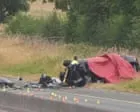
A collision on the M9 motorway in County Kildare, Ireland, has killed five teenage boys and left a mother, her young son and two aunts seriously injured, sparking outrage over a TikTok trend in which young men film themselves driving recklessly, including going the wrong way down motorways, in pursuit of online attention. The case has reignited debate in Ireland over policing, criminal justice, social services and the regulation of social media platforms, as commentators question why the boys sought notoriety through such dangerous behaviour and how society failed to intervene sooner.
Police believe the boys, driving a stolen BMW after breaking into homes and cars, tried to bait police into a chase before crashing head-on into a Hyundai on the wrong side of the M9 at around 3am on 16 August, injuring sisters Ella Hendricken, Niamh Kinsella and Alma Kinsella, and Alma's seven-year-old son, who were travelling to Dublin airport for a wedding. The five boys who died — Joe Carthy, 15, Kamil Pustkowski, Jack Kennedy and Alex McCarthy, all 17, and Jeremy O'Brien, 18 — were known to police, with three also known to child welfare agency Tusla, and several had previously posted videos of reckless driving online. A fundraiser for the injured family has raised more than €660,000, while online reaction to the boys' deaths has been sharply divisive, with abusive commentary prompting relatives to withdraw from public view.
In short
- Five teenage boys died in a wrong-way M9 motorway crash in Ireland.
- Crash linked to a TikTok trend of filming reckless, dangerous driving.
- Case sparks debate on policing, social services and platform regulation.
Steelman: both sides, in good faith
The strongest fair case each way — we don't pick a winner.
The case for
These young people were vulnerable adolescents whose impulses toward risk-taking and status-seeking were systematically amplified by social media platforms designed to maximise engagement, with algorithms rewarding increasingly dangerous content. Several had prior contact with police and social services, suggesting critical intervention points were missed. Society should focus on addressing how digital platforms exploit adolescent psychology, improving early intervention systems, and creating conditions where young people don't feel compelled to perform dangerous acts for online validation.
The case against
These were teenagers—some legally adults—who made serious deliberate criminal choices that resulted in five deaths and catastrophic injuries to an innocent family, including a seven-year-old child. Whilst we can discuss systemic factors and prevention, a functioning society requires accountability for serious crimes and significant consequences. Individual responsibility and choice matter greatly here. The focus must remain on the reality of deliberate dangerous criminal behaviour and on justice for the innocent victims.
Explained simply
TikTok is a video-sharing app where clips can attract large audiences and likes. The reported trend involves young men posting footage of dangerous driving to gain attention, sometimes by driving the wrong way on motorways or trying to draw police into a chase.
The crash has brought renewed attention to how police respond to dangerous driving, how Ireland’s criminal justice and child welfare systems deal with young people at risk, and what responsibility social media platforms have for harmful content. It has also prompted debate about the online abuse directed at the families involved.
Art Culture Technology Trending Weird & Viral