World news and discussion on TalkFuse.
Xi hosts Trump and Putin as summit tests China’s diplomacy
Developing story first seen 7 hours ago
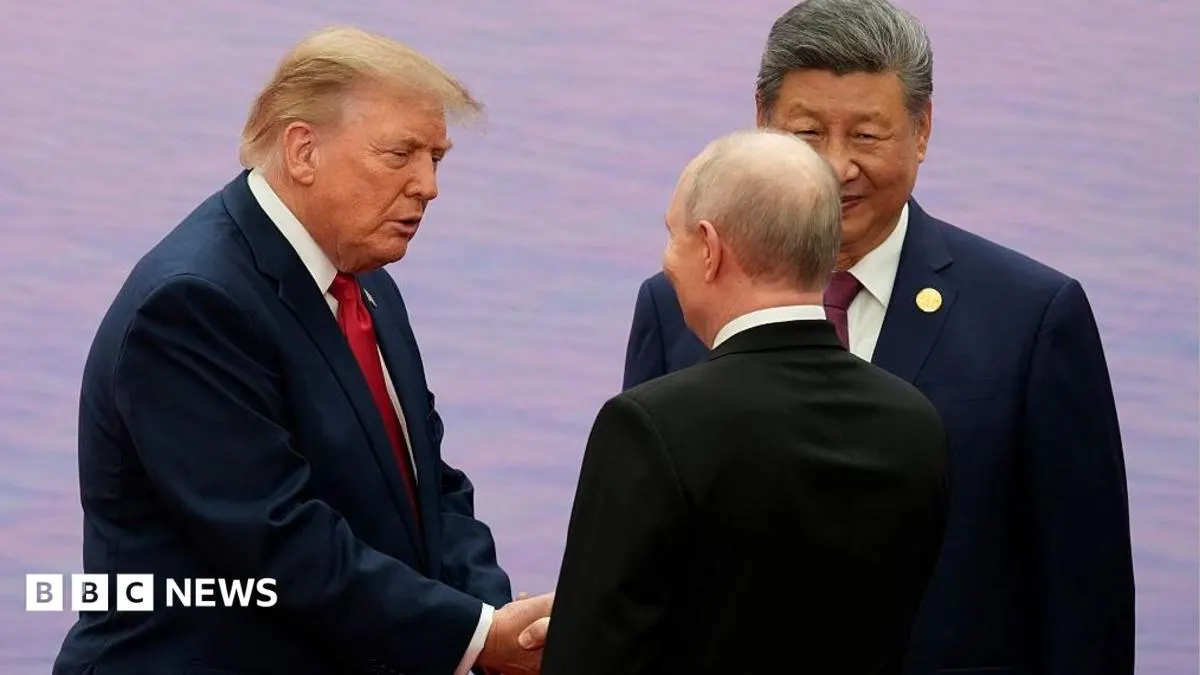
New coverage says Donald Trump wants the summit with Xi Jinping and Vladimir Putin to address limits on nuclear weapons, adding a sensitive issue to a meeting already testing China’s diplomacy. The talks could expose a gap between Xi’s ambition to present China as a global leader and Beijing’s refusal to join restrictions designed for the much larger US and Russian arsenals.
The leaders are meeting in Shenzhen on the sidelines of an Asia-Pacific economic summit, which Xi is also using to showcase China’s influence. He is balancing close ties with Russia against China’s important trade links with Europe, while seeking to keep the war in Ukraine off the agenda. The last major US-Russian arms control treaty, New START, expired in February, and China’s expanding nuclear arsenal has raised concern in Washington.
- Sources
- 6
- Outlets
- 5
- Left · Centre · Right
- 1 · 1 · 2
In short
- Trump wants nuclear limits discussed at the summit.
- China resists joining US-Russian arms restrictions.
- Xi is balancing ties with Russia and Europe.
How this story developed
- 17 minutes ago Coverage continued to focus on Trump’s nuclear arms proposal, with China’s expanding arsenal and the February expiry of New START underscoring the challenge for Xi.
- 22 minutes ago The leaders’ talks were held alongside an Asia-Pacific economic summit, giving Xi another platform to showcase China as he sought to keep Ukraine off the agenda.
- 1 hour ago Trump had said he wanted nuclear weapons limits discussed, sharpening tensions as Beijing resisted restrictions designed for the much larger US and Russian arsenals.
- 2 hours ago Xi Jinping hosted Donald Trump and Vladimir Putin in Shenzhen, using the historic summit to project China’s diplomatic influence while facing pressure over Ukraine and arms control.
- Meduza ‘Who’s that? He’s my friend’: Trump greets Putin at summit in China as the two hold 40-minute meeting
- Fox News Trump's China trip: Historic Xi-Putin talks, 'superintelligence' boast and other top moments
- Al Jazeera The Xi-Putin-Trump summit will not be a ‘new Yalta’
- Kyiv Independent What China hopes to gain from the Trump-Putin summit
- BBC World Xi hosts Trump and Putin as summit tests China’s diplomacy
- Fox News Trump's historic summit with Xi, Putin marks diplomatic milestone, but breakthroughs remain elusive
Full account
Chinese President Xi Jinping is hosting Donald Trump and Vladimir Putin in Shenzhen for a trilateral meeting on the sidelines of the Asia-Pacific Economic Cooperation summit. The gathering brings the leaders of the United States, Russia and China together in a setting organised by Beijing, putting Xi at the centre of a high-profile diplomatic moment.
The meeting follows a roughly 40-minute conversation between Trump and Putin. Trump described the Russian president as a friend and said he hoped their relationship could lead to positive outcomes. Putin did not speak publicly during the encounter. Both leaders declined to comment afterwards; Putin’s aide Yuri Ushakov said they had focused mainly on Ukraine and treated the discussion as preparation for the meeting with Xi.
The summit is taking place amid competing pressures on Beijing. China has called for negotiations to end the war in Ukraine while avoiding condemnation of Russia’s invasion. It seeks to preserve ties with Moscow, a neighbouring ally, while maintaining access to European markets. The source reports that the United States and European governments have accused China of supplying Russia with goods that could support its war effort and of sustaining its economy through energy purchases; Beijing’s position is that it is neutral.
Arms control is another potential point of tension. Trump has said he wants the leaders to discuss limiting nuclear weapons, and has argued that China should be included in any new agreement. The last major US-Russian arms control treaty, New START, expired in February, while China’s growing nuclear stockpile has drawn concern in Washington. Beijing has resisted joining a pact on the same terms, pointing to the difference in the size of its arsenal compared with those of the United States and Russia.
The reports frame the event differently. The first presents the trilateral summit as a test of Xi’s effort to raise China’s diplomatic standing, and stresses the risks posed by Ukraine and nuclear arms control. The second focuses on the Trump-Putin meeting beforehand, including Trump’s warm remarks, Putin’s silence and Ushakov’s account of their discussion. It does not describe the trilateral meeting’s outcome.
Where outlets differ
Centre outlets 1
Only here: hosts, tests, diplomacy
Right-leaning outlets 2
- Trump's China trip: Historic Xi-Putin talks, 'superintelligence' boast and other top momentsFox News
- Trump's historic summit with Xi, Putin marks diplomatic milestone, but breakthroughs remain elusiveFox News
Only here: historic, trip, talks, superintelligence, boast
Every side used: putin, trump, summit
Headline columns compared word for word; nothing in them is AI-written.
Steelman: both sides, in good faith
The strongest fair case each way — we don't pick a winner.
The case for
A summit that brings Trump and Putin together gives Xi an opportunity to encourage dialogue on nuclear risks and show that China can help address disputes that other powers have struggled to manage. Discussing arms limits could be valuable after the expiry of New START, while Beijing’s position that it should not face the same limits as countries with much larger arsenals reflects a claim to fair and proportionate treatment.
The case against
China’s effort to present itself as a diplomatic broker may be undermined if the leaders’ disagreements produce no progress, or if the meeting lets Russia avoid scrutiny over Ukraine. From this perspective, putting nuclear limits on the agenda is useful only if it leads to credible commitments; China’s refusal to accept limits designed for larger arsenals could make that harder, even as its own nuclear capability grows.
Explained simply
China, the United States and Russia are among the world’s most powerful countries, and their leaders meet against the backdrop of Russia’s war in Ukraine and wider tensions between Washington and Beijing. China has close ties with Russia, while also relying on trade and economic links with Europe.
Nuclear arms control means agreements that limit countries’ nuclear weapons. The United States and Russia have the largest nuclear arsenals, while China’s is growing; Beijing says limits drawn up for the larger arsenals should not automatically apply to China.
Arms control has long been discussed through agreements between Washington and Moscow. The expiry of New START, the last major US-Russian treaty of this kind, has renewed concern about whether the two countries will face limits on their nuclear weapons.
Coverage · 6 sources
Bias meters
From 4 rated sources, 2 unrated.
- BBC WorldCentreXi hosts Trump and Putin as summit tests China’s diplomacy
- Meduza‘Who’s that? He’s my friend’: Trump greets Putin at summit in China as the two hold 40-minute meeting
- Fox NewsRightTrump's China trip: Historic Xi-Putin talks, 'superintelligence' boast and other top moments
- Al JazeeraLeftThe Xi-Putin-Trump summit will not be a ‘new Yalta’
- Kyiv IndependentWhat China hopes to gain from the Trump-Putin summit
- Fox NewsRightTrump's historic summit with Xi, Putin marks diplomatic milestone, but breakthroughs remain elusive
Read the full article at the source →
Originally published by BBC World as “This is a remarkable diplomatic moment for China’s Xi – but it comes with pitfalls”.