‘This is not an anti-tech town’: backlash to datacenter in city once home to IBM
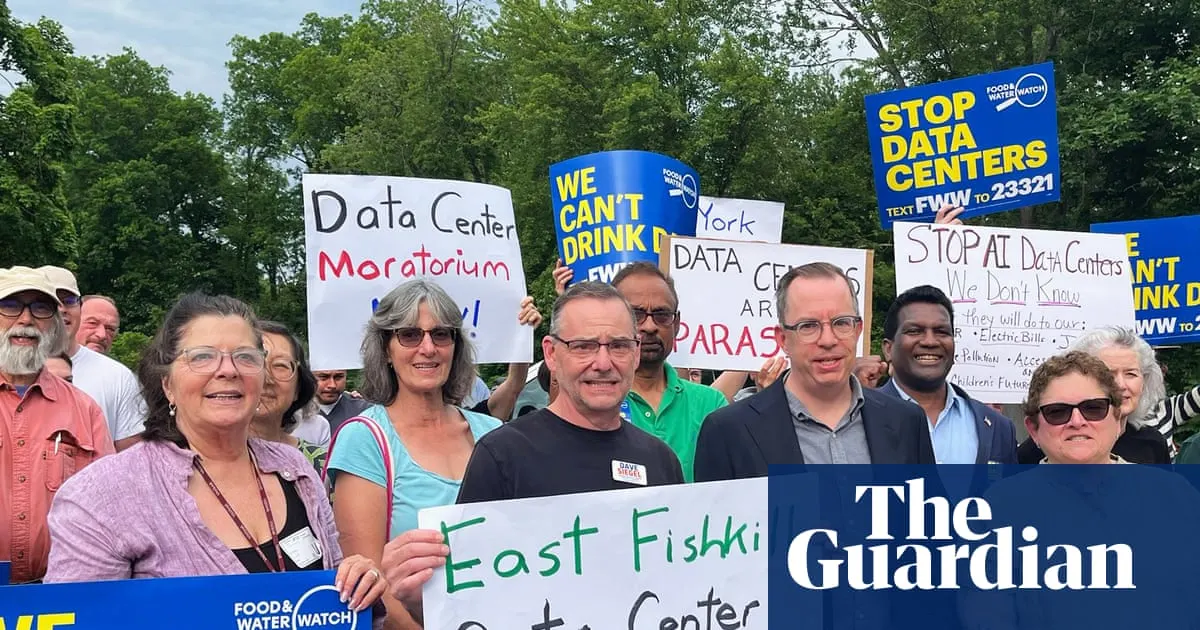
East Fishkill, a New York hamlet 70 miles north of New York City that was home to IBM's semiconductor operations for nearly 50 years, has erupted in fierce opposition to a proposed artificial intelligence (AI) datacenter despite the town's deep ties to the technology industry. The developer, Treetop Companies, is exploring plans for what could be one of the country's largest AI datacenters, consuming approximately 1,000 megawatts of electricity—more than the entire city of Buffalo—sparking resident protests and rallies that led the town to impose a three-year moratorium on new datacenters. The town of East Fishkill, home to just 30,000 residents, issued this unprecedented three-year moratorium in late June 2026 forbidding datacenters larger than 20 megawatts until July 2029 whilst officials study impacts on water resources and ecosystems. The controversy intensified because Treetop Companies bypassed the town's planning process, instead submitting its 1,000 megawatt request directly to New York Independent System Operator (NYISO), the organisation managing the state's power grid, meaning town officials initially had no formal application to review or reject.
- East Fishkill opposes massive AI datacenter despite its tech heritage.
- Town enacted three-year moratorium on large datacenters.
- Proposed facility would consume more electricity than Buffalo.
New here? Start with this
East Fishkill is a small town in New York State, seventy miles north of New York City, with deep roots in the technology industry. It was home to IBM's semiconductor manufacturing operations for nearly fifty years, making it a significant centre of technological innovation. The town is now facing a proposal for what could be one of America's largest artificial intelligence data centres, prompting intense debate amongst residents.
The proposed data centre would require approximately 1,000 megawatts of electricity to operate—more power than the entire city of Buffalo consumes. Local residents have expressed concerns about the impact on water supplies and ecosystems, leading to protests against the project. In response, East Fishkill's authorities imposed a three-year moratorium in June 2026 that bans new data centres larger than 20 megawatts whilst officials study the potential effects.
The controversy has been heightened by how the developer, Treetop Companies, has approached the proposal. Rather than following the town's normal planning approval process, the company submitted its plans directly to the New York Independent System Operator, the state organisation that manages the power grid. As a result, local officials initially had no formal application to review or reject.
Both sides, in good faith
The strongest fair case each way — we don't pick a winner.
The case for
East Fishkill's half-century hosting IBM's semiconductor operations demonstrates the town's proven capacity for major tech infrastructure and its historical identity as a centre of technological advancement. Proponents of the datacenter argue it represents significant economic opportunity, bringing investment and employment to the region whilst positioning it competitively in the AI economy. They contend that environmental concerns can be adequately managed through proper regulatory oversight and that the project's benefits justify proceeding with careful planning and community engagement.
The case against
Residents and local officials argue that a 1,000 megawatt facility in a town of 30,000 would place unsustainable strain on water resources and electrical infrastructure, potentially causing significant environmental degradation. The developer's decision to bypass local planning processes and submit directly to the state grid operator represents a troubling circumvention of democratic governance, denying residents meaningful input on a project with profound community impacts. The three-year moratorium reflects legitimate concerns that warrant serious environmental study before approval, demonstrating that even historically tech-friendly communities have reasonable limits to infrastructure scale.