This is what a supercar was like a century ago
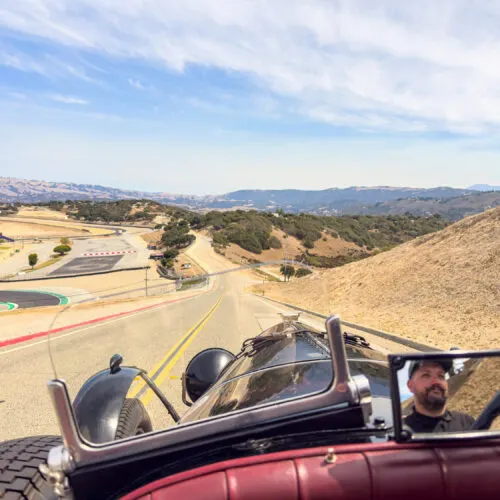
Bentley recently gave a journalist a ride in one of its earliest Super Sports models, offering a glimpse of what passed for a supercar a century ago. The comparison came alongside the launch of the new Bentley Supersports, and highlighted just how far car performance has advanced since the 1920s, when most vehicles, including the ubiquitous Ford Model T, struggled to exceed 40 mph.
Bentley built only 18 examples of the original Super Sports between 1925 and 1927, based on the shortened, lightened 3 Litre model with a tuned engine and tapered radiator, and each was guaranteed to top 100 mph. The car featured, chassis YM 4037 (nicknamed "Smoky"), was built in 1926, later fitted with a 4.5-litre engine from Bentley's 1928 Le Mans winner, and went on to win seven races at Brooklands in the mid-1930s. Riding in it revealed a visceral, unassisted driving experience, no seatbelts, roll bars or conventional pedal layout, yet surprisingly strong cornering grip that still echoes qualities found in modern supercars.
- Bentley let a journalist ride in a 1926 Super Sports, one of only 18 built.
- The car could exceed 100 mph when most cars struggled past 40 mph.
- It later won races at Brooklands after a 1932 engine upgrade.
New here? Start with this
In the 1920s, most cars were slow by modern standards: even the widely used Ford Model T struggled to exceed 40 mph. Bentley’s Super Sports was built for much higher speeds, with a tuned engine and lighter, shorter chassis.
Bentley made just 18 of these cars between 1925 and 1927, each guaranteed to reach more than 100 mph. One, nicknamed Smoky, was built in 1926 and later won races at Brooklands, a motor-racing circuit in Surrey.
The comparison with today’s supercars shows how much performance and driving equipment have changed. Smoky had no seatbelts or roll bars and required more effort to drive, while its strong grip through corners points to a quality that remains important in fast cars.