[Thursday 5am] Trump puts himself back on the ballot: 5 takeaways from GOP midterm convention Night 1
Developed over time first seen 2 months ago
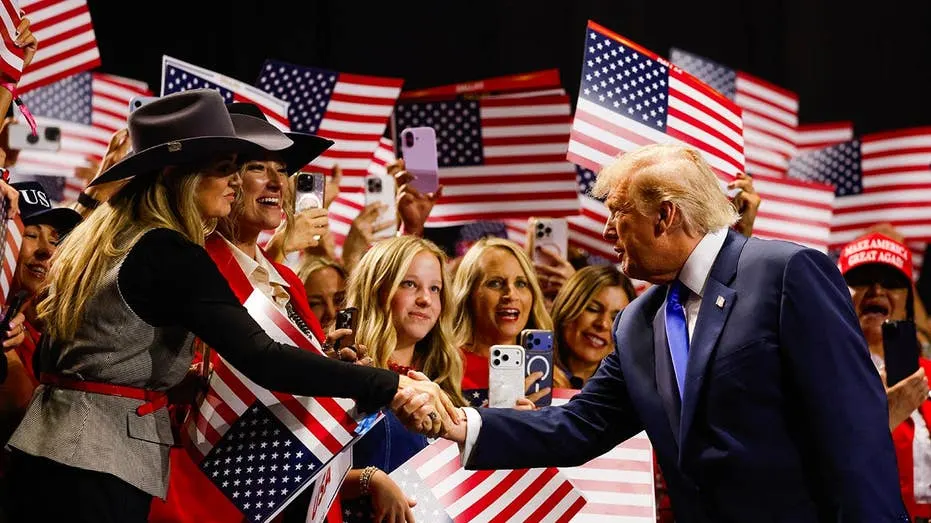
President Donald Trump used his speech at the first-ever Republican midterm convention in Dallas to try to energise the party's base ahead of a difficult set of midterm elections. With Republicans facing a tough political environment and early voting only weeks away, Trump and party leaders sought to highlight policy achievements and cast Democratic politicians as far-left, telling supporters to "pretend that I'm on the ballot" even though he himself is not standing.
The headline moment came when Trump pledged that, if Republicans retain control of both the House and Senate, he would issue a $5,000 "dividend" to every adult US citizen, funded by tariff revenue, on condition the money is spent domestically; he gave no further details. He also defended his economic record, promising falling prices and cheaper oil once the conflict with Iran ends, and pointed to last year's tax cuts and prescription drug price reductions as achievements. Democrats dismissed the dividend pledge as an empty promise, with the DNC arguing that only Trump, his family and wealthy donors are benefiting from the economy while ordinary families face high prices and stagnant wages, amid polling showing Trump's economic approval underwater.
- Sources
- 5
- Outlets
- 2
- Left · Centre · Right
- 0 · 0 · 5
In short
- Trump pledged a $5,000 payment to Americans if Republicans keep Congress
- Convention aimed to boost GOP turnout ahead of tough midterms
- Democrats called the pledge an empty promise amid weak economic approval
How this story developed
- 2 months ago President Donald Trump's opening night at the first-ever Republican midterm convention in Dallas has been framed by his own party as a wide-ranging "Trumpapalooza" performance, with new detail emerging on how he and other GOP figures used the event to cast Democratic politicians as far-left radicals while defending his economic record.
- 2 months ago President Donald Trump used his speech at the first-ever Republican midterm convention in Dallas to try to energise the party's base ahead of a difficult set of midterm elections.
- 2 months ago President Donald Trump used the opening night of the first-ever Republican midterm convention in Dallas to pledge a $5,000 payment to every adult US citizen, funded by tariff revenue, if Republicans retain control of both the House and Senate in November.
- 2 months ago President Donald Trump used the opening night of the first-ever Republican midterm convention in Dallas to unveil a pledge of a $5,000 payment to every adult US citizen if Republicans retain control of both the House and Senate, funded by tariff revenue, though he gave no further detail beyond requiring the money to be spent domestically.
- 2 months ago President Donald Trump used the opening night of the first-ever Republican midterm convention in Dallas to unveil a pledge of a $5,000 payment to every adult US citizen if Republicans retain control of both the House and Senate, funded by tariff revenue, though he offered no further detail beyond requiring the money to be spent domestically.
- 2 months ago President Donald Trump opened the first-ever Republican midterm convention in Dallas by urging supporters to treat the November elections as a referendum on him personally, declaring "I'm asking you to pretend that I'm on the ballot." With Republicans facing a tough political climate and control of both chambers of Congress at stake, Trump and party leaders used the opening night to tout policy achievements and cast Democrats as far-left radicals, aiming to energise the MAGA base ahead of early voting.
- Fox News Trump's stunning vow steals show during night one keynote at GOP midterm convention and more top headlines
- The Hill Trump, Fetterman deliver surprises at RNC night 1
- The Hill Live updates: Trump, Vance to close out RNC midterm convention; Democrats counter with protests
- The Hill Watch live: Vance, Trump to close out Day 2 of RNC midterm convention
- Fox News [Thursday 5am] Trump puts himself back on the ballot: 5 takeaways from GOP midterm convention Night 1
Full account
President Donald Trump opened the Republican Party's first-ever midterm convention in Dallas by making an unusual pitch to voters: a $5,000 payment to every adult American citizen, conditional on the GOP retaining control of both chambers of Congress in November. Speaking to supporters at the American Airlines Center on the opening night of the two-day gathering, dubbed 'Trumpapalooza' by party figures, Trump framed the contest as effectively a referendum on himself, telling the crowd to 'pretend' he was on the ballot even though his own name will not appear. The event comes with Republicans acknowledging a tough electoral climate less than two months before polls open and with early voting due to begin within weeks.
Trump described the proposed payout as funded by revenue raised through his tariff policies, stipulating that recipients would have to spend the money within the United States, though he offered no further detail on how or when it might be distributed. He called the announcement the highlight of his address. The Democratic National Committee dismissed the idea as an empty pledge, with a rapid-response official accusing the president and his party of making promises they would not keep — an early sign that the proposal is likely to become a flashpoint in the midterm campaign.
Much of the rest of Trump's speech was devoted to defending his economic record at a moment when polling suggests voters remain sceptical, amid continuing inflation, rising fuel prices linked to renewed conflict involving Iran, and ongoing trade tensions with Canada. The president insisted costs were falling and predicted oil prices would drop further once the confrontation with Iran was resolved. He also highlighted tax measures passed by the Republican-controlled Congress, including exemptions on tips, overtime pay and Social Security income, alongside claims of historic cuts to prescription drug prices, presenting these as central achievements he wants voters to reward at the ballot box.
Beyond Trump's own remarks, the convention was pitched by organisers as a rallying point for the party's base and a showcase for down-ballot candidates ahead of races that will decide control of Congress. Coverage of the gathering also noted some unexpected crossover moments, including a sitting Democratic senator appearing to back a Trump-aligned candidate, and a potential 2028 Democratic contender using the convention's spotlight to needle the president. Together, these threads point to a first night designed less around new policy detail than around energising supporters and setting the tone for a bruising midterm fight.
Where outlets differ
From the full account, which is AI-written from the sources:
Both supplied sources originate from Fox News — one a news article on the convention, the other the outlet's own morning newsletter digest — so there is limited genuine cross-outlet comparison available; no independent or opposing-outlet account was provided.
The main article (Source 1) gives substantive detail on the $5,000 dividend proposal, its funding rationale, and the Democratic National Committee's critical response, whereas the newsletter (Source 2) only teases the story via a headline ('Trump's stunning vow steals show') without elaborating.
Source 2 places the convention story within a broader roundup and flags related but distinct angles — a Democratic senator's supportive remarks at the event and a possible 2028 Democratic candidate's appearance — that Source 1 does not mention in the portion provided.
Source 1 emphasises the economic backdrop (inflation, fuel prices, the Canada trade dispute) as context for scepticism about Trump's claims, a framing not present in the newsletter excerpt.
Steelman: both sides, in good faith
The strongest fair case each way — we don't pick a winner.
The case for
Supporters would argue that returning a share of tariff revenue directly to citizens is a defensible, even innovative, use of funds collected from trade measures designed to protect American industry, and that voters deserve concrete proposals rather than vague promises. They would say Trump is right to make the midterms a referendum on his record, pointing to tax relief on tips, overtime and Social Security income and to negotiated drug price reductions as tangible achievements that merit continued Republican control of Congress to see through. On this view, asking supporters to treat him as personally on the ballot is simply an honest acknowledgement that midterms function as a verdict on a sitting president, and rallying the base with bold, memorable pledges is a legitimate way to energise turnout in a difficult political climate.
The case against
Critics would counter that a $5,000 payment with no funding mechanism detailed beyond tariff revenue, and no explanation of how it would be administered or paid for, looks more like an electoral inducement than a serious fiscal policy, especially when tariffs are widely understood to raise costs for consumers rather than generate simple windfalls. They would argue it is reasonable to question a pledge unveiled at a party rally rather than developed through normal budgetary process, particularly while polling shows the public unconvinced on the economy amid inflation and rising fuel costs. On this view, casting the election as a referendum on one man's popularity, and casting opponents as far-left radicals, distracts from scrutiny of living costs and risks reducing a policy debate to a personality contest, which is a fair concern regardless of one's party.
Explained simply
Republicans this week are holding the first-ever midterm convention, a party gathering in Dallas designed to rally support ahead of November's congressional elections, when all seats in the House of Representatives and roughly a third of the Senate are up for a vote. President Donald Trump, though not himself standing for office, has taken centre stage at the event and has been asking supporters to treat the vote as a judgment on him personally.
Midterm elections typically go badly for the party holding the White House, and Republicans currently control both chambers of Congress, meaning they have more to lose. The stakes are heightened by a difficult backdrop for the party, including public concern over the cost of living, petrol prices and inflation, all of which shape how voters may respond in the coming months.
The Democratic Party, the main opposition, has been quick to challenge claims made at the convention, reflecting the broader battle between the two parties to define the economic debate before voters go to the polls.
Coverage · 5 sources
Bias meters
From 5 rated sources.
- Fox NewsFar right[Thursday 5am] Trump puts himself back on the ballot: 5 takeaways from GOP midterm convention Night 1
- Fox NewsFar rightTrump's stunning vow steals show during night one keynote at GOP midterm convention and more top headlines
- The HillRightTrump, Fetterman deliver surprises at RNC night 1
- The HillRightLive updates: Trump, Vance to close out RNC midterm convention; Democrats counter with protests
- The HillRightWatch live: Vance, Trump to close out Day 2 of RNC midterm convention
Elections Government Politics World