Tiny zebra-striped bee in West a ‘huge surprise’
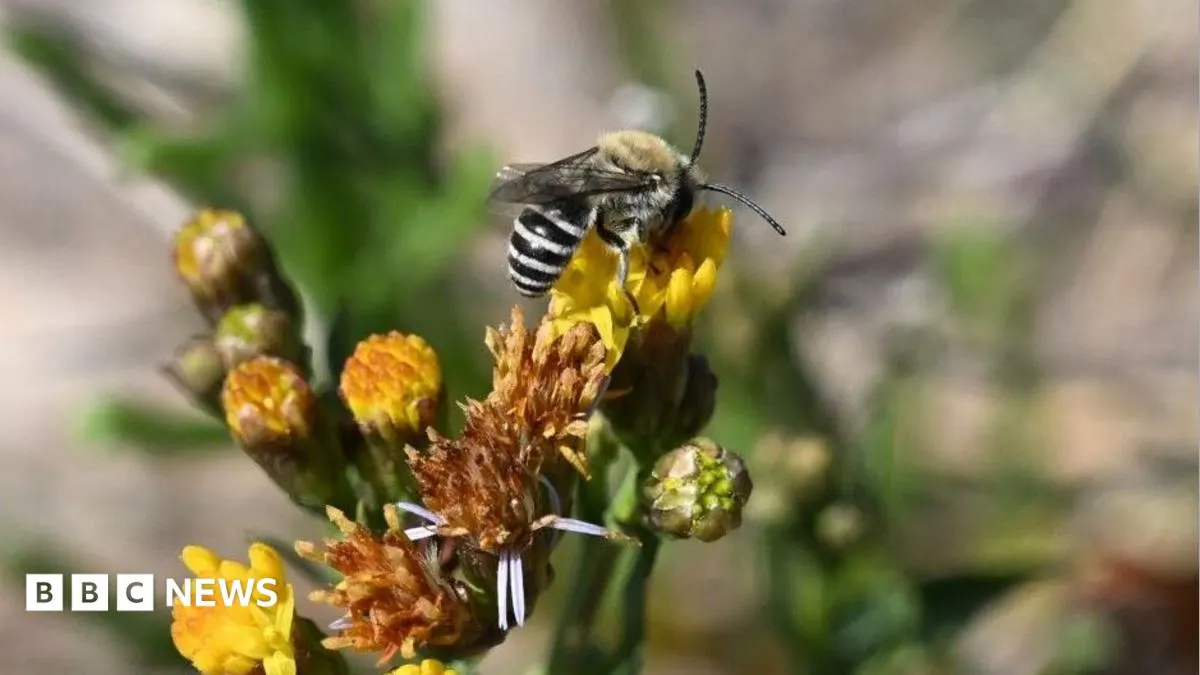
A rare sea aster mining bee, usually found on England’s south and east coasts, has been discovered at Steart Marshes in Somerset. The unexpected sighting suggests that restoring coastal wetlands can help rare wildlife establish itself in new areas.
Naturalist Nigel Phillips found several bees and nesting areas in dry, sandy ground. The reserve was created from former farmland in a project completed in 2014, which allowed seawater to return; its sea aster flowers provide food for the bees. Across the UK, 148 of the 290 invertebrate species recorded in saltmarsh habitats are found only there.
In short
- A rare mining bee has appeared in Somerset.
- The bees depend on sea aster flowers.
- Wetland restoration may help wildlife thrive.
Explained simply
Sea aster mining bees are small, solitary bees that nest in sandy ground and feed on sea aster flowers. They have mostly been recorded on England’s south and east coasts, where saltmarshes provide the conditions they need.
Steart Marshes is a coastal reserve in Somerset, created by returning seawater to former farmland. Its mix of wetland and dry sandy areas offers habitat and food for wildlife. Saltmarshes are especially important for invertebrates: many species recorded in these habitats are found nowhere else in the UK.