Technology news and discussion on TalkFuse.
To make Moon landings easier, NASA is making life harder for Orion
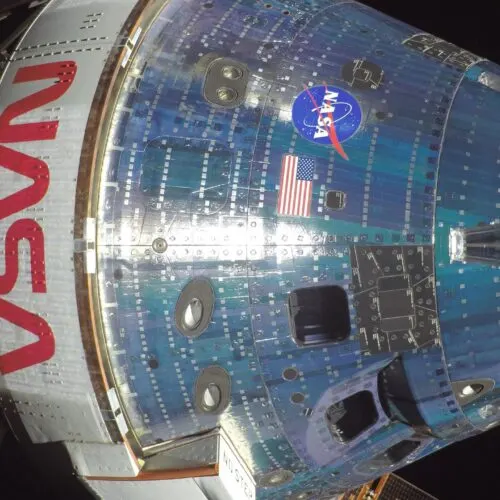
NASA’s revised Artemis plans give SpaceX’s Starship and Blue Origin’s Blue Moon more flexibility to meet Orion, but require Orion to operate in ways it was not originally designed for. The changes add engineering challenges and new risks as NASA prepares to test Orion with lunar landers before attempting a crewed Moon landing.
For Starship missions, Orion must fly backwards and withstand acceleration of about 0.8 to 1 g in the opposite direction from its original design assumptions, compared with 0.1 to 0.15 g previously. The European Space Agency and Airbus are modifying Orion’s propellant tanks, while engineers are assessing structural and heating concerns. A planned Artemis III test would keep Orion in low Earth orbit for about two weeks, where thermal conditions and orbital debris pose added concerns; NASA and Lockheed expect to complete the debris assessment by January.
In short
- Revised lunar plans place new demands on Orion.
- Orion must handle stronger acceleration in the opposite direction.
- Engineers are assessing heat and orbital debris risks.
Steelman: both sides, in good faith
The strongest fair case each way — we don't pick a winner.
The case for
Changing the mission plan may make lunar landings more achievable by giving Starship and Blue Moon room to rendezvous with Orion, while testing those connections before a crewed landing. Adapting Orion could be a practical way to use the landers NASA has selected and keep the programme moving, provided engineers address the new loads and other hazards through modifications and testing.
The case against
Requiring Orion to fly in ways its designers did not anticipate adds structural, propulsion and thermal challenges, as well as a longer stay in low Earth orbit with debris risks. Critics could reasonably argue that these changes increase the chance of delays or failure and that the benefits of schedule flexibility must be weighed against the safety and reliability of a crewed programme.
Explained simply
NASA’s Artemis programme aims to return astronauts to the Moon, with the spacecraft Orion carrying crews from Earth and lunar landers taking them down to the surface. Orion is built by Lockheed Martin with major contributions from the European Space Agency, whose contractor Airbus supplies its service module.
NASA has contracted SpaceX and Blue Origin to develop landers called Starship and Blue Moon. Orion must meet these vehicles in orbit so astronauts can transfer between spacecraft; the different designs and flight plans affect how that meeting takes place.
The way Orion was originally designed limits the forces and conditions it can handle. Changing its role therefore involves engineering work and assessments of matters such as heating, spacecraft structure and debris in orbit, all of which are relevant to crew safety and mission planning.
Read the full article at the source →
Originally published by Ars Technica as “To make Moon landings easier, NASA is making life harder for Orion”.