World news and discussion on TalkFuse.
‘Tom and Jerry: Forbidden Compass’ Review: The Famous Cat-and-Mouse Duo Are Not Themselves In a Chaotic Chinese Cartoon
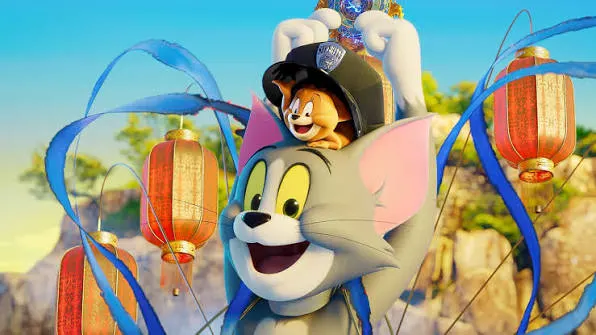
Variety's review pans "Tom and Jerry: Forbidden Compass," a Chinese production from director Zhang Gang that grafts the Hanna-Barbera cat-and-mouse duo onto an unrelated adventure rooted in Chinese mythology. The critic argues the film abandons everything that made the original cartoons work, sidelining Tom and Jerry as bystanders within minutes and instead following new characters through a chaotic quest involving a "Phoenix Master," a villain called "Mega-Rat" and various mythological creatures.
The review notes the plot begins with a five-minute nod to classic Tom and Jerry slapstick before a magic compass transports the pair to "Golden City," modelled on Beijing's Forbidden City, after which the familiar duo becomes largely irrelevant for the remaining 95 minutes. The critic highlights visually incoherent animation, dated Orientalist tropes, and awkward musical interludes, and points out the film is produced by the state-owned China Film Group alongside Warner Bros. and Origin Animation, using American intellectual property to market what is essentially a Chinese property.
In short
- Variety pans new Tom and Jerry film as chaotic and incoherent.
- Chinese-made movie sidelines the iconic duo for mythology-based plot.
- Produced by state-owned China Film Group with Warner Bros, Origin Animation.
Explained simply
Tom and Jerry are a cat and mouse created by the American animation studio Hanna-Barbera. Their cartoons are best known for largely wordless slapstick, built around the pair’s repeated chases and tricks.
This film places the characters in a fantasy adventure drawing on Chinese mythology and sends them to a city modelled on Beijing’s Forbidden City. It was made by Chinese studio Origin Animation with state-owned China Film Group and Warner Bros., which owns rights to the characters.
The film brings together a globally familiar American cartoon pair and a story shaped by Chinese cultural references. That makes it part of a wider practice of adapting established characters for new markets and audiences.