Business news and discussion on TalkFuse.
Tomb Raider’s creators on how the game changed their lives: ‘Skint staff were suddenly pulling up in sports cars’
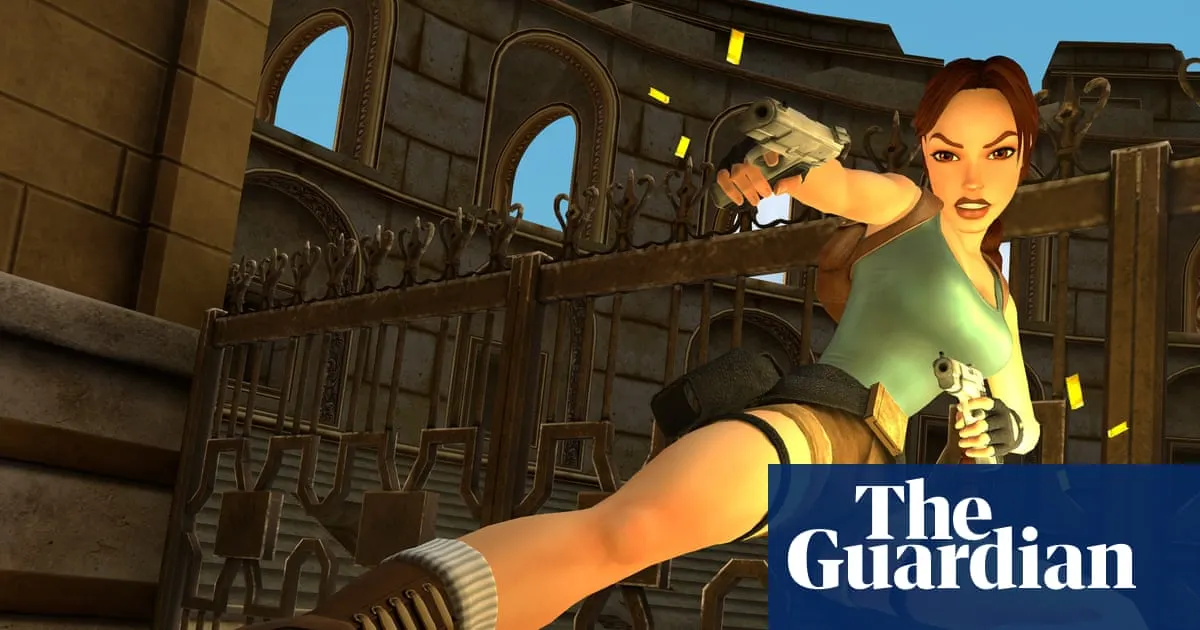
Core Design’s Tomb Raider team turned a prototype into one of the era’s defining action-adventure games, helping make Lara Croft a global phenomenon. Its success challenged the belief that players would not embrace a female lead, though the developers say the character’s marketability and later sexualisation also shaped the game’s rise.
The team built the game around platforming, puzzles, combat and story, setting its levels in Peru, Greece, Egypt and Atlantis. Limited memory and processing power shaped its 3D environments, while Lara’s movement was designed using measurements mapped out in the studio car park. Development was gruelling: one creator took only three days off in two years, and staff often worked until the early hours.
In short
- Tomb Raider helped make Lara Croft a global gaming icon.
- Its creators worked under severe time and hardware limits.
- The game’s success challenged assumptions about female leads.
Explained simply
Tomb Raider was made by Core Design, a British games studio, in the 1990s, when home consoles were beginning to make three-dimensional games more common. Players guided Lara Croft through ancient sites, solving puzzles, jumping across hazards and fighting enemies. The developers had to build these environments around the limited memory and processing power of the machines of the time.
Lara was unusual as the lead of a major action game: many in the industry doubted that players would take to a woman hero. The game’s success helped make her widely recognised, while her appearance also became central to how the character was marketed and discussed. For the team, the game’s popularity brought major changes to their working lives after a demanding development.