Top chipmakers embrace ASML’s $400M machines, agree to crucial chipmaking change
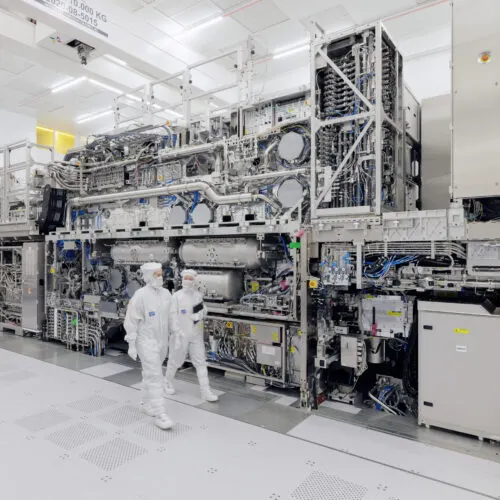
Samsung Electronics and Taiwan Semiconductor Manufacturing Co (TSMC) have announced plans to adopt ASML's latest high-NA EUV lithography machines, joining Intel in backing a change to chipmaking standards that could boost the new machines' productivity by 40%. The move signals the semiconductor industry's broader shift towards this technology, which can cost up to $400 million per machine and is supplied solely by the Dutch firm ASML, allowing manufacturers to etch smaller, more efficient circuitry into chips destined for AI data centres and consumer devices.
Samsung plans to use the machines for memory chip production by 2028, while TSMC aims to apply the technology to advanced chips for clients including AMD, Apple, Nvidia and Qualcomm from 2030; Intel has already begun high-volume use in its Panther Lake processors since July 2026. The productivity boost hinges on switching the industry's photomask standard from 6-inch to 12-inch stencils, a change Samsung and TSMC are now pursuing alongside Intel and ASML, with SK Hynix reportedly considering joining too. The push comes amid a global memory chip shortage driven by AI data centre construction, and against a backdrop of US-China tensions over access to ASML's technology, from which Chinese firms remain largely restricted.
In short
- Samsung and TSMC to adopt ASML's costly high-NA EUV chipmaking machines.
- Switch to 12-inch photomasks could raise productivity by 40%.
- Comes amid AI-driven chip demand and US-China tech tensions.
Explained simply
ASML is a Dutch company and the only supplier of high-NA EUV lithography machines, which use light to print tiny circuit patterns onto silicon wafers. The machines can make smaller, more efficient chips, but cost up to $400 million each. Chipmakers use them for processors and memory in products ranging from phones to AI data centres.
Samsung and SK Hynix make memory chips, while TSMC and Intel manufacture processors and other chips. Samsung plans to use the machines for memory production, and TSMC for advanced chips designed by customers such as Apple and Nvidia. Intel has already started using the technology in processor production.
The machines’ productivity depends partly on changing the photomasks—the stencils that carry circuit patterns—from six inches wide to 12 inches. The shift could affect how efficiently manufacturers meet demand for chips, including memory for expanding AI data centres; access to ASML’s technology is also limited for Chinese firms amid US-China tensions.