Top energy trader hails Trump’s Venezuela oil deal as a ‘generational win’ for gas prices
Developed over time first seen 2 months ago
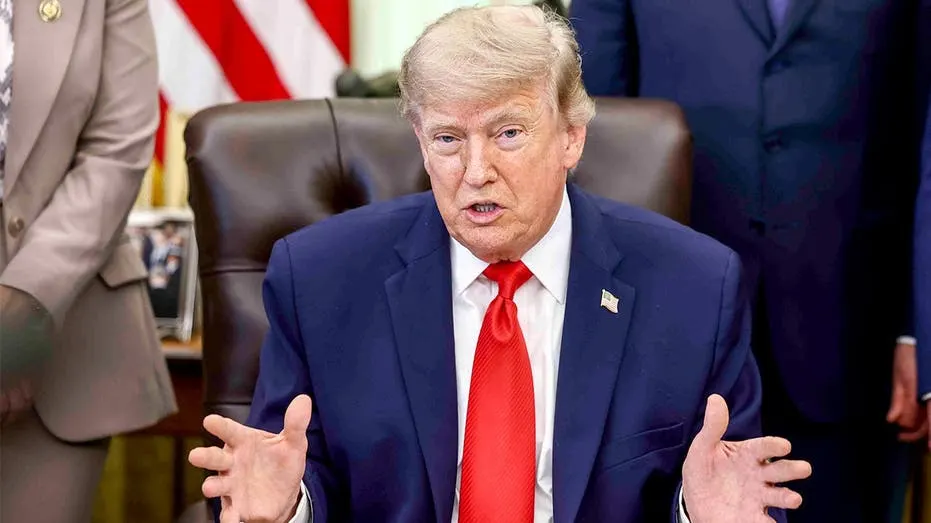
President Donald Trump's deal granting the United States majority control of over 65 billion barrels of Venezuelan oil reserves has been welcomed by oil trader Phil Flynn as a "generational win" likely to keep US petrol prices low for years to come. Speaking on Fox & Friends Weekend, Flynn argued the arrangement would ease long-standing worries about depleted US strategic reserves, quipping that Venezuela now effectively serves as America's "biggest strategic petroleum reserve in history", while also benefiting Venezuelans through superior US extraction technology. Secretary of State Marco Rubio publicly endorsed the deal on X, framing it as evidence of Trump's "America First" foreign policy delivering stable regional oil supplies and lower domestic fuel costs.
Trump announced the agreement on Truth Social, saying it was negotiated at his direction by Rubio and Secretary of War Pete Hegseth alongside Venezuelan interim President Delcy Rodriguez, and secured "through a partnership with private business" at no cost to US taxpayers. He said it more than doubles American oil reserves and would substantially lower petrol prices long-term, though Flynn cautioned against expecting an immediate drop at the pump, saying any effect would initially be more psychological, signalling easing geopolitical risk. The deal follows a US operation that captured then-Venezuelan leader Nicolás Maduro in January and a subsequent transition of power in Venezuela.
- Trump strikes deal for majority US control of Venezuela's 65bn-barrel oil reserves
- Trader Phil Flynn calls it a "generational win" for long-term US petrol prices
- Deal follows Maduro's January capture and Venezuela's political transition
New here? Start with this
Venezuela's oil reserves are among the largest in the world, but years of sanctions, economic crisis and mismanagement under former leader Nicolás Maduro left much of the country's oil industry starved of investment and technology. That changed after a US operation in January led to Maduro's capture, with Delcy Rodriguez taking over as interim president. This set the stage for closer dealings between Washington and Caracas.
The deal at the centre of this story gives the United States majority control over more than 65 billion barrels of Venezuelan oil reserves, negotiated on the US side by Secretary of State Marco Rubio and Secretary of War Pete Hegseth. President Trump announced it on his Truth Social platform, describing it as historic and saying it would significantly boost America's oil holdings without cost to taxpayers. Supporters argue it could ease pressure on US strategic oil stockpiles and help keep fuel prices stable.
This matters because oil supply and price are closely watched by ordinary consumers, businesses and policymakers alike, and any deal affecting reserves on this scale has the potential to influence energy markets both in the US and globally. It also reflects a significant shift in the relationship between the US and Venezuela following years of tension, sanctions and political upheaval in the South American nation.
Both sides, in good faith
The strongest fair case each way — we don't pick a winner.
The case for
Supporters argue that securing majority control of vast Venezuelan reserves gives the United States a powerful buffer against future oil-price shocks and reduces dependence on volatile international suppliers, all without a direct bill to taxpayers. They see the deal as astute, results-driven diplomacy that channels American technology and investment into revitalising Venezuela's oil industry, benefiting both nations, and view Rubio's endorsement as evidence that a firm, deal-making foreign policy can deliver concrete, kitchen-table gains such as steadier petrol prices.
The case against
Sceptics caution that branding the deal a 'generational win' may be premature, since global oil prices are shaped by many factors and a single agreement is unlikely to move pump prices quickly, as even Flynn himself concedes. They also raise deeper concerns about the legitimacy and optics of a major resource-control arrangement struck with an interim Venezuelan government installed only after the US military operation that removed Maduro, questioning whether such a deal, negotiated in the shadow of that intervention, truly serves Venezuelans' interests or risks resembling an older pattern of powerful nations securing favourable terms over a weaker state's natural wealth.
Full account
President Donald Trump has announced an agreement with Venezuela which he says will give the United States majority control over oil associated with more than 65 billion barrels of the country’s proven reserves. Trump described it as the largest oil arrangement in history and said it had been negotiated by Secretary of State Marco Rubio and Secretary of War Pete Hegseth with Venezuela’s interim president, Delcy Rodríguez. He said the arrangement would use a private-sector partnership, require no taxpayer funding and eventually expand US supply while reducing petrol prices.
Oil trader Phil Flynn welcomed the announcement in an interview with Fox & Friends Weekend, calling it a “generational win” for Americans and Venezuela alike. He argued that American expertise and technology could develop Venezuelan fields more effectively than they have been in the past, and suggested the reserves could ease concerns about drawdowns from the US Strategic Petroleum Reserve. Flynn nevertheless cautioned that drivers should not expect an immediate reduction at filling stations, although he thought the announcement could exert some downward pressure on prices through market expectations.
A report drawing on information from an unnamed US official said Washington would hold an effective 55% interest in production from a newly created company covering 17 Venezuelan oilfields. That would amount to an interest in oil eventually extracted, rather than instant access to 35.75 billion barrels. The agreement is also said to permit the US to buy Venezuelan crude at cost, potentially giving American purchasers access to cheaper supplies if output rises substantially.
The prospect of lower prices remains dependent on a difficult rebuilding of Venezuela’s oil industry. Years of underinvestment and mismanagement have damaged capacity, while much of the country’s crude is exceptionally heavy and requires lighter hydrocarbons before it can move through pipelines and reach export facilities. Analysts have said major drilling, repairs, infrastructure upgrades and investment would be needed over several years. The announcement comes amid higher fuel costs linked to disruption in global energy markets during the Iran war; one report cited an AAA national average of $4.08 per gallon for regular petrol, compared with $3.20 a year earlier.
Where outlets differ
The first report centres on Flynn’s favourable assessment and his argument that Venezuela could function as a vast strategic reserve, while the second gives more detail on the proposed ownership structure and the 17 fields involved.
The second report places greater emphasis on practical constraints, including the time, infrastructure and investment needed to increase output; the first focuses more heavily on the political claims made by Trump, Rubio and Flynn.
Both reports say pump prices are unlikely to fall straight away, but the second provides a specific current petrol-price comparison and industry analysis of Venezuela’s technical production problems.