Tory shadow minister claims there are ‘no-go zones’ in Luton where ‘white people won’t go’
Developing story first seen 12 hours ago
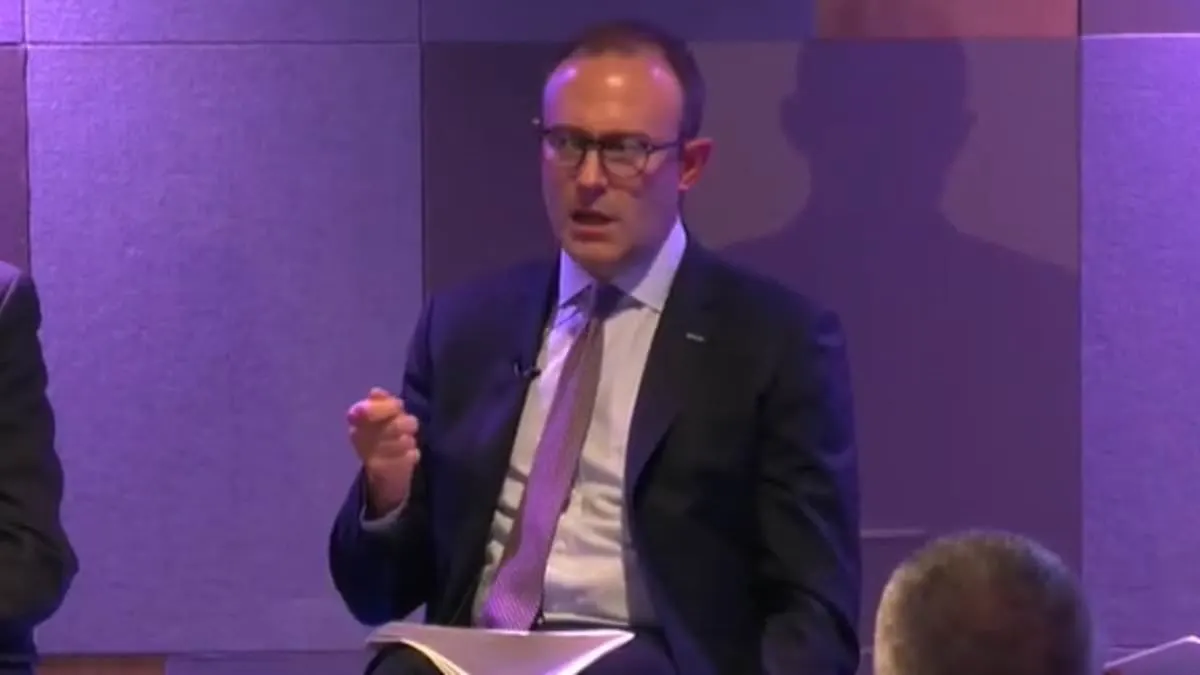
The story has gained a response from Luton Council: its leader, Amjid Ali, says there are no “no-go zones” where white people cannot or will not go, and calls Blake Stephenson’s comments untrue and damaging. The council’s statement adds to criticism of the Conservative shadow minister’s claim and challenges his description of the town.
Stephenson, the MP for neighbouring Mid Bedfordshire, said at a Conservative conference event that parts of Luton were dangerous and places where white people would not go. Conservative leader Kemi Badenoch said she stood by him, while Labour MP Sarah Owen and Bedfordshire’s police and crime commissioner said they did not recognise his account and that there was no evidence for it. Stephenson also criticised mass immigration, which he called a disaster for the country.
- Luton Council rejects claims of “no-go zones” in the town.
- Kemi Badenoch says she stands by Blake Stephenson.
- Local representatives say his description is unsupported.
New here? Start with this
Blake Stephenson, a Conservative politician representing the nearby constituency of Mid-Bedfordshire, claimed during the Conservative Party Conference that parts of Luton had become "no-go zones" where white people would not venture. He described Luton as "a shadow of its former self" and argued that large-scale immigration had been disastrous for the town.
His comments matter because Stephenson is a shadow minister—a senior opposition politician whose views help shape Conservative Party policy arguments. The remarks were made during a Conservative Party Conference debate on immigration.
Sarah Owen, the Labour MP representing Luton, rejected his account as untrue and irresponsible. She said local people would not recognise his description and invited him to meet residents to understand the reality of the town.
Both sides, in good faith
The strongest fair case each way — we don't pick a winner.
The case for
Supporters argue that rapid demographic change in parts of Luton has created real segregation and integration challenges that merit serious political discussion. They contend that avoiding candid conversation about community cohesion problems is counterproductive, and that opposition politicians have a legitimate role in raising such concerns rather than leaving them unaddressed.
The case against
Critics argue that characterising accessible, functioning communities as 'no-go zones' is inflammatory and factually misleading language that stigmatises diverse neighbourhoods without advancing genuine policy discussion. They contend that real integration progress requires honest but accurate dialogue, and that such divisive rhetoric counterproductively damages community relations rather than solving substantive concerns.
Full account
A senior Conservative politician has provoked debate following remarks made during a party conference event concerning demographic composition and safety within a major Bedfordshire town. Blake Stephenson, shadow home office minister and MP for Mid Bedfordshire, made the contentious observations at an immigration-focused fringe meeting in Birmingham during the Conservative Party's annual conference.
During the discussion, Mr Stephenson characterised Luton—an area adjoining his own constituency and home to a substantial Muslim population—as having undergone significant decline from its former status. He alleged that certain districts within the town exhibited characteristics of 'no-go zones' where white residents would be reluctant to venture, describing these areas as effectively segregated communities or 'ghettoes'. He argued that such patterns of spatial division extended across multiple English towns and that meaningful remedies required substantial community integration efforts.
Party leader Kemi Badenoch stepped forward to defend her junior minister when questioned about the remarks. Ms Badenoch stated that whilst unfamiliar with the precise context of his speech, she regarded Mr Stephenson as a 'sensible' figure and expressed confidence in his capacity to provide justification for his position. She subsequently distinguished his comments from those made previously by Robert Jenrick, now a member of Reform UK, suggesting they represented different circumstances.
The remarks prompted swift objections from multiple directions. Luton's Labour MP Sarah Owen characterised the comments as deeply irresponsible and contended they mirrored far-right political discourse. Bedfordshire Police and Crime Commissioner John Tizard asserted there existed no evidential basis for the claims regarding community segregation and public safety concerns, indicating that neither police, local authority nor his office recognised the portrait of Luton presented in the address.
The controversy follows a precedent set in February 2024 when former Conservative minister Paul Scully issued an apology after making comparable assertions about certain London and Birmingham districts, in which he suggested such areas exhibited problematic patterns of community separation.
Where outlets differ
Source 1 emphasises official responses and fact-checking rebuttals from local authorities; Source 2 allocates greater space to Stephenson's full explanation and broader commentary on immigration policy
Source 1 references the 2024 Paul Scully precedent; Source 2 emphasises Badenoch's comparison with Robert Jenrick and his transition to Reform UK
Source 1 provides prominent quotation from Labour MP Sarah Owen's criticism; Source 2 highlights Badenoch's stated unfamiliarity with the comments' context
Source 2 reproduces substantially more verbatim material from Stephenson's actual speech, including his discussion of 'icky' language; Source 1 relies predominantly on summary and paraphrase