Trump officials subpoena New York Times reporters over Air Force One story
Developed over time first seen 4 months ago
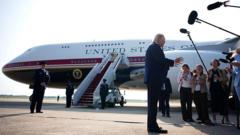
The Trump administration issued grand jury subpoenas compelling several New York Times journalists to testify under oath after they reported alleged security concerns about the president's new, Qatari-gifted Air Force One plane. Federal agents delivered the subpoenas to some reporters' homes, and the Justice Department said it was investigating illegal leaks of classified information, stressing that "reporters are not the targets, those leaking classified information are." The move drew accusations that the administration was seeking to intimidate the press, with the Times's top newsroom lawyer, David McCraw, calling it a "brazen act" intended to stop the public learning how their government operates.
The subpoenas required the reporters to appear before a grand jury in Manhattan and related to an alleged violation of federal criminal law. The Times had reported that Trump flew to a Nato summit in Turkey aboard the new plane but returned on an older aircraft on the advice of the Secret Service, amid concerns the newer jet lacked advanced security features such as antimissile capabilities. Similar reports appeared elsewhere, including CBS News, and a former official said there was neither the time nor money to bring the plane up to Air Force One standards. Trump dismissed the concerns, saying "I have a threat all the time. I'm No. 1 on their list," while the Justice Department maintained it must ensure those entrusted with national secrets do not share classified information.
- Sources
- 2
- Outlets
- 2
- Left · Centre · Right
- 0 · 1 · 1
In short
- Trump administration subpoenaed New York Times reporters over Air Force One security stories.
- Justice Department says it targets leakers, not journalists.
- Times condemned the move as an attempt to intimidate the press.
How this story developed
- 4 months ago The Trump administration issued grand jury subpoenas compelling several New York Times journalists to testify under oath after they reported alleged security concerns about the president's new, Qatari-gifted Air Force One plane.
Where outlets differ
Centre outlets 1
Only here: officials, subpoena, york, reporters, story
Right-leaning outlets 1
Only here: administration, subpoenas, journalists, grand, jury
Every side used: trump, times, force
Headline columns compared word for word; nothing in them is AI-written.
Steelman: both sides, in good faith
The strongest fair case each way — we don't pick a winner.
The case for
The government has a legitimate responsibility to protect classified national security information, and federal law requires investigation when such material is disclosed without authorisation. The Justice Department's distinction between reporters and actual leakers reflects the genuine legal principle that while press freedom is protected, those who unlawfully disclose classified information must be held accountable. Grand jury testimony is a standard investigative tool, and if journalists possess information about who disclosed security details about the president's aircraft, there is legal precedent for requiring their testimony to identify sources of leaks in sensitive national security matters.
The case against
Press freedom fundamentally depends on journalists' ability to investigate government operations without government coercion, including reporting on security matters affecting public welfare. When authorities subpoena reporters over their sources, it inevitably chills investigative journalism as sources become unwilling to speak if compelled identification follows. Regardless of the stated distinction between targeting leakers versus journalists, subpoenaing the press effectively punishes reporting itself. The Air Force One reporting served the public interest by examining legitimate security concerns about how government operates—precisely the kind of scrutiny democracy requires.
Explained simply
Trump's new Air Force One is a Boeing 747-8 that Qatar gave to the US government as a gift, intended to replace the ageing existing presidential jets. The New York Times and other outlets reported claims that the plane lacked certain security features fitted to standard Air Force One aircraft, and that Trump had used an older plane rather than the new one for a trip to a Nato summit in Turkey on the advice of the Secret Service.
The story's current focus is on how the US Justice Department responded to that reporting. It has issued grand jury subpoenas ordering several Times journalists to testify in New York over the sourcing of the story, as part of a stated investigation into the leaking of classified information. Key figures include the Times's newsroom lawyer, David McCraw, who has criticised the move, and Trump himself, who has publicly rejected the underlying security concerns.
This matters because it touches on the relationship between the US government and the press, and specifically on how far authorities can go in compelling journalists to reveal how they obtained sensitive information. Cases like this are often watched closely for what they suggest about press freedom and the protection of confidential sources in the United States.
Coverage · 2 sources
Bias meters
From 2 rated sources.
Read the full article at the source →
Originally published by BBC World as “Trump administration subpoenas New York Times journalists over Air Force One reporting”.