Trump-backed Mike Collins’ Senate bid has gone ‘disastrously wrong’ as Republicans fear he’ll drag the whole ticket down with him
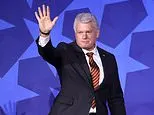
Republican strategists are increasingly alarmed that Mike Collins' Trump-backed Senate campaign in Georgia is faltering badly, weighed down by controversies, an ethics investigation and a large fundraising shortfall against Democratic incumbent Jon Ossoff. The race, once viewed as a genuine toss-up, is reportedly now seen by many political observers as leaning firmly Democratic, prompting fears within the GOP that a weak Collins campaign could hurt Republican candidates further down the ballot in a state the party had hoped to contest strongly.
An August poll by InsiderAdvantage of 800 likely voters put Ossoff ahead of Collins by 50% to 43%, with seven percent undecided and a margin of error of around 3.4-3.46%. Ossoff's campaign had raised roughly $98 million during the election cycle as of 30 June, compared with about $7.4 million for Collins. Collins has also faced a House ethics investigation and scrutiny over social media activity linked to associates, including his son-in-law, whose online presence has been connected to white nationalist and antisemitic content. Democratic strategist Mike Nellis described Collins as a poor candidate against a "flawless" Ossoff campaign, and blamed Donald Trump for repeatedly backing unpopular Senate candidates, also citing Texas's Ken Paxton as a similar case.
In short
- Ossoff leads Collins 50%-43% in new Georgia Senate poll
- Ossoff has raised ~$98m versus Collins' ~$7.4m
- Collins hit by ethics probe and associate's extremist social media links
Steelman: both sides, in good faith
The strongest fair case each way — we don't pick a winner.
The case for
Republicans could argue that Collins remains a viable choice for voters who want a senator aligned with Trump and his agenda, and that one poll or a fundraising gap does not settle the outcome. They may also see the race as a chance to challenge Ossoff’s record and worry that a weak result could dampen turnout or hurt other Republican candidates in Georgia.
The case against
Critics could argue that the polling and fundraising gap, alongside the ethics inquiry and surrounding controversies, point to a campaign struggling to persuade voters and compete effectively. If Collins loses support beyond his own race, Republicans could also face weaker prospects down the ballot in a state they hoped to contest.
Explained simply
Republicans have long viewed Georgia's Senate race as one of their best chances to unseat a Democratic incumbent, with Jon Ossoff defending the seat he won narrowly in 2021. Mike Collins, a US congressman, secured the backing of Donald Trump to become the Republican challenger, in a state that has swung between the two parties in recent elections and is seen as crucial to the wider battle for control of the Senate.
Ossoff, first elected during a period of intense national attention on Georgia's politics, has built a large campaign war chest and is regarded by strategists in both parties as a strong campaigner. Collins has faced separate difficulties, including a House ethics inquiry and questions over social media links connected to people around him, which have added to doubts about his ability to compete financially and in the polls.
The outcome matters beyond Georgia because Senate control affects which party can pass legislation and confirm judicial and executive appointments. A struggling Republican campaign in a competitive state can also affect other candidates on the same ballot, since voters often decide multiple races together, which is why party strategists are watching this contest closely.
Business Elections Government Markets Politics World