Trump Backs Federal Film & TV Tax Incentive: “Hollywood Is A Complete & Total Disaster!”
Developed over time first seen 2 months ago
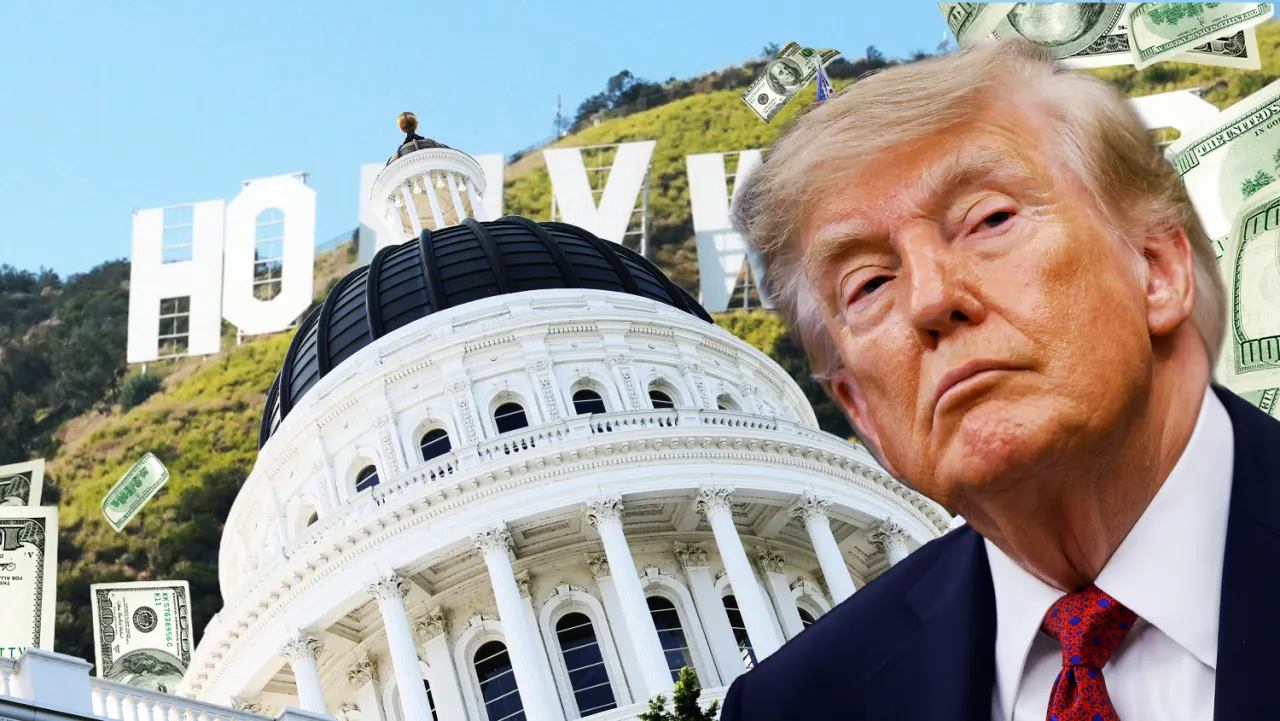
Donald Trump has formally backed a federal tax incentive for film and television production, declaring "Hollywood is a Complete and Total Disaster!" in a Truth Social post after meeting actor Jon Voight, whom he has designated a "Hollywood Ambassador" to advise on the industry's decline. The proposal quickly drew broad, cross-partisan support, including from Motion Picture Association chief executive Charles Rivkin, Democratic Senator Adam Schiff, SAG-AFTRA, the DGA and the WGA, reflecting how severely US production has haemorrhaged jobs to cheaper filming locations abroad, particularly Canada, and how badly this has hit California specifically.
No figures or structural details of the incentive have been confirmed, though advocates including Voight, Spencer Pratt and Schiff have previously floated a rate of around 25%. Trump said meetings were being arranged with congressional leaders from both parties to draft bipartisan legislation swiftly, framing it as a way to recoup costs many times over through increased tax revenue. Outgoing California Governor Gavin Newsom, who last year more than doubled the state's own production credit programme to $750 million, also voiced support, while a separate post-production incentive was noted to have cleared the California state Senate.
- Trump backs a federal film/TV tax credit, blasting Hollywood's decline.
- MPA, unions and Democrat Adam Schiff all voiced rare bipartisan support.
- No rate confirmed yet, though ~25% has been floated by advocates.
New here? Start with this
Trump has thrown his weight behind a long-running push to create a federal tax break for American film and television production, aimed at stemming the loss of jobs to countries such as Canada, where costs are lower. The idea has been championed for months by actor Jon Voight, who has been lobbying Trump directly, and it now has the backing of major industry bodies including the Motion Picture Association, actors' and writers' unions, and studio executives.
The push comes alongside separate efforts at state level: California, long the heart of the US industry, has been expanding its own incentive scheme under Governor Gavin Newsom and has just advanced a further measure through its state Senate. Supporters span both major US political parties, with Democratic figures such as Senator Adam Schiff also backing bigger incentives, reflecting how the issue cuts across party lines in areas that have lost production work.
No details of how a federal incentive would work, or how much it would cost, have yet been set out, and any change would require action by the US Congress. The story matters because it touches on jobs, state and national economies, and the future shape of an industry that has for decades been centred on Hollywood.
Both sides, in good faith
The strongest fair case each way — we don't pick a winner.
The case for
Supporters argue that a federal production tax incentive is a pragmatic response to a genuine competitive problem: other countries and even other US states already offer generous rebates, and American film and television jobs, from camera operators to caterers, have been steadily lost to cheaper locations abroad. They see this as protecting a strategically important industry and a source of cultural soft power, and welcome that it appears to be drawing support across party lines, including from unions such as SAG-AFTRA and the WGA, studio executives and lawmakers in both parties, suggesting a rare area of practical consensus focused on jobs rather than ideology.
The case against
Sceptics argue that subsidising one of the world's wealthiest industries is hard to justify, particularly when studios, top-tier actors and executives are already highly profitable, and that public money would be better directed at broader tax relief or sectors with less capacity to help themselves. They also caution against government picking winners through targeted incentives, question whether the benefits would reach ordinary crew members rather than being captured by large studios, and note the irony of a president who has repeatedly attacked Hollywood as culturally hostile now proposing to subsidise it, raising doubts about whether the move is driven by genuine industrial policy or by electoral considerations ahead of the midterms.
Full account
Donald Trump has publicly thrown his weight behind the idea of a federal tax incentive for film and television production, declaring on his Truth Social platform that "Hollywood is a Complete and Total Disaster". The remarks followed a meeting with actor Jon Voight, whom Trump appointed last year alongside Mel Gibson and Sylvester Stallone as one of his "Special Ambassadors" to the entertainment industry. Trump described the sit-down as "great and very interesting" and praised Voight as someone who "loves our Country" and feels strongly about the fate of American film-making.
The comments reflect a well-documented decline in domestic production, with studios and streamers increasingly shooting in Canada and other countries that offer more generous incentives, at a cost of tens of thousands of jobs, particularly in California. Trump said the industry was "being dissipated in its entirety" and argued there was now little financial reason to base productions in the United States, a shift he said was hurting California "very badly".
Trump offered no specifics on the size or structure of any incentive, though he has previously floated the idea of tariffs on foreign-made films, and industry figures who have pushed for a credit — including Voight, commentator Spencer Pratt and Democratic senator Adam Schiff of California — have generally coalesced around a rate of roughly 25 percent. Trump framed the initiative as urgently needed and explicitly bipartisan, saying he wanted Republican and Democratic leaders to meet and "immediately craft Legislation" to protect the sector, adding that any spending on incentives would be recouped many times over through tax revenue. The bipartisan framing comes with the midterm elections approaching, and much of the lost production activity concentrated in Democratic-leaning states.
The Motion Picture Association moved quickly to welcome the announcement, with chief executive Charles Rivkin issuing a statement calling a federal incentive a potential "landmark step" for bringing production back to communities across all 50 states and pledging to work with the White House and congressional leaders to turn the idea into law. Coverage of the episode varied in focus: one account placed greater emphasis on the political mechanics and the range of voices, across the aisle, already lobbying for a specific rate, while another dwelt more on Trump's personal rapport with Voight and the broader remit of his celebrity ambassador programme. No legislative text has yet been produced, and it remains unclear when, or in what form, Congress might take up the proposal.
Where outlets differ
Deadline (Source 1) situates the announcement in a political context, noting the approaching midterms and naming Sen. Adam Schiff and Spencer Pratt as advocates who have floated a roughly 25% credit rate; it also strikes a more skeptical, wry tone ("Trump being Trump, there were no details…").
Fox News (Source 2) foregrounds Trump's personal praise for Jon Voight and the wider 'Special Ambassadors' initiative (also including Mel Gibson and Sylvester Stallone), quoting Trump's description of the industry being 'dissipated in its entirety', and omits the 25% figure and the Schiff/Pratt references entirely.
Both outlets quote Trump's Truth Social post and the Motion Picture Association's statement from CEO Charles Rivkin in near-identical terms, indicating a shared primary source (the Truth Social post and MPA press statement).