Trump delivers ominous warning that ‘Israel would be gone’ without him as he defends military action in Iran
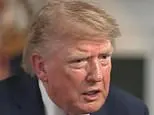
Donald Trump has claimed that Israel and the wider Middle East "would be gone" if he were not US President, defending his administration's continued military action against Iran. He made the remarks to Fox News on the same night that US and Iranian forces exchanged fresh attacks, marking an escalation after weeks of relative calm in the six-month conflict, and as he continues to insist that Tehran must never be allowed to acquire a nuclear weapon.
Trump argued that Iran's strikes on neutral Gulf states such as Saudi Arabia, Qatar, the UAE, Bahrain and Kuwait had cost it regional support, but warned that had Iran possessed a nuclear weapon it likely would have used it. His comments came alongside remarks from Israeli Prime Minister Benjamin Netanyahu, who ruled out any diplomatic deal with Iran and vowed a devastating response to any attack, and from Iran's supreme leader Ayatollah Mojtaba Khamenei, who urged Muslim nations to confront the US and Israel as common enemies. Trump also reiterated that he is "not in a hurry" to resume negotiations, saying Iran's leadership is under severe economic and military strain following his declared "economic D-Day" campaign against the country.
- Trump says Israel would be "gone" without his presidency amid Iran war
- US-Iran clashes escalate again after weeks of relative calm
- Netanyahu rules out a deal with Iran; Khamenei urges resistance to US, Israel
New here? Start with this
The US and Israel have long viewed Iran’s nuclear programme as a security threat, while Iran says it has the right to develop nuclear technology. Disputes over the programme and Iran’s role in the region have led to sanctions, negotiations and repeated military confrontations.
The main players are the US president, Israel’s government and Iran’s leadership, including its supreme leader. Gulf states such as Saudi Arabia, Qatar and the United Arab Emirates are also affected by the conflict and have their own security interests.
The conflict matters because further attacks could draw more countries into the fighting and put civilians and regional trade at risk. The possibility of Iran acquiring a nuclear weapon is also a central concern in international efforts to prevent a wider crisis.
Both sides, in good faith
The strongest fair case each way — we don't pick a winner.
The case for
Supporters of the military action could argue that preventing Iran from obtaining a nuclear weapon protects Israel, Gulf states and wider regional stability, especially given Iran’s attacks and its leaders’ hostile rhetoric. They may see sustained pressure as necessary to deter further aggression and preserve leverage, and credit decisive US leadership with strengthening Israel’s security.
The case against
Critics could argue that escalating military action risks widening the conflict, endangering civilians and drawing neighbouring states into further violence, while weakening prospects for diplomacy. They may also question the claim that Israel’s survival depends on Trump, and warn that economic and military pressure could harden Iran’s position without reliably preventing it from seeking nuclear weapons.