World news and discussion on TalkFuse.
Trump EPA’s arguments for letting power plants spew unlimited pollution ‘dead wrong’
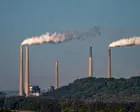
The US Environmental Protection Agency has moved to scrap all limits on planet-heating pollution from coal and gas power plants, with administrator Lee Zeldin claiming the change will lower Americans' electricity bills and pose little climate risk. Environmental lawyers and analysts say both justifications collapse under scrutiny, arguing the rollback instead entrenches costly, polluting fossil fuel generation while removing incentives for cheaper renewable alternatives. The move follows a similar rollback of vehicle emissions rules and forms part of a broader effort to strip current and future US administrations of legal authority to regulate greenhouse gases.
The EPA's own impact analysis undercuts Zeldin's claims, showing retail electricity prices will actually rise by 0.7% by 2030 rather than fall, with prices not expected to drop until the mid-2030s, and coal costs projected to climb 27.3% by 2045. A Natural Resources Defense Council analysis estimates the policies will cost US households an extra $30bn a year in electricity bills by 2035, while critics such as attorney Maggie Coulter of the Center for Biological Diversity say the EPA's reasoning ignores billions of dollars in public health costs from increased pollution, having previously valued averting a human death at effectively zero. The agency claims the change will save $310bn but has not explained the calculation, when bill reductions might materialise, or the climate impact of the extra emissions.
In short
- EPA scraps pollution limits on US coal and gas power plants.
- EPA's own data contradicts its claim that bills will fall.
- Critics say rule ignores billions in health and climate costs.
Steelman: both sides, in good faith
The strongest fair case each way — we don't pick a winner.
The case for
Supporters could argue that removing federal emissions limits would give power plants greater operational flexibility, reduce compliance costs and help preserve dispatchable coal and gas generation that can support reliability as electricity demand grows. They may also contend that the EPA should avoid rules whose costs fall on consumers unless the climate benefits and legal basis are clearly established, and that states or Congress are better placed to make those choices.
The case against
Opponents argue that the EPA’s own analysis projects electricity prices rising in the near term, while independent estimates point to substantial added household costs and the agency has not explained its claimed savings. They also say the rollback would increase climate and public health harms, weaken incentives for cheaper renewable generation, and constrain future administrations’ ability to address those costs.
Explained simply
The US Environmental Protection Agency, or EPA, is the federal body responsible for regulating pollution in America, including gases from power stations that scientists say contribute to climate change. Successive rules have required coal and gas-fired power plants to limit these emissions. The Trump administration, through EPA head Lee Zeldin, is seeking to remove those limits entirely, arguing this will cut costs for households and cause little environmental harm.
The change matters because power plants are among the largest sources of greenhouse gas emissions in the United States, and any shift in how they are regulated has knock-on effects for electricity prices, air quality and the country's contribution to global warming. It also fits into a wider pattern: the administration has already loosened rules on vehicle emissions and is attempting more broadly to limit the legal powers that any US government, now or in future, has to regulate greenhouse gases.
Because the proposal would reverse established environmental policy, it faces scrutiny from lawyers, climate researchers and advocacy groups, who assess the EPA's own figures and reasoning against its public claims. Such disputes over the evidence behind deregulation are central to understanding why this move has drawn attention.
Americas Business Climate Elections Environment Politics Science World