World news and discussion on TalkFuse.
Trump heads to Asia for historic nuclear talks with China and Russia
Developing story first seen 13 hours ago
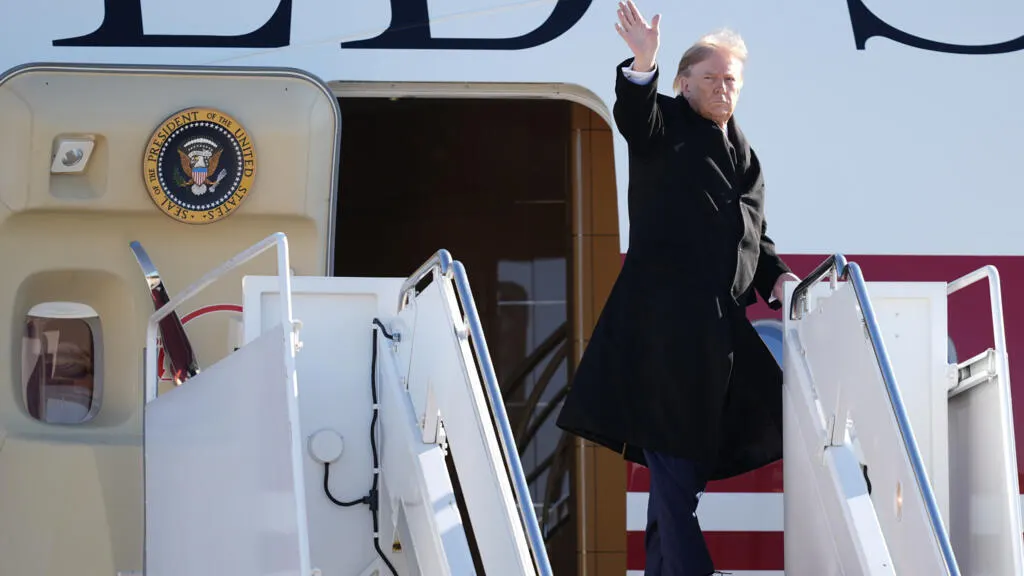
New coverage highlights Trump’s departure for Asia after several days largely out of public view, as his administration faces scrutiny over a nationwide air traffic ground stop and Republicans’ midterm losses. The trip is focused on economic deals and planned nuclear talks with Chinese President Xi Jinping and Russian President Vladimir Putin, while Trump says he will also raise Russia’s war in Ukraine.
Trump said Russia is losing 25,000 soldiers a month and suggested he may meet North Korean leader Kim Jong Un in China to discuss its nuclear programme. Ukrainian President Volodymyr Zelensky has warned against the summit becoming a new Yalta, reshaping global influence. Air Force One refuelled in Fairbanks instead of Anchorage because of weather, according to the White House.
- Sources
- 2
- Outlets
- 2
- Left · Centre · Right
- 0 · 1 · 1
In short
- Trump has departed for Asia amid domestic political and travel problems.
- He plans to raise Ukraine in talks with Xi and Putin.
- Zelensky warns against a deal reshaping global influence.
How this story developed
- 5 hours ago Donald Trump has begun a trip to Asia focused on economic agreements and planned talks with Chinese President Xi Jinping and Russian President Vladimir Putin, including discussions on nuclear disarmament.
- 6 hours ago New coverage highlights Trump’s departure for Asia after several days largely out of public view, as his administration faces scrutiny over a nationwide air traffic ground stop and Republicans’ midterm losses.
Where outlets differ
Centre outlets 1
Only here: heads, china, russia
Right-leaning outlets 1
- Trump arrives in Philippines to kick off Asia trip ahead of historic three-way nuclear talks with Xi and PutinNew York Post
Only here: arrives, philippines, kick, trip, ahead
Every side used: trump, asia, historic, nuclear, talks
Headline columns compared word for word; nothing in them is AI-written.
Steelman: both sides, in good faith
The strongest fair case each way — we don't pick a winner.
The case for
Supporters could argue that direct talks with China and Russia are necessary to reduce nuclear risks and may open routes to arms control, while engagement with North Korea could serve the same purpose. Raising Ukraine alongside economic and security issues could give Trump more scope to press for a settlement and avoid leaving a major conflict outside discussions among influential powers.
The case against
Critics could argue that talks framed around major-power relations risk sidelining Ukraine and other countries whose security is at stake, echoing concerns about decisions made over smaller nations’ heads at Yalta. They may also worry that pursuing agreements without clear safeguards or the affected parties’ participation could legitimise territorial concessions or a redistribution of influence, while weakening pressure on Russia over its war.
Explained simply
The United States, China and Russia are the world’s largest nuclear powers. Talks between their leaders about limiting nuclear weapons would build on past arms-control efforts, which have sought to reduce the risk of nuclear war and keep competition between countries from escalating.
Donald Trump is the US president; Xi Jinping leads China and Vladimir Putin leads Russia. Their governments have competing interests, while Russia’s war in Ukraine has put it at odds with the United States and its allies. Volodymyr Zelensky is Ukraine’s president, and Kim Jong Un leads North Korea, which also has nuclear weapons.
The 1945 Yalta Conference brought together the leaders of the US, Soviet Union and Britain to discuss the post-war order in Europe. Comparisons with Yalta reflect concerns that powerful countries could make decisions affecting other nations’ futures, including Ukraine’s, without their involvement.
Coverage · 2 sources
Bias meters
From 2 rated sources.
Americas Asia Europe Government Politics World